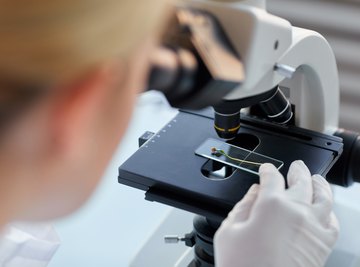
Cells may be considered the fundamental unit of living things and hence the basic unit of biology. All living things contain cells – some only a single one, others trillions – and each cell is specialized to meet the needs of whatever organ or tissue the cell inhabits. For example, the cells of your liver, which acts as a filtration organ, are physically and functionally distinct from the cells that make up your bones, which clearly serve support and structural purposes.
Stem cell plasticity is the ability of cells of a given type to be biochemically prompted grow into a different type of cell, whether the difference is modest (such as one kind white blood cell being used to grow another kind) or pronounced (such as a cell taken from the umbilical cord being used to create heart tissue).
Note that this discussion focuses chiefly on adult stem cells (ASC) and not embryonic stem cells (ESC), the latter having assumed great importance in medical research and the media in in the 21st century. ESC are presumed by their nature to possess nearly unlimited plasticity.
Stem Cell: Definition
The stem cell medical definition includes the requirement that a cell must undergo multiple self-renewing cell divisions in sequence to qualify as a stem cell. In terms of their resulting properties, stem cells are classified as totipotent, or possessing the ability to develop into any type of cell; pluripotent, or being able to develop into a variety of cell types but not the whole range; and multipotent, or able to develop into a comparative handful of related cell types.
Totipotent cells exist in nature only after the first few divisions following fertilization of an ovum. Pluripotent stem cells include ESC and can ultimately become different types of cells in embryologically related tissues, such as cells from the embryonic mesoderm layer, endoderm layer or ectoderm layer. Multipotent stem cells can become cells from the same organs or tissues; most ASC have traditionally been presumed to be multipotent.
Plasticity: Definition
In the early 2000s, medical researchers began to question the accepted idea that ASC could not be compelled to develop into cells not found in the specific organ or tissue from which these cells were taken. Some studies suggested that, for example, cells from adult bone marrow could be made to mature into skeletal muscle cells, liver cells, heart muscle cells or neural cells. Other studies showed that some cells not derived from the blood system could wind up as blood cells given the right input. This phenomenon is what is implied by cell plasticity: In this context, more plasticity simply means a wider potential range of "child" cells.
An example of a stem cell is the multipotent adult progenitor cell (MAPC), which has been used for many years in mice and human research.
Recent Plasticity Research
Some of the promise of the research starting late 1990s has been realized. Purified bone-marrow stem cells have been employed to restore heart, liver and skin function in mice and humans in which these areas have been damaged. Further research has implied that the plasticity of many ASC relies on the environment into which it is introduced; that is, a cell with little apparent ability to become a nerve cell might receive signals from surrounding neural tissue to do precisely this if placed in the proper environment.
Overall, ASC cannot show the same plasticity as ESC, but their ultimate therapeutic potential remains quite high.
References
Resources
About the Author
Kevin Beck holds a bachelor's degree in physics with minors in math and chemistry from the University of Vermont. Formerly with ScienceBlogs.com and the editor of "Run Strong," he has written for Runner's World, Men's Fitness, Competitor, and a variety of other publications. More about Kevin and links to his professional work can be found at www.kemibe.com.