What Type of Rock Does Slate Change Into?

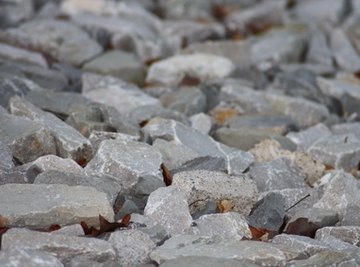
Slate is a metamorphic rock. Metamorphic rocks are rocks that change form from one type of rock into another because of time, pressure, heat and other factors. Diamonds are the most famous of metamorphic rocks, starting out as humble coal. Other metamorphic rocks include slate, shale, schist, gneiss and marble. The new form of a rock is determined by the composition of the original rock.

  1. Shale to Slate

    • Slate is formed by the metamorphosis of a sedimentary rock, shale. The shale rock is exposed to pressure, causing it to change into slate.

    Pressure Change

    • The pressure causes faults in the slate--called cleavage--to form. This results in long, parallel sheets of rock like pages in a book. This is called foliation. When the rock splits, the slate falls apart along those cleavage lines.

    Useful Slate

    • Since slate naturally splits into large flat surfaces, it has long been used for a variety of uses. If you have ever looked closely at a fine fireplace, you have probably seen slate as the base beneath the fire. It is valued for its flatness. It is commonly used for walkways, blackboards, construction and in finer pool tables.

    Fate of Slate

    • Accessible slate itself does not turn or metamorphize into another form of rock. Since it is near the surface, there is no pressure to cause change. Instead, the forces of erosion weather the slate into rock fragments, sand and dust. These small pieces of slate are swept away by wind and rain into low-lying areas. As more and more of these sand and rock fragments gather, the increasing weight forces them together. The cementing action of silicates and carbonates mixed with the slate particles causes the fragments to solidify into a solid mass, and sandstone is born.

    Not Just Slate

    • Shale doesn't automatically turn into slate. It must be kept away from certain chemicals and kept at a certain temperature, or it will become another type of rock as the pressure, heat, and chemical action continue over long periods of time. Shale at first becomes slate, but given enough time, pressure and heat, it will continue to change into phyllite, schist and then gneiss.

Related Searches:

References

Comments

You May Also Like

  • Facts About Slate Rock

    There are many different types of rocks, minerals and stones out there. Each falls into a particular category and is used for...

  • How to Cut Slate Rock

    Slate is a fine-grained metamorphic rock. Typically, slate forms from a parent rock of either mudstone or shale that is rich in...

  • What Causes Rocks to Metamorphose?

    Metamorphic rock is rock that has been greatly changed due to its surrounding environment. The word comes from the Greek words meta,...

  • Difference Between Slate and Flagstone

    There is considerable confusion as to the difference between slate and flagstone. In many discussions on this topic, terms such as shale,...

  • How to Install Slate Rock

    Slate rock, a sturdy, metamorphic stone, is popular for outdoor uses. The stone is mined from quarries and cut into sections. Generally,...

  • What Type of Rock Is Slate?

    Comments. You May Also Like. What Type of Rock Does Slate Change Into? Slate is a metamorphic rock. Metamorphic rocks are rocks...

  • What Does a Caterpillar Form Before Turning Into a Moth?

    A caterpillar, or larval, is a unique creature which completes its life cycle by transforming into a butterfly or moth. Before it...

  • Uses of Slate Rock

    Uses of Slate Rock. The multi-layered slate stone is formed from the metamorphosis of shale (a soft claystone). When shale is subjected...

  • How to Do a Natural Slate Walkway

    Natural slate walkways add an earthy, rustic element to a landscape. This strong stone will provide a low-maintenance surface able to withstand...

  • How to Lay Slate Slabs

    Slate is a metamorphic stone that is formed from clay, quartz and sedimentary rock shale. The colors of slate range from shades...

  • How to Tell the Difference Between Shale and Slate

    Shale and slate are two very similar types of stones found naturally along split bedding lines. The difference between these rocks can...

  • How to Install Slate Tile in an Area That Freezes

    Laying slate tile in an area that freezes (i.e., on a screen porch or patio) requires some extra preparation with the underlayment....

  • Types of Metamorphic Rocks: Foliated Gneiss

    Gneiss is a type of metamorphic rock, meaning it changed over time from a different type of rock to its current state....

  • Slate Rock Information

    Comments. You May Also Like. Facts About Slate Rock. There are many different types of rocks, minerals and stones out there. Each...

  • Why Is Quartzite Harder Than Its Parent Rock?

    Quartzite is a metamorphic rock, formed when its parent rock, sandstone, is buried then heated and/or compressed. Sandstone is a sedimentary rock,...

  • How Does Marcasite Form?

    Marcasite is an opaque, pale white to slightly yellow, metallic mineral. With little commercial value, marcasite is sometimes used as a source...

  • What Minerals Are in Slate?

    Slate is a fine-grained metamorphic rock whose original parent rock was a clay-rich sedimentary rock such as shale or mudstone. These sedimentary...

  • What Is a Schist Made of?

    Schist, a metamorphic rock usually formed as a composite of multiple minerals, is a common rock found throughout the world.

  • What Kind of Rock Is Slate?

    Slate is a stone that is highly resistant to rain, snow and sun. It comes in a variety of colors, including black...

Related Ads

Featured