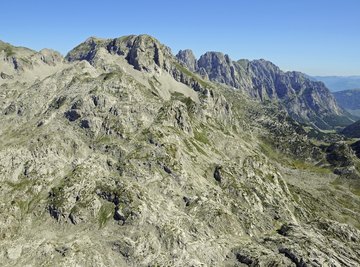
To most non-scientists, rocks are rocks. They are hard, unmoving pieces of the Earth that can be found just about anywhere. In many areas of the country roads are cut straight through large slabs of rock, evidence of the necessary interaction between man and nature. Enthusiasts may climb rock formations without a thought about where they might have come from or thinking of the names of rocks. Geologists, however, know intimately that there are different kinds of rocks, each holding a special place in the Earth's history. Every rock tells a story for those who can read them.
Igneous Rocks
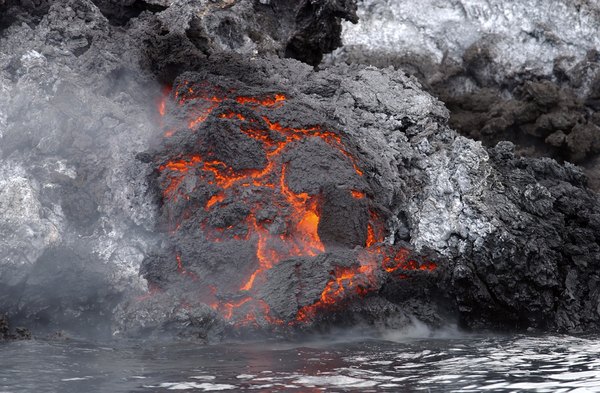
Igneous rocks are one type of rock. These rocks are associated with volcanoes and form at plate boundaries, either as magma under the ground hardens or as lava flows over the surface and cools. Magma cools to form intrusive igneous while lava cools to form extrusive igneous rocks. Many igneous rocks are basalt or granite, two of the most abundant rock types on the planet. Other examples of igneous rocks include andesite, rhyolite, granodiorite and gabbro.
Sedimentary Rocks
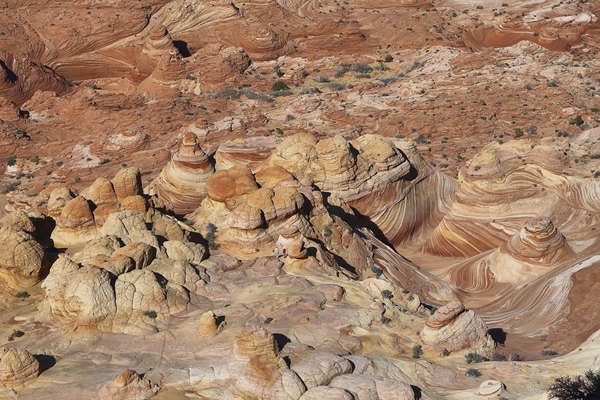
Sedimentary rocks take thousands of years to form. Unlike igneous rocks which can form as the result of violent collisions and volcanic eruptions, sedimentary rocks form quietly, as sand, mud and sometimes the remains of living things collect on the sea floor or on land. As more and more sediment deposits, the sheer weight of the sediments causes them to compress, forming solid rock. Sedimentary rocks are distinguished by their layered appearance, as different types of sediments collect over time, and by the presence of fossils. Examples of sedimentary rocks include conglomerate, sandstone, mudstone and limestone.
Metamorphic Rocks
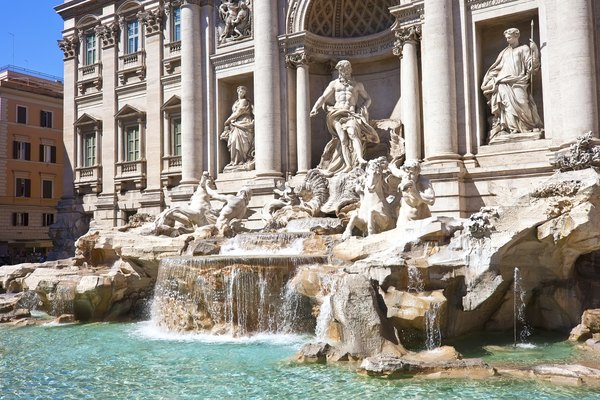
Metamorphic rocks are the result of pressure and heat applied to igneous or sedimentary rocks. The appearance of these rocks is transformed along with the structure; for example, metamorphic sedimentary rocks retain the layers, but the layers are bent and compressed. Some examples of metamorphic rock include marble, slate and gneiss.
Gemstones are Large Crystals
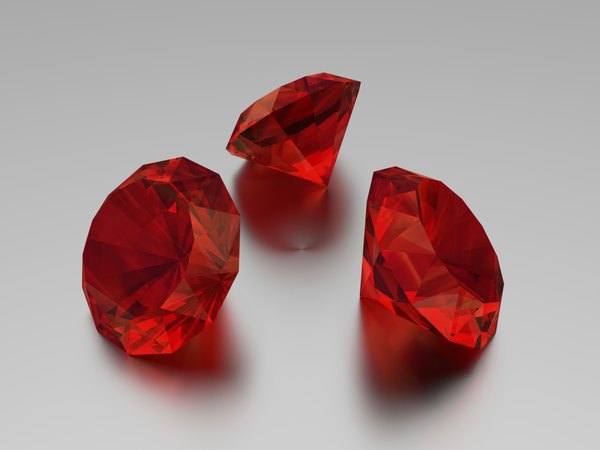
The most beautiful jewelry often features gemstones, and most gemstones come from underground rock formations. Pressure and heat cause fluids to crystallize in different ways, leading to the formation of such gemstones as onyx, ruby, sapphire and turquoise.
The Rock Cycle Forms 3 Types of Rocks
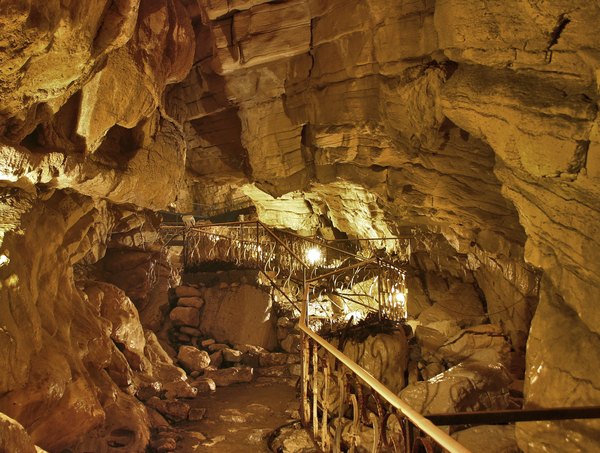
The Earth is a closed system, which means that what is formed on the planet must be recycled and re-used. Just as the water cycle explains how water is cycled through the atmosphere, the rock cycle shows how rocks are created and destroyed. The cycle usually begins with the emplacement or eruption and eventual erosion of igneous rocks and their subsequent deposition as sediments. From here the rocks may be pushed further into the Earth and incorporated into the molten inner layers, or they may be brought to the surface over time as sedimentary rocks. The rock cycle is multi-directional, so the formation of rocks is continuous but happens in different ways over time.
Ages of Rocks
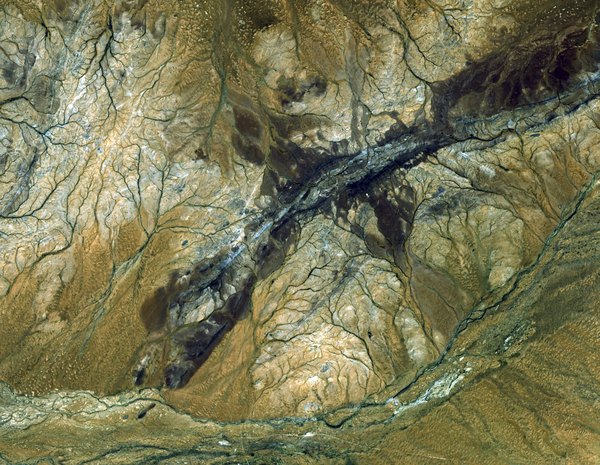
In most areas of the Earth, rocks are being constantly created or destroyed. However, igneous, sedimentary and metamorphic rocks may be millions of years old. The oldest rock formation is believed to be in Western Australia, a combination of metamorphic and sedimentary rocks known as Jack Hills. They have been dated at 4.4 billion years old, forming only a few million years after the Earth itself.
References
About the Author
Jennifer Ratliff has been writing Web content since 2004. Her previous clients include Elika Associates, Sam's Club and Microcap Review. She has also had work published through Odyssey and Seven Seas Magazine. Ratliff has taken courses through Ohio State University and Prestonsburg Community College. Her articles specialize in the natural sciences and mathematics.
Photo Credits
Przemyslaw Wasilewski/iStock/Getty Images