The cells that make up your body have a cycle made up of stages, just as life as a whole can be divided into infancy, childhood, adolescence and so on through old age. Most of your cells are continually growing, dividing and replacing worn-out or dead cells, or are about to be replaced in this manner themselves.
Within each stage, things happen that affect the cell as a whole. For example, during interphase, DNA is being replicated into two theoretically identical twin sets, while in mitosis, these twin sets are being split into two theoretically identical siblings.
But the time these cycles spend in each phase itself must be monitored. That is, the cell cycle needs internal regulators.
Cell Basics
All cells have a cell membrane around the outside, cytoplasm filling most of the inside, genetic material in the form of DNA (deoxyribonucleic acid) serving as the genetic material of all living things and ribosomes for making proteins. Prokaryotes, which are mostly single-celled organisms (such as bacteria) that reproduce by binary fission, have little more than this.
Cells of eukaryotes have additional components, notably membrane-bound organelles such as mitochondria. Because these cells are often a part of greater tissue in eukaryotes, their growth must be coordinated, and thus a cell cycle is needed in these organisms.
The Cell Cycle: Overview
The eukaryotic phenomenon known as the cell cycle has a number of well-defined phases. At the very top level is the separation of the cell cycle into interphase, when it is not actively dividing, and the M phase, when it is in fact dividing. Interphase in turn includes the G1(first gap), S (synthesis) and G2 (second gap) stages; the M phase includes mitosis and cytokinesis.
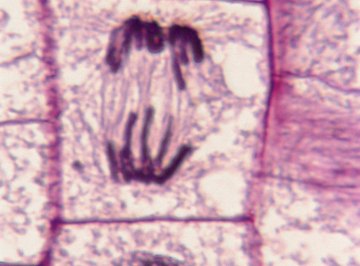
Finally, in one last layer of this organizational scheme, mitosis has five steps of its own. Mitosis, the means by which eukaryotic cells divide asexually (as has happened countless thousands of times in your own body since you started reading this sentence) is divided into prophase, prometaphase, metaphase, anaphase and telophase, each with its own characteristic activity and regulating influences.
When a cell has just been "born" of the division of a "mother" cell, it is in interphase. It then progresses through the various phases described, and then divides into two daughter cells, thus continuing the cycle.
But it is not quite this simple or easy in practice.
Cell Cycle Regulators: Definition
Internal regulators of the cell cycle consist of two formal, well-defined types: positive regulator molecules such as cyclins and cyclin-dependent kinases and negative regulator molecules such as Rb, p53 and p21.
These molecules constitute a great sea of "positive" and "negative" regulators within cells, so that the loss of any one molecule alone has very little effect overall.
Cyclin-dependent kinases and cyclins are internal factors that bind together to form groupings in the cell called Cdk-cyclin complexes. Each component alone is not nearly as effective. In contrast, Rb, p53 and p21 act mostly at the G1 cell cycle checkpoint.
Cell Cycle Checkpoints
The cell cycle includes a number of checkpoints, which are just what they sound like: points in the life of the animated biological sculpture called a cell at which the cell's own work must be scrutinized for quality, and fixed where necessary and if available tools permit. As it happens, G1, S, G2 and the M phase as a whole are preceded by such checkpoints.
Which checkpoint is considered to be the most important in the cell cycle? Well, that may depend on whether you wish to focus on whether the onset of division is the most important point of a cell cycle, or whether the onset of interphase is more important since it represents birth. Really, as long as you know them, the one you choose as your favorite is entirely up to you.
References
About the Author
Kevin Beck holds a bachelor's degree in physics with minors in math and chemistry from the University of Vermont. Formerly with ScienceBlogs.com and the editor of "Run Strong," he has written for Runner's World, Men's Fitness, Competitor, and a variety of other publications. More about Kevin and links to his professional work can be found at www.kemibe.com.
Photo Credits
Jupiterimages/liquidlibrary/Getty Images