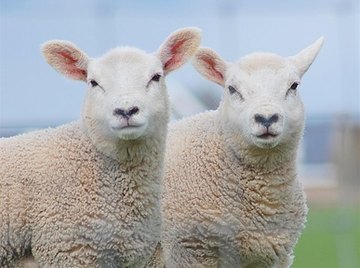

Cloning occurs in nature. Identical twins are created when an embryo divides into two individuals with identical DNA. Self-pollinating plants produce plants with the same genetic code. Scientists have been trying to create clones for more than 100 years.
Splitting Embryos
Hans Driesch was the first to clone animals in the late 1800s by splitting a sea urchin embryo. Hans Spemann had similar results with a salamander in 1902. Fifty years later Robert Briggs and Thomas Joseph King cloned a frog embryo by transferring a cell nucleus into an unfertilized egg cell--a technique still in use today.
Cloning Mammals
The first mammals were cloned from embryos by two independent teams in 1986: Steen Willadsen’s team cloned a sheep, Neal First’s team a cow. Ian Wilmut’s team at the Roslin Institute in Scotland was the first to clone a cell from an adult: Dolly the sheep was created in 1996. Ryuzo Yanagimachi and team cloned the second live mammal, a mouse, in 1997 and were first to clone successive generations.
Implications
Some people believe cloning interferes with God’s role as creator. Others fear cloning will upset the natural course of evolution or be misused by malevolent people. The theological, ethical and moral debate must continue to ensure science benefits mankind and the planet.
References
About the Author
Donna Eigen has written, produced and managed communication programs for global, government, university and nonprofit organizations since 1980. Eigen has taught graduate business communication and is a certified facilitator in work force diversity, leadership, team building and effective presentations. She has a Master of Arts in communication and a Bachelor of Arts in sociology from the University of Wisconsin-Milwaukee.
Photo Credits
Twin Lambs image by Zen Photography from Fotolia.com