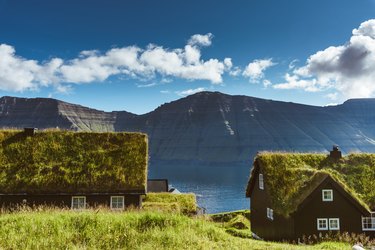
Green roofs, also known as living roofs, are rooftops covered with living vegetation planted in lightweight engineered soil. But you don't just toss plants on the roof and let them grow. These roofs require drainage material and a waterproof membrane along with careful plant selection. Green roofs provide an environment for wildlife, reduce stormwater runoff, and lower your heating and cooling costs. But there are also some disadvantages to installing green roofs that you should consider before you start planting.
Structural Limitations
Video of the Day
The roof and load-bearing walls of some buildings aren't strong enough to support the added weight of a green roof. Thin, lightweight systems, known as extensive green roofs, typically have a planting medium measuring 2 to 6 inches deep. Heavier, thicker varieties are known as intensive green roofs and range in thickness from 6 to 18 inches or deeper. Extensive green roofs often weigh less than standard gravel and tar roofs. Intensive green roofs, however, may require additional structural support.
Video of the Day
Another one of the cons of green roofs is the limited amount of slope allowed. Green roofs can only be installed on flat or gently sloping roofs. The maximum allowed incline is usually 25 degrees, although some green roof installers in Europe have grown turf on 45-degree inclines using innovative erosion control techniques. If you have a traditional sloped roof, a green roof may not work.
Cost Disadvantages of Green Roofs
You may save a little money on your heating and cooling bills, but you'll spend upfront to have the green roof installed. Installing a green roof can cost up to twice as much as installing a conventional roof. An extensive green roof generally costs between $10 to $24 per square foot. Intensive green roofs typically cost twice as much to install as extensive green roofs because of their thicker, more complex assembly.
Maintenance for intensive green roofs can be labor-intensive and expensive. Extensive roofs require less watering and fertilizing, but they require at least yearly inspections to remove unwanted self-seeding plants. Homeowners can reduce costs by weeding, fertilizing and watering plants themselves instead of hiring a profession to maintain the green roof. Growing your own plants from seeds rather than buying seedling plugs or mats can also help you save money.
Damage from Leaks
Although most green roofs include a root barrier layer, the roots of plants sometimes penetrate the waterproof membrane, causing roof leaks that could result in structural damage. A yearly inspection to remove problematic shrubs helps reduce the potential for developing leaks. A shallow growing medium usually prevents any plants from growing large enough to develop a strong, deep root system.
Because the green roof assembly is so complex, finding the source of a leak and repairing it can be a challenging process. Green roof installers can perform flood tests immediately after the installation or repair of a roof to check for leaks. Some companies offer leak detectors that use electronic charges to trace the path of a leak to its source.
Limited Choice of Plants
Another one of the disadvantages of green roofs is the available plant selection, especially if you choose an extensive system. The thick growing medium of intensive green roofs can support the growth of a wide range of plants, including shrubs and small trees. The thinner extensive green roofs, however, can typically only accommodate a small selection of drought-tolerant plants with shallow root systems.
Sedums, lichens, mosses and low-growing grasses are common choices for extensive roofs. They look less lush, leafy, and, to some, less attractive than the plants grown in deeper soil. Less robust plants may also have trouble surviving the strong winds common on high rooftops.
Green roofs can offer you several benefits, but it's also important to look at the potential drawbacks. When you understand the potential disadvantages of a green roof, you can make a fully informed decision about whether or not to start planting on your roof.