Ducks might be the most recognizable waterfowl on the planet. Cosmopolitan, or worldwide, in distribution and wildly successful, you can find various species of ducks in a wide range of habitats and regions, from the manicured ponds of busy theme parks to secluded wetlands far from the closest town. Many species of ducks are incredibly prolific breeders. In fact, some are so wide-reaching that most domestic duck species originate from one species, the mallard duck!
Sexual Dimorphism
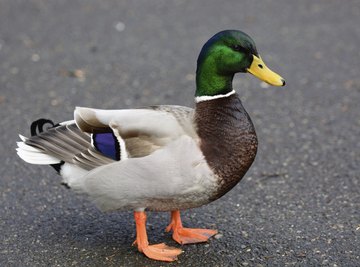
You can probably picture a male mallard, also known as a drake, right now. The iridescent green head feathers, bright yellow bill and iridescent blue feathers on their wings truly help this dapper duck stand out from the crowd. This makes the mallard a great example of sexual dimorphism in ducks, or males and females with drastically different appearances.
Both male and female mallards have iridescent blue speculum feathers, or secondary wing feathers. However, that's about the showiest part of the female mallard, also known as the hen. Hens have dull brown feathers with dark brown mottling across their entire bodies. This coloration provides camouflage for the birds while they incubate their eggs, protecting them from predators.
Duck Life Cycle: Finding a Mate
Many ducks begin looking for a mate in the fall, usually around October in North America. Multiple males often compete with one another for a female's attention, performing displays in the hope she'll pair with him. In mallard ducks, for example, they'll rapidly shake their heads, flap their wings to raise themselves up vertically in the water, and look over their shoulder to gain her attention. Once the pair has established, they create a territory and chase all intruding ducks away.
After choosing a mate and establishing a territory, the pair chooses a nesting spot near the water. They search for the spot together, flying low over the water and the surrounding area in search of a safe spot. Some duck species mate for life, or for several seasons, while others only choose a partner for a single breeding season.
Duck Life Cycle: Incubation Period
Most ducks create a nest out of vegetation. Mallards, for example, don't pluck or collect material and carry it to their nest but pull up all the vegetation that they can reach from the edge of the nest. Some ducks also pull the overhanging grasses and shrubbery over themselves to hide from predators. While they lay their clutches of eggs, many ducks collect leaves, twigs and shoots, and lines the edges of the nest. Once they begin incubating their eggs, most species also pluck their own feathers to line the nest and keep the eggs warm and insulated.
Ducks lay a varied number of eggs. For example, mallard hens lay anywhere from nine to 13 eggs, which they incubate for a period of 23 to 30 days. The young of all duck species are precocial, which means that they hatch with open eyes, have fuzzy down and can walk and follow their mother soon after hatching. Ducklings leave the nest and take their first swim by the time they are 16 hours old.
Duck Life Cycle: Raising Ducklings
Once all the eggs have hatched, the hen and her brood leave the nest and go to the water. Hens and their ducklings do not return to the nest after leaving it. The mother does not feed the ducklings but shows them how to find food themselves. It takes about eight weeks for most ducklings species to fledge, or develop their adult feathers and learn to fly.
Many species of ducks begin to breed when they are a year old. However, research on mallard ducks has shown that older hens have greater reproductive success than yearlings. Duckling mortality for older mallards is much lower than first year mothers.
References
Resources
About the Author
Marina Somma is a freelance writer and animal trainer. She holds a B.A. in Psychology and a B.S. in Marine and Environmental Biology & Policy from Monmouth University. Marina has worked with a number of publications involving animal science, behavior and training, including animals.net, SmallDogsAcademy and more.
Photo Credits
Aploon/iStock/Getty Images