
Transition metals include common metals such as iron and gold. The transition metals appear in the middle columns of the periodic table. Reasons that transition metals are unique include alloy properties, construction advantages, electricity conductivity and their use as catalysts.
Alloys
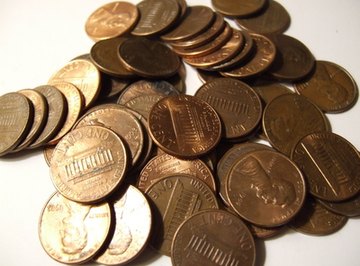
Transition metals contain atoms of similar sizes if they are in the same row of the periodic table. For example, transition metal atoms in row D, such as zinc and iron, have about the same radius, so they are easy to mix together, creating a metal alloy. Alloys are useful because the combined metal includes the advantages of one metal, such as corrosion resistance, and can reduce disadvantages of the other metal, such as higher cost. Nickel and copper are also transition metals in row D, allowing easy mixing to forge metal alloy coins and sculptures.
Oxidation States
Transition metals usually have several oxidation states. Elements found in other columns often have a single oxidation state, Chlorine is always -1, Calcium is always +2. This means that when scientists refer to calcium chloride, it is always the compound CaCl2, as the sum of the oxidation states is zero in an ionic compound. A transition metal such as manganese has several oxidation states, so combining it with oxygen, -2, does not give you enough information to explain the formula of manganese oxide. Scientists write manganese(IV) oxide to describe manganese in the +4 oxidation state, so the oxide is MnO2. This is a different compound from manganese(II) oxide, MnO.
Construction
Transition metals include useful structural properties. Elements such as copper and iron can be bent into different shapes, while remaining strong enough to support other weights. This makes the transition metals good to use in construction. The ease of bending the metal, or malleability, and the metal property of stretching without breaking, or ductility, are advantages of many transition metals.
Conduction
Transition metals are good conductors. Metals such as copper, gold and zinc stretched out into wires transmit electricity through power lines and between appliances in the home. Transition metals are good conductors for the same reason they have multiple oxidation states; they can accept varying numbers of electrons.
Electron Orbitals
All transition metal atoms in a row of the periodic table have the same arrangement of electrons in the outer orbital shell of the metal atom, and an inner orbital of the metal atom fills with electrons moving from left to right across the row, according to Colorado State University. The outer orbital is already filled, so the atom adds or loses electrons without greatly changing properties such as atomic radius.
Nutrition
Biological organisms contain transition metals. Transition metal catalysts speed up many reactions in the body, so small amounts of many transition metals are necessary minerals found in vitamin pills. Transition metal complexes include medicines such as the cancer drug Cisplatin, according to Michigan State University.
References
About the Author
Eric Novinson has written articles on Daily Kos, his own blog and various other websites since 2006. He holds a Bachelor of Science in business administration from Humboldt State University.
Photo Credits
copper pennies image by Joseph Pierce from Fotolia.com