
Kyokushin Karate Training Methods
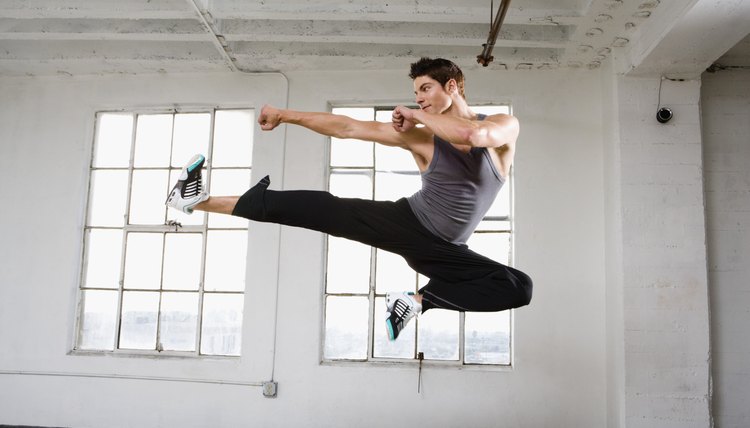
Created by master martial artist Sosai Masutatsu Oyama in the 1950s, Kyokushin karate is an intense, hard-hitting karate style. Oyama, who fought bulls with his bare hands, believed karate practice should include rigorous training methods that test the strength and discipline of the mind and body. Oyama died in 1992, but many of his training methods continue. These methods include sparring, physical conditioning and kata.
Sparring
Kyokushin is known for its full-contact sparring training. Unlike many other martial arts styles, Kyokushin students do not typically use protective gear during sparring practice. Kyokushin schools try to provide realistic and practical sparring matches. Students block with their bare arms and receive blows to their midsections in order to toughen their bodies.
The “100 Man Kumite” is a famous sparring feat that has been completed by some Kyokushin practitioners. During this kumite, which means "sparring" in Japanese, students must complete two-minute rounds with 100 opponents.
Physical Conditioning
In order to condition students for sparring matches and combat, Kyokushin schools focus a lot of time on rigorous physical exercise. According to the American Kyokushin Karate Organization’s (AKKO) website, one of the style’s commandments states that, “All selfish desires should be roasted in the tempering fires of hard training.”
At one point in his life, Oyama spent 12 hours each day training in the wilderness. He trained under cold waterfalls, broke river stones with his bare hands and used trees as striking boards. Oyama also jumped over flax plants hundreds of times each day.
Today’s Kyokushin practitioners routinely perform exercises such as push-ups, sit-ups, squat kicks, jumping jacks and mountain climbers. The AKKO requires black belt candidates to be able to complete 60 repetitions of each of these exercises in order to be promoted.
Kata
Kyokushin students also train in kata. Kata is a Japanese word that means "form." Katas are choreographed forms, or patterns, in which martial artists practice kicks, blocks and strikes.
According to the Banff Kyokushin Karate website, Oyama said, “A human life gains luster and strength only when it is polished and tempered.” Kata is a training method for polishing a Kyokushin student’s techniques. Students must remember and refine each technique of a kata through practice.
The practice of kata is a training method that Kyokushin uses to blend mental and physical conditioning. The practice of kata is also a way that Kyokushin schools pay respect to the origins of martial arts.
Writer Bio
Mike McLaughlin has been writing news, entertainment and sports articles since 1990. McLaughlin has written for “The Maine Campus,” “The Bangor Daily News" and various websites. McLaughlin is also a martial arts instructor and certified personal trainer. He has a bachelor's degree in journalism and an associate degree in filmmaking.