

How to Build Outdoor Fireplaces Using Old Wood Stoves

An outdoor fireplace is a desirable luxury, but the price keeps many homeowners without one. If you have an old wood-burning stove that needs a new purpose, it can easily be converted into an outdoor heat source and cook-top.
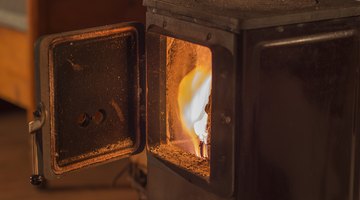
It’s easy to be excited about bringing the luxuries of indoor living to an outdoor space, but the expense of installing those luxuries can often be more than expected. This obstacle of cost has inspired some people to reuse their older wood-burning stoves as outdoor fireplaces, rather than paying to install something new. If you have an old wood-burning stove on hand, consider modifying it as an outdoor heat source and potential outdoor cook-top.
Things You Will Need
- Wood-burning stove
- Fire-resistant hearth or patio
- Reciprocating saw
- Sandblasting gun
- Cooking materials: cast-iron skillet, trivet, potholders, etc.
-
When moving a wood-burning stove outdoors, you’ll need to select a location that gives you a 5-foot clearance around all sides of your stove. This will let people safely navigate around the stove without touching it, in case it gets too hot. You’ll also need to keep any combustibles far away from the stove such as wood, gasoline, house siding, tree branches or shrubs, furniture or rugs.
-
The ground below your wood-burning stove should be level, sturdy and fire-resistant. Certain materials such as firebrick, stone, gravel or asphalt do best underneath heavy stoves. If you don’t have a section of your deck or outdoor space that is flat and fire-resistant, look into installing a hearth big enough for your stove.
-
Once you’ve found a location for your stove, it’s time to get your hands dirty. Be sure to consult your local hardware store for any materials you need or questions you may have. Many stores allow you to rent power tools, which may be more cost-effective than buying one brand new. You’ll need to make the following changes to your wood stove before lighting it up:
-
- Cut the stovepipe. The stovepipe is the tall pipe on top of a wood stove that works like a chimney, pushing the smoke up and out of the stove. This pipe should not be cut shorter than 2 feet, to avoid smoke blowing into your face, but it can be taller if you so choose. Be sure to cut it with a reciprocating saw and a blade intended to cut metal, so that you get a nice, clean cut.
- Clean the exterior. This is an optional step, but if your wood stove has not been properly stored away from moisture, there is a chance it has rusted over. Removing rust is best done by sandblasting, which can get into all the grooves of the surface, and replace any rusted hardware with stainless steel. By keeping the wood stove outside, however, you increase the chance of damage due to weather. Painting the exterior of your wood stove with high-temperature stove paint after sanding is one way to make the stove last longer without further rust damage.
- Change the door. The door to a wood stove is opened when you need to feed the fire with more wood, but it is often made of the same material as the rest of the stove, which evenly heats the area around the stove in all directions. If you’ve arranged your seating area to be in front of your stove’s door, rather than in a circle around the stove, then consider changing out your door with a grate that allows the heat to flow out of the front of the stove.
-
After making repairs to your wood stove, you’re ready to cut some wood and make a fire. Many wood-burning stoves are best only for heat, but if your stove has a flat surface on top that can fit a pot or skillet, then it can be used for cooking outdoors. A cast-iron trivet on top of your wood-burner can transfer heat safely to pans that aren’t as resilient as cast iron, like enamel Dutch-ovens or stainless steel pots.
-
You can also cook inside the stove with a low fire or a bed of hot coals if you install a grate above the fire. This grate will let you rest food directly above the heat, wrapped in aluminum foil or put it in a grill box. Any tools generally used for barbecuing can be used in cooking with a wood-burning stove, so be creative.
Choose a Location
Modifications and Repairs
Warning
When working with power tools, be sure to wear proper eye protection and gloves to protect you from any flying debris.
Start Cooking
Warning
Cooking with an open flame and hot surfaces requires proper tools for heat protection to be easily accessible. Keep potholders, oven mitts and other heat resistant items nearby while cooking.
References
Writer Bio
Heidi Nickerson graduated from Liberty University in 2013 with a Bachelor of Arts in English. She has a passion for home improvement, construction and interior design.
More Articles

