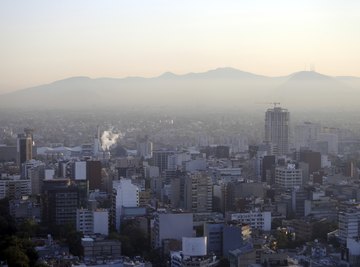

Carbon dioxide, also known as CO2, isn't what you might consider a traditional air pollutant. Though it plays a massive role in the greenhouse effect, carbon dioxide doesn't contribute to the classic smog that you might picture when you think of cities with heavy air pollution. However, research shows that the results of global climate change driven by carbon dioxide emissions could directly impact human respiratory health in a fashion similar to the more traditional forms of air pollution.
What Is Air Pollution?
You can classify air pollution as any pollutant released into the atmosphere that can adversely impact human health, the planet or both. Not only does carbon dioxide fall under the category of planet-wide implications, but it also directly impacts human health as well. Research has shown that temperature and humidity increases related to global climate change can increase annual air pollution deaths.
Carbon dioxide also indirectly impacts the more visible form of air pollution – smog. By increasing temperature and humidity, carbon dioxide emissions increase the formation of smog, which has adverse effects on respiratory health. Through both direct and indirect fashions, carbon dioxide pollution impacts our planet and human health.
Where Does Carbon Dioxide Pollution Come From?
Carbon dioxide pollution, better known as CO2 emissions, primarily comes from the burning of fossil fuels. Two great examples of this are the consumption of gasoline in gas-powered vehicles and the production of electricity by power plants.
Researchers estimate that nearly 30% of greenhouse gas emissions come from transportation, while another 25% comes from the production of electricity, 23% from industrial production, 13% from commercial and residential sources and 10% from agriculture.
Carbon dioxide accounts for approximately three-quarters of global greenhouse gas emissions.
What Are the Problems With Carbon Dioxide?
The primary concern with carbon dioxide pollution is how it exacerbates the greenhouse effect. Carbon dioxide and other pollutants, known as greenhouse gases, are released into the air due both to human activity and natural sources. These gases collect in the atmosphere and create an insulating effect around the planet - the greenhouse effect. They let in the sun's rays, but when those rays bounce off the planet and back towards space, the greenhouse gases reflect them back to Earth.
This process increases the global temperature and results in a complex chain of events known as global climate change. Global climate change leads not only to increased temperatures but also changes the overall weather patterns and climate of the planet.
Impacts of Global Climate Change
One of the most direct results of global climate change has been the rise in sea level. As the average global temperature rises, the polar ice caps melt. This melting raises the overall sea level and can cause flooding in coastal regions. It can also exacerbate the impacts of storms in coastal areas.
Global climate change also affects the formation and severity of major weather events such as hurricanes, causing them to form with greater regularity and higher power. Hurricanes build up over warm tropical seas, and increasing water temperatures help these storms become more powerful faster.
The changing sea temperature also impacts aquatic life beneath the surface. As oceanic temperatures increase, fish populations migrate to colder regions where waters better replicate their natural habitat. As fish stocks move towards the poles, fishermen must travel farther to catch food and support their local economy.
How to Reduce Greenhouse Gas Emissions
Greenhouse gas emissions greatly impact human life. While a large portion of emissions come from large commercial industries, your family can make also make changes to reduce emissions as well, including:
- Switching to sustainable power sources, such as electric cars and solar power.
- Shopping locally and supporting companies with fewer emissions.
- Making your home as energy efficient as possible, turning off lights and switching to energy-saving appliances.
References
- ScienceDaily: Carbon Dioxide Tied to Air Pollution Mortality
- Natural Resources Defense Council: Air Pollution: Everything You Need to Know
- United States Environmental Protection Agency: Sources of Greenhouse Gas Emissions
- National Geographic: Carbon Dioxide Levels Are At A Record High. Here's What You Need to Know
About the Author
Marina Somma is a freelance writer and animal trainer. She holds a B.A. in Psychology and a B.S. in Marine and Environmental Biology & Policy from Monmouth University. Marina has worked with a number of publications involving animal science, behavior and training, including animals.net, SmallDogsAcademy and more.
Photo Credits
Mika Makelainen/iStock/Getty Images