What is Drywall Made Of?

What is Drywall Made Of? thumbnail
What is Drywall Made Of?

Drywall is a large, smooth building material used primarily for interior finishing. Does this Spark an idea?
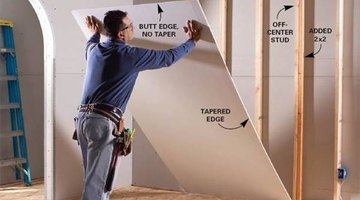
  1. Composition

    • Drywall is made out of gypsum, a word which may not mean much to you. Gypsum itself is made out of the chemical calcium sulfate, a common mineral that occurs naturally in the earth. To form drywall, manufacturers add additional ingredients that make the drywall construction worthy.

    Formation

    • Drywall is mixed wet, wrapped in heavy paper, then fired in a large kiln to dry. The resulting board is only semi-flexible, quite firm and somewhat water-permeable.

    Uses

    • Drywall is used in construction all over the world as the final layer of interior walls. The large, smooth boards are ideal for their ease of installation and the finish that they provide for paint and wall hangings.

    Size

    • Most drywall boards are 4 by 8 feet and 1/2-inch thick. Some ceiling varieties are 5/8-inch thick.

    Features

    • One reason for drywall's popularity in construction materials is its function as a fire barrier. While one should not depend on it as a firewall, it still functions very well to contain flames and prevent rapid spread of a fire.

    Types

    • As with nearly any construction material, drywall comes in a variety of forms. Some drywall manufacturers sell fire-resistant, mold-retarding, humidity-resistant, sound-rated, sound-proof, recycled and a variety of other specialized types of drywall.

Related Searches:

Resources

  • Photo Credit Image property of Reader's Digest

Comments

You May Also Like

  • What Is Drywall?

    Learn about drywall in this free DIY home improvement garage remodel project on video.

  • Ingredients in Sebastian Molding Mud

    Ingredients in Sebastian Molding Mud. Sebastian Molding Mud was designed to replicate the dirty, matted hair style sported by London youths. The...

  • Does the Brown Side of Drywall Face Out?

    The drywall surface designed to face outward is consistent and even, so you'll achieve the best results if you install drywall according...

  • Ingredients of Fiber Cement

    Ingredients of Fiber Cement. Fiber cement is a wood substitute for siding that mimics the look of real wood. It is environmentally...

  • How to Recycle Drywall

    Rather than hauling leftover drywall from your building or remodeling project to the landfill, recycle them instead. You'll help save landfill space...

  • How to Check for Chinese Drywall in Your Home

    Chinese drywall is a potential health risk and is in houses throughout the country, in particular in the South Florida area. The...

  • What Kills Mold on Drywall

    Drywall, also referred to as gypsum board and plasterboard, is a type of plaster used for wall boards. Drywall can breed mold...

  • What Is the Composition of Gypsum?

    Gypsum is found throughout the world. It is a mineral that has a crystal appearance and can have many colors. Gypsum has...

  • What Is Gypsum Drywall?

    If you live in a house built after 1950, chances are your walls are made of gypsum drywall. If you are remodeling...

  • What Is Polyurethane Made Of?

    Polyurethane is a linear polymer material that consists of carbamate groups, also known as urethane, which is formed by a chemical reaction...

  • Removing Wallpaper With Natural Ingredients

    Most of us have heard horror stories about removing wallpaper. The mess, the time, and the monotony of the task is just...

  • Gypsum Installation Safety

    Gypsum board, commonly known as drywall or plasterboard, is a relatively safe material. Its handling rarely leads to lacerations, burns or absorption...

  • How to Find Out If My House Was Built With Chinese Drywall

    Drywall was in short supply during the U.S. building boom of 2004-2006, so Chinese drywall (CD) filled the demand gap. Some ships...

  • How to Make Your Own Textured Paint Out of Drywall Mud

    If you want to repaint a room in your home or office, you have a couple of different options. You can either...

  • How to Tape the Corner of a Drywall

    The first and easiest way is to purchase the paperlined preformed metal inside corners shown above. Mix up enough set-mud to coat...

  • Ingredients That Kill Mold

    Ingredients That Kill Mold. Bleach, sodium hypochlorite, has frequently been used to kill mold and mildew. Its effectiveness is a myth since...

  • The Advantages of Drywall

    Before drywall was introduced to the American market by the United States Gypsum Company in 1916, the most common method to finish...

  • Easy Drywall Texturing

    Drywall texturing can make the difference between boring walls and those that add interest to a room. There are many techniques for...

  • Recycled Substitute for Drywall

    Eco-friendly building products can make your home or business more energy efficient and lower your carbon footprint. For your next green project,...

  • What Is a Drywall Hammer Used For?

    Drywall is also called gypsum plaster, wallboard or Sheetrock. It is composed primarily of gypsum (calcium sulfate) that is added to other...

Related Ads

Featured