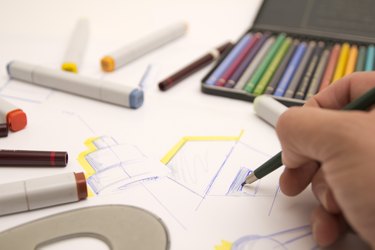
Artistic ability, color sense and creativity are among an interior designer's intangible tools. Equally important are the actual tools used by designers--their tools of the trade.
Drawing/CAD Tools
Video of the Day
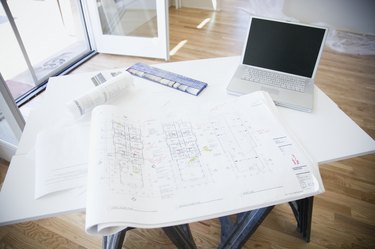
Drawing tools for sketching room designs and plans include a pencil, ruler, compass, protractor and graph paper.
Video of the Day
Computer-aided-design (CAD) software converts initial sketches and measurements into a 3-D plan for the designer and client.
Color Wheel

The color wheel demonstrates the relationships of primary, secondary and tertiary colors. The wheel helps designers create pleasing color schemes based on a combination of complementary and analogous colors.
Paint Chips

Paint manufacturers produce sets of paint chips or strips of colors for each of their lines. Interior designers use them to select room colors and coordinate paint colors with fabric, furniture and accessories.
Fabric Samples

Like paint manufacturers, fabric makers provide designers with books and sample swatches to promote new product lines. The small swatches streamline fabric selection. These tools also assist the interior designer in developing a room's color palette.
Measuring Tape
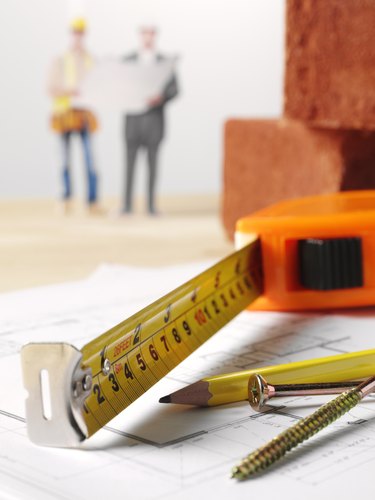
Interior designers rely on measuring tapes to verify and calculate dimensions of interior spaces and furnishings. Rigid tapes measure straight lengths while cloth tapes calculate curved and angled surfaces.
Digital Camera

Digital cameras create a visual record of job sites, furnishings and accessories. Interior designers can download photos into CAD programs and integrate them into design plans.