
How to Treat a Plantar Fascia Rupture
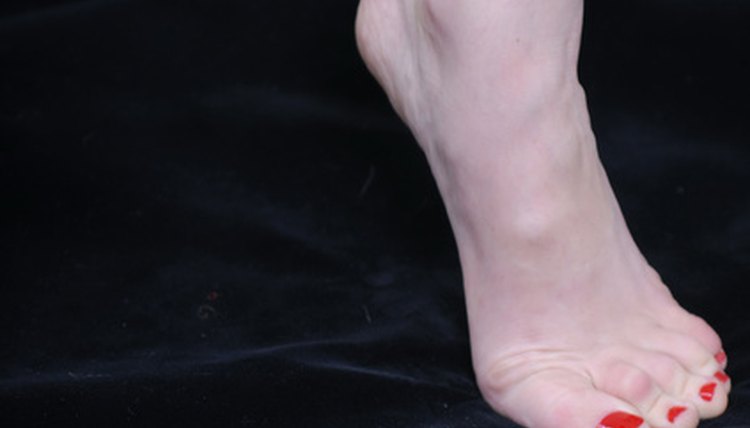
Plantar fascia is the thick connective tissue that supports the arch of the foot. MayoClinic.com explains that the plantar fascia spans from the heel bone to the toes. When injury occurs in this area, it involves pain or inflammation of the connective fibers. Plantar fasciitis is a condition in which ruptures of this area occur due to flexing or over-extending any area of the connecting plantar tissue. Individuals at most risk for plantar fascia rupture include athletes, the elderly due to weakened connective fibers and those with foot abnormalities, such as high arches or flat feet.
Hold an ice pack over the injury. Ice will ease the sensation of pain accompanying the rupture. Apply an ice pack three times a day for up to 20 minutes per setting. Do not place raw ice on the area. If you do not have an ice pack, make sure the ice is covered by a towel or cloth. MayoClinic.com suggests trying a frozen water filled paper cup to roll over the area of discomfort as an alternative.
Rest the injured foot. Try not to move the foot because this may further injure the ruptured area. The Sports Injury Clinic suggests sitting or laying down with the foot elevated for several days. Resting the injury will decrease the stress placed on the foot as well as cut down on inflammation.
Take anti-inflammatory medication. Over-the-counter medications containing nonsteroidal anti-inflammatory drugs, or NSAIDS, including ibuprofen, naproxen or aspirin, will help ease the pain. MayoClinic.com suggests this as a temporary relief because it will not fix the rupture; it will only reduce discomfort. Consult your physician if more intensive medications are required for the rupture.
Buy orthotic supports. Arch supports are found at local pharmacies. The American Academy of Family Physicians suggests purchasing dense and soft brands of arch supports to provide comfort to the foot when walking. In more severe cases of rupture, custom orthotics will be required through a physician's prescription.
Start using a night splint. Night splints are designed to keep the ankle in a neutral position during sleep. A night splint is available commercially or can be customized to your foot. Consult your physician regarding the best option for your condition.
Stretch your arches. Simple stretching exercises are useful in healing a plantar fascia rupture. The American Academy of Family Physicians notes that calf stretches on a stair or with a slant board, done in the morning, can strengthen the muscles of the foot.
Tips
Consider changing your shoes if they cause pressure on the foot area. In the event of severe pain from rupture, seek medical attention prior to trying home remedies.
Warnings
Wait a couple of days after injury to stretch your foot and calf muscles.
References
- American Academy of Family Physicians: Treatment of Plantar Fasciitis
- Sports Injury Clinic: Plantar Fasciitis
- "RadioGraphics"; Plantar Fasciitis and Fascial Rupture: MR Imaging Findings in 26 Patients Supplemented with Anatomic Data in Cadavers; Daphne J. Theodorou, MD, et al; October 2000
- Goff JD, Crawford R. Diagnosis and treatment of plantar fasciitis. Am Fam Physician. 2011;84(6):676-82.
- Lim AT, How CH, Tan B. Management of plantar fasciitis in the outpatient setting. Singapore Med J. 2016;57(4):168-70. doi:10.11622/smedj.2016069
- Rathleff MS, Mølgaard CM, Fredberg U, et al. High-load strength training improves outcome in patients with plantar fasciitis: A randomized controlled trial with 12-month follow-up. Scand J Med Sci Sports. 2015;25(3):e292-300. doi:10.1111/sms.12313
- Tsai C-T, Chang W-D, Lee J-P. Effects of Short-term Treatment with Kinesiotaping for Plantar Fasciitis. Journal of Musculoskeletal Pain. 2010;18(1):71-80. doi:10.3109/10582450903495882
Writer Bio
Aubri John has been a contributing researcher and writer to online physical and mental health oriented journals since 2005. John publishes online health and fitness articles that coincide with her licensed clinical skills in addictions, psychology and medical care. She has a master's degree in clinical social work and a Ph.D. in health psychology.