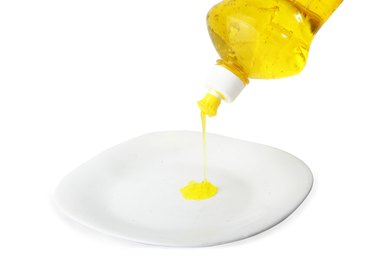
Spider mites, tiny web-spinning arachnids that colonize on the undersides of plants' leaves, suck the fluids out of the plants, including the chlorophyll, leaving them mottled or even killing them. Insecticides will eliminate the pests, but they may also kill beneficial insects, such as ladybug beetles, and they often leave a chemical residue that is toxic to pets and children. Insecticidal soaps work without that damage and risk, but they are often expensive. A simple solution is to make your own version using dish-washing soap.
What to Mix
Video of the Day
Use a mild dish-washing liquid that does not contain a degreaser. Don't choose automatic dish-washing detergent, as these are usually too harsh for tender plants. Make a 2-percent solution by mixing 2 teaspoons of liquid soap to 1 pint of distilled water. Hard water will reduce the efficacy of the mixture, so tap water is usually not the best option. For more sensitive plants, use a weaker solution.
Video of the Day
How to Apply
For a soap mixture to be effective against mites, you need to make sure that it covers the pests entirely. Fill a spray bottle with your mix and wet the leaves of the plant thoroughly, tops and undersides. To protect your plants, rinse the leaves after a couple of hours.
Why It Works
Insecticidal soaps, including your homemade version, control spider mites by washing away the waxy coating that protects them and then breaking down their cell membranes. This makes the treatment effective against soft-bodied pests without posing much harm to hard-bodied insects that help your plants thrive.
What to Consider
While insecticidal soaps are about 50 percent effective in ridding your plants of mites, it only works when the wet solution comes in contact with the mites. As a result, you may need to spray more than once.
Also, soaps may leave your plants vulnerable to phytotoxicity, also known as plant injury, which results in spotting and burning of leaf tips and edges. To prevent this, only spray well-watered, nonstressed plants. Don't spray new growth before it has hardened off, and don't spray if the temperatures are above 90 degrees. Test a small area of any leaves for its reaction before dousing the entire plant.