

How to Apply Minwax Gel Stain

Applying a stain such as Minwax Gel Stain can improve both the quality and appearance of your wood furniture. You can apply it so that it's as dark or light as you like and apply a conditioning treatment and coating so that the quality lasts.
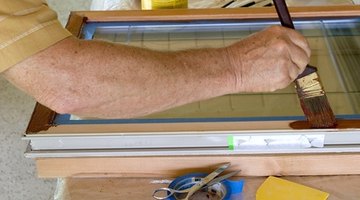
-
Start with clean, untreated wood that is free of grease, old coating or dirt.
-
Apply a pre-stain condition to your wood, especially if it's maple, pine, birch or alder. Use a medium-sized paint brush or sponge to rub the pre-stain conditioner onto the wood.
-
Allow the condition to penetrate for 5 to 15 minutes, then wipe off the excess with a cloth or sponge.
-
Stir the Minwax Gel Stain with a paint stick until its consistency is even and creamy.
-
Rub on a liberal amount of Minwax Gel Stain with a rag or brush until the wood is coated. Do this within 2 hours of the pre-stain conditioning treatment.
-
Allow it to set for 3 minutes, then wipe it off with a clean rag, wiping with the wood grain.
-
Allow the wood to dry for 8 to 10 hours.
-
Repeat the process if you want the stain to be darker.
-
Apply a protective clear finish 24 hours after the Minwax Gel Stain has dried.
References
Resources
Writer Bio
Tobias Starr has been writing professionally since 2010. Her specialties include fashion/beauty articles, literary analysis pieces and the occasional commentary on cultural issues. She holds a Bachelor of Arts in English with a minor in speech communication and a Master of Arts in secondary education, both from Morehead State University.
Photo Credits
- staining window frame image by Richard J Thompson from Fotolia.com
More Articles

