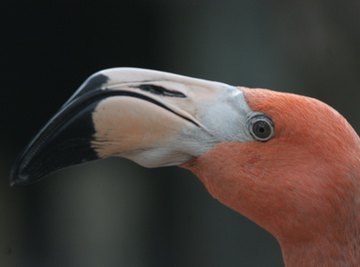

Flamingos are large birds that inhabit many different tropical and subtropical areas of the world. In the United States, the birds are rare, casual visitors to the coastal regions of the southeastern states. They are usually found in large colonies near a body of water. They wade through the water of their habitats, and often stand on only one of their long legs.
Geography
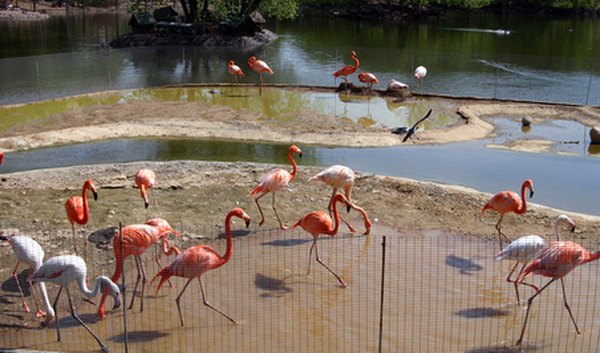
Greater flamingos are residents of the Galapagos Islands, the Yucatan, Bahamas and West Indies. They are the only species found in the United States, albeit rarely. Other species, such as the Chilean, James' and lesser flamingos are found in South America and Africa.
Habitat
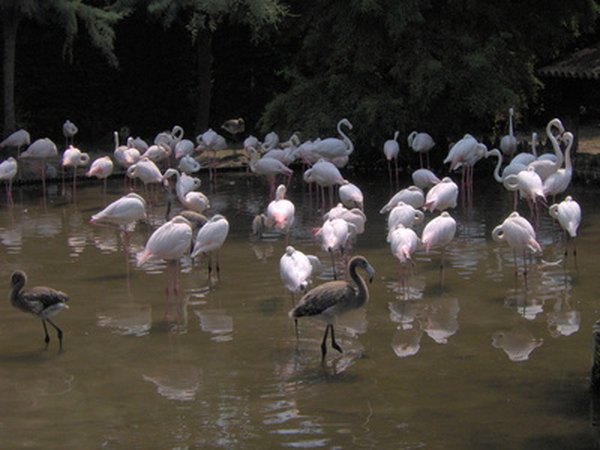
Flamingos of all species prefer shallow waters in which they can easily feed off of algae, small insects, mollusks, crustaceans and small fish. The greater flamingo is known to reside in mudflats and shallow lagoons. Other habitats include mangrove swamps, tidal flats and sand-rich islands. Flamingos typically prefer saline or alkaline bodies of water.
Habitat Features
Most of the bodies of water inhabited by Chilean and greater flamingos have low fish populations. This helps to ensure that the birds are not competing with fish for food. Most species also prefer water with low vegetation. Lesser flamingo are among the only species that can eat in and inhabit volcanic lakes with pH levels up to 10.5. They do, however, need to drink and rinse with fresh water, forcing them to sometimes leave their habitat to find it.
Migratory Habits
Flamingos may migrate depending on different occurrences within their habitats, such as climate changes or water levels. In Africa, the lesser flamingos often migrate to find new bodies of water due to their water source drying up, taking their food with it. Flamingo species that inhabit higher elevation lakes may also migrate in the winter months due to the water freezing.
Fun Facts
A flamingo's habitat provides the backdrop to showcase their interesting method of eating. The shallow water allows the flamingo to turn its head upside down and sweep its beak side to side to allow for food collection and filtering. Flamingos filter their food with their tongues, up to 20 mouthfuls per second. The flamingos' food also gives them their unusual color: the algae in the water that they consume provides the pink pigment in their feathers.
References
About the Author
With a professional background in gardening, landscapes, pests and natural ecosystems, Jasey Kelly has been sharing her knowledge through writing since 2009 and has served as an expert writer in these fields. Kelly's background also includes childcare, and animal rescue and care.
Photo Credits
flamingo image by Earl Robbins from Fotolia.com