If your horse is a performance athlete, you need to assess his energy needs and balance them with his feeding requirements. Plentiful high-quality forage, such as pasture grass or hay, is a necessary staple for most horses unless they have atypical feeding requirements. Equine athletes typically will need additional energy sources in addition to forage. While some horse owners think that high-protein foods give horses the most energy, that is not the case.
Fat
Fat provides the most energy in a concentrated form, so you can feed your horse less fat than other energy sources to get the energy benefit. He also will burn fat more efficiently than carbohydrates while getting twice the energy. As a “cool” energy source, horses generate less body heat when burning fat, so it’s great for hot weather work-outs. It also helps your horse maintain glucose levels suitable for endurance sports, such as cross-country jumping.
Common fat sources that horses like include corn and soybean oil. Introduce it to your horse’s system gradually, adding a few ounces a day. If your horse is currently on grain, substitute fat for 10 percent of his current grain intake. So, if he’s getting 10 pounds of grain, replace one pound of grain with one pound of fat, or approximately two cups of oil.
Corn
Corn offers your horse the most energy among grains. You can buy whole or cracked corn, but introduce it to your horse slowly and be sure it’s free from mold. Older horses or horses with dental problems may have a tough time chewing it; cracked or steamed rolled corn will make it easier for them. Add as much as your horse needs as long as his diet is at least 50 percent hay. If you mix corn with another grain, such as oats or barley, feed less of the corn.
Barley
Barley looks similar to oats, but it is lower in fiber and higher in energy -- although lower in energy than corn. The barley kernel is hard, so purchase rolled or steamed flaked barley to feed your horse. Barley may be a solution if your horse has a tough time chewing corn and also is suitable to add to other grains to complete your horse's high-energy diet.
Oats
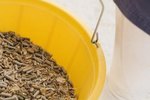
Oats are one of the most popular horse foods. They are high in fiber and easy for horses to digest. If your horse’s work program requires more energy than hay but not enough for fat, corn or barley, just adding oats may be enough. If it’s not, oats are good to mix with corn or barley for an additional energy source, or just add fat. Feed them whole, or purchase them crimped, rolled or crushed.
Commercial Feed Products
Simplify your horse's feeding routine by adding a commercial grain product, selecting the desired fat, starch and fiber content by reading the label. Any mix containing molasses is a “sweet feed” and will have an energy content second only to corn. The advantage of a commercially prepared product is that your horse’s required daily intake of vitamins and minerals are added.
References
- Equisearch: Four Reasons for Feeding Fat to Your Horses
- University of Kentucky, College of Agriculture, Cooperative Extension Service: Nutrition of the Performance Horse
- Kentucky Equine Research: Carbohydrates in Equine Nutrition
- Extension: Nutrients and Common Feed Sources for Horses
- Rutgers Equine Science Center: Nutrition – Grain and Feed Mixes
- Extension: Grains for Horses and Their Characteristics
Resources
Photo Credits
-
Digital Vision./Digital Vision/Getty Images
Writer Bio
Based in Central Texas, Karen S. Johnson is a marketing professional with more than 30 years' experience and specializes in business and equestrian topics. Her articles have appeared in several trade and business publications such as the Houston Chronicle. Johnson also co-authored a series of communications publications for the U.S. Agency for International Development. She holds a Bachelor of Science in speech from UT-Austin.