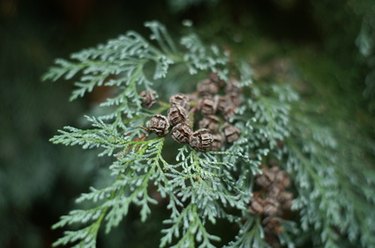
The Leyland cypress has long been popular for hedging and decoration. It is a fast-growing evergreen tree that is incredibly hardy. Although demanding of light, it can endure high levels of pollution. Despite its popularity, all parts of the Leyland cypress are potentially toxic.
Sap
Video of the Day
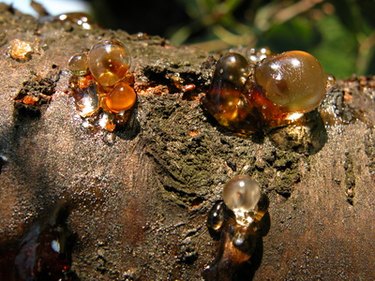
In some individuals, the Leyland cypress sap can cause skin irritation. This reaction is not life threatening and can be easily treated with over-the-counter ointments.
Video of the Day
Consumption
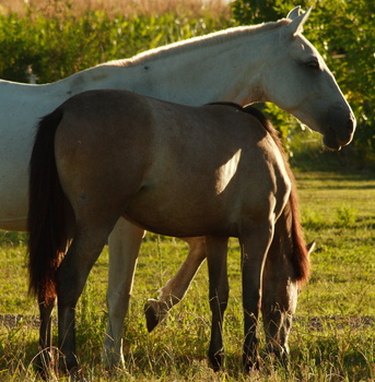
Consumption of any part of the plant is dangerous. Cases of human ingestion of parts of the tree are rare. This poses a greater threat to animals, specifically horses and dogs, who have a tendency to try to eat the leaves. If an animals eats any part of the Leyland cypress, it should be immediately taken to the veterinarian. Symptoms include diarrhea, loss of appetite and weakness.
History
The Leyland cypress is a hybrid created from the cross-pollination of the Monterey cypress and the Alaskan cypress. These trees would never have naturally crossed, as their ranges are separated by 400 miles. This hybrid is naturally sterile. Over 40 different forms of the Leyland cypress have been bred, each with slightly different levels of toxicity to animals and humans.
Leyland Cypress Benefits
For many people, exposure to evergreen trees can result in adverse reactions such as congestion, coughing, sneezing and irritation. The Leyland cypress actually seems to cause the least irritation among the evergreen family. It emits very low quantities of oleoresins, and therefore produces very little smell. Also, as a true hybrid, it does not produce any pollen.
Precautions
The Leyland cypress is a beautiful, hardy evergreen well suited for use in hedging. It should not, however, be placed in abundance around grazing animals. Beyond its toxicity to animals, the Leyland cypress can present difficulties in its persistent growth. It can grow up to 3 or 4 feet per year even in poor soil conditions. This combined with its shallow roots makes the Leyland cypress susceptible to collapsing as soil erodes.