Visage/Stockbyte/Getty Images
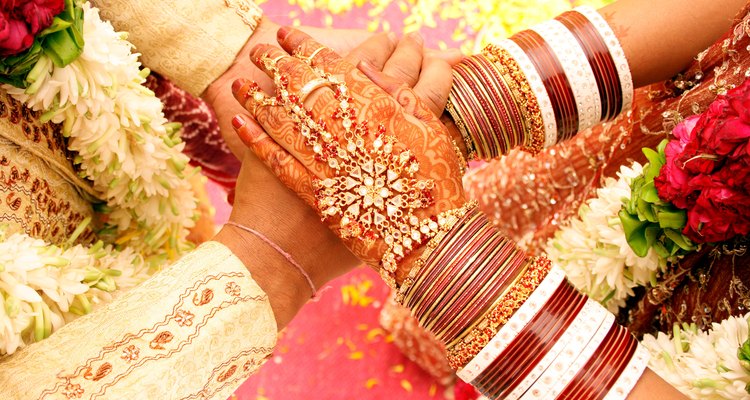
Attending a traditional Hindu, Sikh or Muslim wedding for the first time can be intimidating. Familiarizing yourself with the cultural traditions and customs will make you feel at ease. Learn a few easy tips in order to enjoy a traditional Indian wedding with confidence, grace and composure. Don’t be too concerned with offending others, as everyone will notice your efforts and understand that the traditions may be foreign to you.
Attire
Daniel Berehulak/Getty Images News/Getty Images
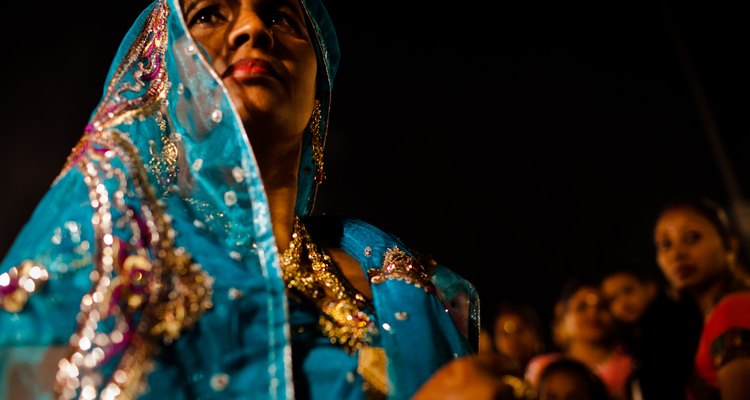
If you’ll be attending the religious wedding ceremony, it’s best to wear a sari. Saris consists of three pieces: the underskirt, the sari and the sari blouse. Saris are fitted, and are somewhat tight and tailored. Consult an Indian tailor to ensure that each piece of the sari fits correctly. If you decide to not wear a sari, it’s necessary to dress modestly. Plunging necklines, short skirts and bare shoulders are not appropriate. Very tight and short clothing are not practical options, as you may need to sit cross-legged on the floor. Appropriate clothing at the reception differs from ceremony attire in that guests don’t need to be dressed as modestly. Bright colors and fancy jewelry is acceptable.
Colors
Ritam Banerjee/Getty Images News/Getty Images
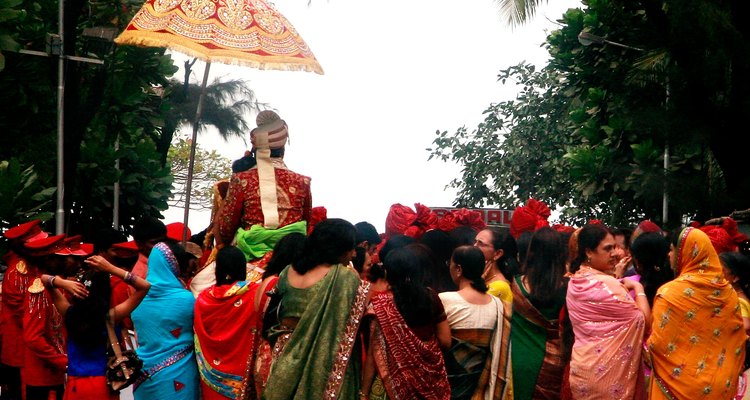
White and black are not worn at Indian weddings. White is worn at Indian funerals and black indicates mourning. As weddings are ceremonious and joyful events, bright colors are often worn. Avoid wearing bright red, as this color is worn by the bride. Just as guests at American weddings avoid white in order to not outshine the bride, red is avoided at Indian weddings for the same reason. Dark red and maroon are acceptable.
Head Coverings
Paula Bronstein/Getty Images News/Getty Images
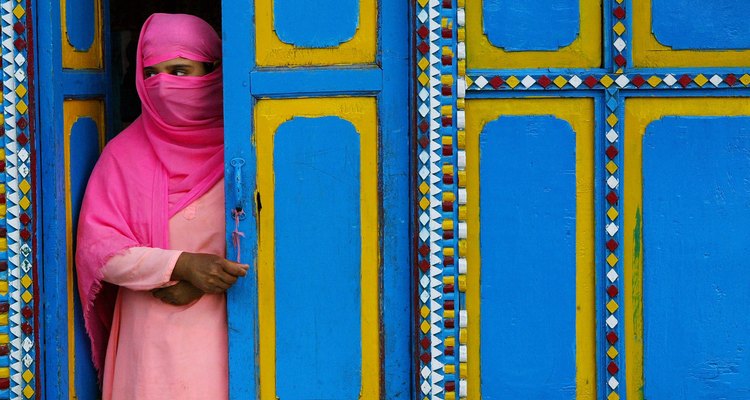
Certain Indian cultures, such as Sikh, require your head to be covered when in the temple. A scarf or pashmina can be used to cover both your head and bare shoulders and arms. Men can cover their heads by using either the head covering provided by the temple or a white handkerchief.
Shoes
Daniel Berehulak/Getty Images News/Getty Images
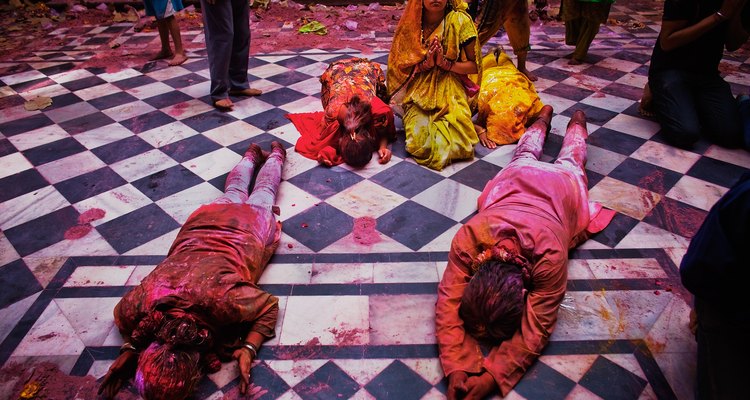
Some religious Indian temples require your shoes to be removed before entering. Certain temples may require you to be barefoot, but often it’s acceptable to wear socks or stockings.
Attire for Men
Daniel Berehulak/Getty Images News/Getty Images
While it’s appropriate for men to wear a traditional suit, they can also opt to wear a Kurta suit, which consists of Indian trousers and a matching shirt. A scarf is also worn with a Kurta suit.
Related Articles

The Proper Attire for a Girl's First ...

How to Dress for a Bris Ceremony

What Can You Wear for a Hindu ...
Dress Etiquette for Jewish Funerals

Semiformal Clothing Etiquette

What Do the English Wear to an Amish ...
What Do You Wear to a Red-Tie Dinner?
Clothing Etiquette for a Courthouse ...

What to Wear to Visitation at a Funeral ...

What to Wear to A Muslim Wedding

What Should an Aunt of the Bride Wear?

Proper Attire for a Tea Ceremony

Proper Mother-Of-The-Bride Apparel for ...

What Is the Traditional Dress Color for ...

What Happens at Hindu Funeral Services ...
Do Muslims Wear White at a Funeral?

The Proper Dress for Catholic Weddings
Gifts for an Indian Engagement

What to Wear to a Granddaughter's ...

Traditional Chilean Wedding Attire
Writer Bio
As a full-time writer in New York's Hudson Valley, Lindsay Pietroluongo's nightlife column and photos have appeared regularly in the "Poughkeepsie Journal" since 2007. Additional publications include "Chronogram," the "New Paltz Sojourn," "About Town" newspaper and "Outsider" magazine. Pietroluongo graduated from Marist College with a B.A. in English.
Photo Credits
Visage/Stockbyte/Getty Images