

Pearl Diving Information

Pearl Diving Information thumbnail
Pearl divers can descend more than 100 feet in their underwater search for oysters.

In the days before pearls became widely available, these natural gems had great value as a precious stone because of the difficulties involved in obtaining them. Pearl divers, some of whom still practice their ancient trade today, use highly developed breath control to grab oysters from ocean depths in the hopes of finding a pearl. Pearl diving has existed for thousands of years, but modern mass-production of cultured pearls has rendered it virtually obsolete. Does this Spark an idea?

  1. Process

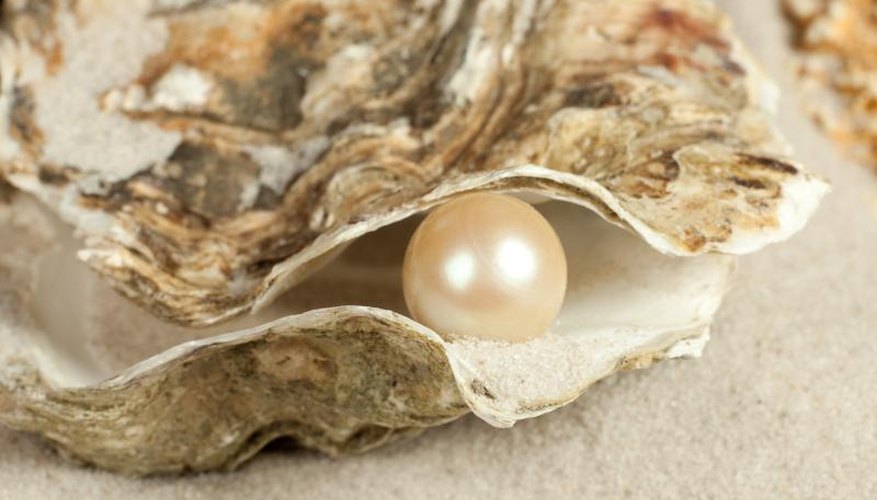
    • Traditional pearl divers use free-diving techniques, usually without oxygen tanks or other scuba equipment, according to All About Gemstones. They fill their lungs with air and dive to a river bottom or ocean floor, gathering up as many oysters as their breath control will allow before retuning to the surface. Because relatively few oysters actually produce pearls naturally, the divers would have to collect almost a ton of oysters just to come away with three or four perfect specimens of these valuable gems.

    Dangers

    • Pearl divers descend to depths of 100 feet or more, making them vulnerable to a condition called Taravana syndrome. This form of gradual hyperventilation, as described in Skin Diver Online, occurs over the course of several dives from repeated breath holding. Early experiments with diving suits for pearl divers in the 1890s created additional dangers. According to Kari Pearls, heavy diving helmets sometimes flipped the divers upside down, suffocating them as the air rushed out of their diving suits.

    Locations

    • The most famous pearl diving regions include the Persian Gulf, China, Japan, the South Sea and Tahiti. Persian divers maintained their ancient techniques until the discovery of oil in the Gulf in the 1930s put an end to pearl diving there, rejecting diving suits and other technological innovations as a matter of pride. Australia began using aboriginal pearl divers in the 1870s to establish its own reputation as a pearl producer.

    History

    • Pearl diving’s history may extend all the way back to 3000 B.C., when the ancient Sumerians began supplying pearls and mother-of-pearl to the Egyptians. According to All About Gemstones, Persian divers would jump from boats while carrying heavy stones to speed their descent, wearing a primitive form of goggles and using clips to squeeze their nostrils shut. The Japanese tradition of "ama," or female pearl divers, began 2,000 years ago, based on the belief that women had larger lung capacities than men and could better withstand the cold underwater temperatures.

    Decline

    • The rise of the cultured pearl spelled the beginning of the end for the pearl diving trade. In 1893, Kokichi Mikimoto found success in his attempts to produce cultured pearls, according to Pearl-Guide. This technology meant that divers no longer had to go through the slow, inefficient process of gathering oysters by hand. In 2006, the "Guardian" published a story about the last few ama still active in Japan, noting that the population of female pearl divers there had declined from 6,000 in the 1940s to a mere 70.

Related Searches:

References

Resources

  • Photo Credit Pearl Strands image by Rainstorm Designs from Fotolia.com

Comments

You May Also Like

  • Facts on Pearl Diving

    The pearl, a precious gem formed among the soft tissue inside an oyster's shell, has been desired and sought after throughout human...

  • Pearl Diving History

    Diving is the oldest method when it comes to harvesting pearls. Before pearl farms, which allows humans to manipulate the formation process,...

  • How to Dive for Pearls in Kuwait

    Not even the finest pearl jewelry purchased at a store can compare to the joy and experience of diving for pearls in...

  • Pearl Diving in Australia

    Pearl diving in Australia has a rich history, dating back to simple aborigine diving and harvesting practices. Today, pearl divers use sophisticated...

  • The Average Salary for Pearl Diving

    Professional divers use their skills and talents in a variety of jobs. Pearl divers specialize in plucking pearls from pearl-bearing oysters. Their...

  • The History of Pearl Diving in Mexico

    Two types of oysters that contain pearls are indigenous to Mexico--the Pteria sterna or “Rainbow-Lipped Pearl Oyster” and the Pinctada mazatlanica or...

  • What Countries Harvest Pearls?

    What Countries Harvest Pearls?. Pearls have been highly desirable decorative items for centuries and still command a high price today. Pearl production...

  • Pearl Diving in UAE

    The United Arab Emirates (UAE) is comprised of seven emirates (states or jurisdictions): Abu Dhabi, Dubai, Sharjah, Ajman, Umm Al Qawain, Ras...

  • Pearl Diving in the Gulf

    The Gulf (also known as the "Arabian Gulf" or "Persian Gulf") area has a long history of harvesting natural pearls. The tradition...

  • Why Do Scuba Divers Wear a Weighted Belt?

    Scuba diving is a fun sport that has gained considerable popularity since the late 1970's. This is in large part due to...

  • What Are the Dangers of Diving for Pearls?

    What Are the Dangers of Diving for Pearls?. Prior to the early 20th century, pearls were obtained by free-divers who manually swam...

  • Pearl Diving in Mexico

    Pearl harvesting and farming has become big business in nations like Japan, Australia, Tahiti, the Philippines and Indonesia. Once upon a time,...

  • Pearl Diving in the Baja

    Pearl diving in Baja California, the western-most area of Mexico, has a long and storied history. The waters off the Mexican coast...

  • How to Clean a Pearl From a Harvested Oyster

    If you're fortunate enough to have found an oyster with a pearl inside, you'll need a way to clean up the harvested...

  • LA Paz Pearl Diving

    Baja California's La Paz Bay has a long history as a prime spot for pearl diving, with expeditions in the area dating...

  • The History of Biwa Pearls

    Biwa pearls are small, unusually shaped cultured pearls from the freshwater mussels of Lake Biwa, Japan. First produced in the 1930s, their...

Related Ads

Featured