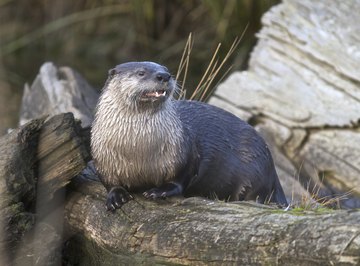

River otters (Lontra canadensis) are amphibious mammals known for their swimming ability. River otters may live along rivers, lakes, ponds, sloughs, bays, estuaries or even along a seacoast. River otters consume both aquatic animal and plant life, with some exceptions. River otters play the role of apex predators, so the river otter food web represents great importance to many watersheds.
TL;DR (Too Long; Didn't Read)
River otters are apex predators in various watershed environments. They use their long, agile bodies to swim and hunt for many prey species such as fish, amphibians, crustaceans and other organisms. The river otter food web maintains great biodiversity.
River Otter Facts
River otters belong to the weasel family. River otters are smaller than their cousins, the sea otters. River otters possess long, muscular bodies suited to their life on both land and in water. Their toes are webbed, they have short legs and they boast a tapered tail ranging up to 15 inches long. This tail serves to propel the otters through water. Their body shape aids in helping them make sudden turns to catch fish and other prey. Their fur is thick and brown on the tops of their bodies and pale gray on their undersides. Male otters can grow to almost 4 feet long and can weigh up to 28 pounds. Females typically are smaller.
Generally solitary, river otters do engage in play when they meet. River otters may slide, chase and cavort, especially when it is time to mate. River otters reach sexual maturity at two years. A female river otter exhibits delayed implantation of her fertilized egg, so that it will not implant on her uterus for several months. These pregnant females seek shelter in dens lined with vegetation. Typically such dens are makeshift, from log piles or similar natural sources, but often they will use former beaver or nutria dens as well. The female births a litter of two to four pups in the spring. These pups stay with their mother until autumn. River otters can live up to about 10 years in the wild.
River otters do not store food or hibernate in winter. The fat layer underneath their skin protects them from cold temperatures. River otters use their fine sense of smell on land; below the water, their eyesight is far keener. The long whiskers around their noses, called vibrissae, aid in food searches in murkier waters. River otters possess special valves to seal their ears and noses while they swim underwater. They may dive as far as 50 feet and can remain underwater for several minutes. Underwater, the river otter swims as fast as 7 miles per hour with considerable grace and agility, necessary for catching prey.
River otters can be found throughout much of the United States, Canada and Mexico around the Rio Grande and Colorado River deltas.
River Otter Food Web
The river otter food web plays a crucial role in the environments the river otter calls home. River otters are apex predators in their food web. The river otter food chain consists mostly of fish. River otters prefer larger fish due to ease of capture; larger prey gives river otters more energy as well. They enjoy carp, sunfish, minnows, suckers, sculpin and salmonids such as:
- trout
- salmon
River otters also prefer slower-moving fish to game fish. The river otter food chain also consists of mussels, bivalves, snails, crabs, crayfish, turtles, frogs, large beetles, worms, injured waterfowl or chicks, bird eggs, fish eggs, snakes and snake eggs. Small mammals in the river otter food chain include mice, immature beavers and muskrats. The river otter food chain also includes aquatic plants and roots. When winter arrives, river otters will hunt under ice for food. River otters chew their food well, leaving very little waste. Their high metabolisms result in rapid food digestion. For this reason, the river otter must consume food often.
River Otter Predators
Few river otter predators exist in nature. River otters are strong, unmatched swimmers in their environments, and on land they can run at speeds up to 15 miles per hour. When cornered on land, they will fight and scratch. Young river otters prove to be the most susceptible to predators. The few natural river otter predators include bears, coyotes, bobcats, cougars and dogs.
The ultimate river otter predators are humans. Once abundant throughout the watersheds of the United States and Canada, river otter numbers suffered greatly due to hunting by humans. Their thick fur made them highly prized for their pelts. Habitat loss and water pollution also took detrimental tolls on river otters. Today, reintroduction efforts and stricter environmental regulation aid the increasing numbers of river otters. Without river otters, entire watershed food webs would suffer. River otters help thin invasive species and protect biodiversity. Protecting these fascinating, playful animals aids many species.
References
- Pennsylvania Game Commission: River Otter Wildlife Note
- The National Wildlife Foundation: North American River Otter
- The Nature Conservancy: Journey With Nature: River Otters
- Canadian Journal of Zoology: Seasonal Diet of the Northern River Otter (Lontra Canadensis): What Drives Prey Selection?
- IUCN Otter Specialist Group Bulletin: Prey Preference of the North American River Otter (Lontra Canadensis) Evaluated Based on Optimal Foraging Theory
About the Author
J. Dianne Dotson is a science writer with a degree in zoology/ecology and evolutionary biology. She spent nine years working in laboratory and clinical research. A lifelong writer, Dianne is also a content manager and science fiction and fantasy novelist. Dianne features science as well as writing topics on her website, jdiannedotson.com.
Photo Credits
Len Jellicoe/iStock/Getty Images