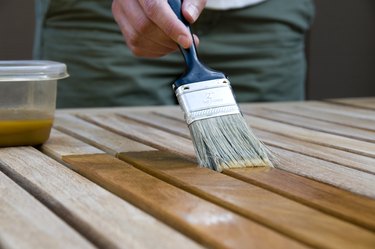
Wood stain, varnish, and lacquer are all liquids used to enhance wood surfaces, but beyond that, they have quite a few differences. Stain brings out the appearance of the wood grain and usually adds a tint to the wood, hence the term "stain," while the others don't necessarily add any color. Both varnish and lacquer add a hard, protective finish, but their composition and their properties are quite different.
Key Points About Wood Stain
Video of the Day
Wood stains make the patterns in the wood grain stand out more, showing off the wood's natural beauty. They're also used to add just about any tint to wood or to make one type of light wood look more like another that has a bit more color to it. Wood stains contain a pigment mixed with a carrier, such as water, linseed oil, or even a gel. Water-based stains dry fast and only require water for cleanup, but they don't penetrate as deeply as oil- or gel-based stains. They're also more likely to leave brush strokes or rag marks.
Video of the Day
Oil-based stains cover well since they take longer to dry, but they also require mineral spirits for cleanup. Oil types are applied with a brush or a rag. Gel-based stains are the thickest of the three. Apply gel stain with a rag, rubbing it in to achieve the desired tint. Mineral spirits are also the best way to clean up messes after working with a gel stain.
Stain generally requires a protective sealer, such as varnish or lacquer, if you want to protect the wood. Some hybrid products have stains or tints mixed into what would otherwise be a protective clear sealer.
Key Points About Varnish
Varnish, a type of protective, is a usually a clear coating applied over stained or untreated wood. It contains a blend of resins, a thinning agent, and a drying oil. Varnish offers a durable, shiny finish that also provides a bit of protection from ultraviolet rays. This helps ensure that the wood doesn't turn gray or fade, as it easily could if left outdoors with no sealer on it. A coating of varnish also protects wood from everyday wear and tear, such as scratches and dents.
Tip
The word varnish is used as a broad term, covering just about any clear, protective coating. Lacquer, shellac, and polyurethane or the act of applying any of these is often referred to as varnish.
Key Points About Lacquer
Like varnish, lacquer provides a protective clear shell over bare or previously stained wood. Lacquer is a mixture of shellac in alcohol, sometimes with other additives, and it goes on thinner than varnish. It's quite glossy but comes in a variety of sheen levels, much like paint. Varnish, on the other hand, usually ranges from a semigloss to a satin finish.
Lacquer dries fast and is usually applied by spray. It emits toxic fumes as it dries and requires lacquer thinner for cleanup. A lacquer coating is quite thin, but it's durable, resists water damage, and generally won't discolor over time. Professional furniture makers sometimes use lacquer on their products.