

How to Identify Ceramic Tile Markings

When doing projects in your home with ceramic tiles, it's important to be able to identify the tiles. Ceramic tiles have their own unique markings. Once you're able to identify them, you can use them in your kitchen, bathroom, walls, on your balcony and even other areas to spruce things up a bit.
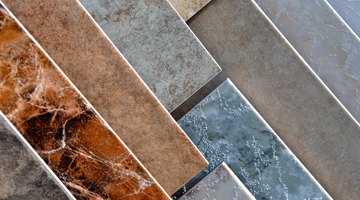
Manufacturers produce ceramic tiles in batches so that the colors, patterns and markings are unique. At the back of each tile is a lot number that indicates the batch. When shipped to stores, ceramic tiles are also contained in boxes that have the lot number and the manufacturer's name.
It's important to know the tile's lot number so that installers won't lay down pieces in different colors, patterns and tones. Although these labels are easy to read, it's quite a challenge to identify what the tile markings mean, much less find a tile locator, especially if you're working on old tiles.
Checking for Ceramic Tile Manufacturers in the USA
Unless you have the original box or a tile on hand, you can check the tile markings by removing a tile from the wall or floor. Simply loosen a tile with a putty knife and wipe off the glue and drywall paper. There should be letters and numbers at the center of the back of the tile that indicates which one of the ceramic tile manufacturers in the USA made the product.
The most popular American ceramic tile company is Dal-Tile Corporation, as it is in over 250 retail outlets. Its tile markings have the words "Dal-Tile" imprinted on the back. If you're unsure of the company's name, you can ask your local hardware or home store for the details.
Understanding the Tile Markings
You might also notice some numbers in the tile markings. This numerical system represents the ceramic tile grading based on the standards that the American National Standard and the American Society for Testing and Materials established.
Grade 1 tiles (standard grade) are of the highest quality and it's at least 3/4-inch thick. Grade 2 tiles (secondary grade) are about 1/2-inch thick, while Grade 3 tiles (cull grade) are 1/4-inch thick. Thin tiles must only be used for walls and not floors.
Ceramic also have scratch resistance and wear/tear rating based on the standards from the Porcelain Enamel Institute (PEI). The PEI is indicated in Roman numerals. Type I and Type II ratings are best for walls only. Type III is good for walls and floors in residential areas. Type IV is most recommended for commercial use in locations with high floor traffic.
Ceramic Tiles vs. Porcelain Tiles
Porcelain tiles are more expensive than ceramic tiles but its quality is also unmatched. Because it’s harder and highly resistant to wear and tear, it's ideal for indoor and outdoor use. Ceramic tiles have the advantage of being softer than porcelain tiles, so it's easier to cut and work with during installation.
Consider using porcelain tiles in areas with higher moisture, such as the bathroom, kitchen or balcony. If you have lots of kids or pets in the house, porcelain tiles on the floor will better resist scratches and breaks. However, you may use ceramic tiles on the walls of a busy household.
References
Writer Bio
Heather is a freelance writer from New York. She loves forming words to make rockstar content. While away from writing, she loves anything to do with personal development, being outside, and spending quality time with family.
More Articles

