Dogs can get an infected paw pad many ways, including from a cut because they stepped on something or from excessive itching or chewing their paw. The latter can be a symptom of a larger issue, from anxiety to allergies, and solving the root cause will be important, not just curing the resulting infection. Before you treat your dog for anything else, you'll need to treat the dog pad infection with antiseptic and possibly veterinary-prescribed antibiotics.
Video of the Day
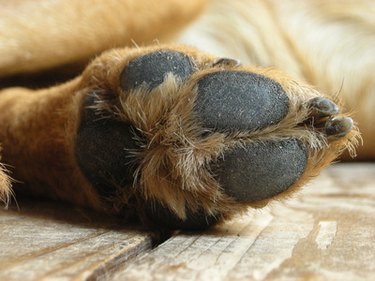
Infected paw pad on a dog
Signs of pododermatitis, or inflamed feet, include visible redness and swelling of the paw pads or toes and the skin between the toes. Skin between the toes, or toe folds, can even be red and expelling a cloudy discharge. Also look at the toenails and check the color, as brown discoloration can indicate infection. Any or all of these symptoms signify that your dog has an infected paw pad.
Video of the Day
There are several ways a dog might get a paw pad infection, and excessive licking or chewing is one of them. Licking increases the amount of natural fugal and bacterial organisms on the paws. In addition to treating the infection, it's important to determine what caused it and why the dog was excessively chewing and feeling uncomfortable.
In addition to allergies that induce excessive licking, other causes of an infected paw pad are long, ingrown, or torn nails. Note that if a torn nail is bleeding, it might require veterinary attention. Other causes of infection include extremely dry paw pads and burns, cuts, or blisters from walking on hot or abrasive surfaces, especially if your dog is a runner.
Prevention of dog pad infection
Prevention of dog pad infections depends on what is creating them. Chronic cases of pododermatitis require identifying and treating the root cause. If it's an allergic response resulting in excessive itching or chewing, the allergy needs to be addressed with veterinary assistance, or the problem will continue. If the cause is less problematic, infections are easier to prevent.
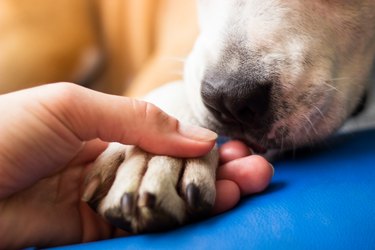
For instance, regular dog pedicures or nail trims might be the best prevention. Nails should not touch the ground when a dog walks. Scheduling regular visits with a professional groomer is often the least stressful way to get the job done quickly and correctly.
Caring for dog paws
If you live in a dry or cold climate, applying dog paw balm to the bottom of the paws can help. Some balms have the added benefit of providing protection from road salt, which can also be a source of cuts and infection. Wiping the dog's paws regularly will help to remove infection-causing grit, salt, chemicals, and other irritants. Consider the climate or temperature before you head out for a walk. Extreme cold contributes to dry pads, and extreme heat makes pavements burning hot, sometimes hot enough to blister paw pads.
Treatment of an infected paw pad
If you notice a small cut or blister on your dog's paw pad, clean it with water and disinfectant immediately. This is likely all you'll need to do to prevent or cure a surface infection. Other topical treatments include foot soaks, shampoo washes, or anti-bacterial wipes.
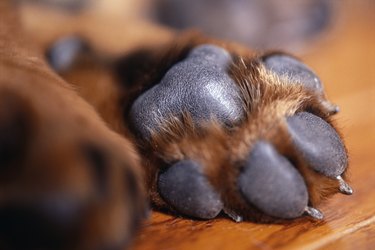
However, if the cut is bigger or doesn't heal in a couple of days, you might need to reclean it, wrap it, and put a sock or boot on the paw. Antibiotics from the vet might be necessary, and in severe cases, corticosteroids, such as prednisone, might be prescribed.