How Is Card Stock Measured?

How Is Card Stock Measured? thumbnail
Card stock's weight and size are determined by the size of the original parent stock sheet.

Card stock is different from paper primarily because of its weight and stiffness. Card stock is generally used for printed materials that need to be more durable and resistant to bending, creasing and constant handling. Business cards, report covers, greeting cards and door hangers are some examples of items printed on card stock. Measuring card stock is similar to measuring regular paper, with a few noticeable exceptions.

  1. Size

    • Card stock is measured both as the parent size for the stock and the cut size. Parent stock consists of the large sheets cut at the paper mill directly from the paper-making machine. The same machines making paper also produce card stock. Adjusting the space between various rollers and increasing the volume of wood pulp to the paper-making process produces card stock of varying thicknesses.

      Parent stock can be as large as 6 feet by 8 feet (for producing large outdoor signboards) or as small as 8.5 inches by 11 inches. Mills rarely cut card stock smaller than the latter, except for special orders.

    Weight

    • All card stock is measured by the weight of 1,000 sheets of the parent stock. Eighty-pound offset card stock means 1,000 sheets of parent stock (measuring 38 inches by 25 inches) weigh 80 pounds. No matter how the card stock is cut and wrapped later, the stock weight is reflective of the original parent stock. One thing to remember is that weight does not always mean one stock is heavier and thicker than another. Eighty-pound offset comes from sheets that measure 38 by 25 inches, but 65 pound offset comes from parent stock sheets that measure 28 by 22 inches. So 1,000 sheets of the much smaller parent stock weigh 65 pounds. Thus, each individual sheet is thicker and heavier than the 80-pound card stock.

    Thickness

    • Card stock thickness is measured in points. A point is a printer's measurement of 1/72 of an inch. Card stock can be 6, 8, 10 or 12 point. Some very heavy cardboard stock is as much as 16-point board. Card stock points are always even numbers, as this is the caliper setting used for the rollers on the paper machine manufacturing the card stock.

    Finish

    • Card stock is also measured according to its finish. It can be vellum, coated (glossy slick), patina (a flat-coated finish) or textured. Some textures simulate wood grain, stone and other exotic feels for the card stock surface.

    Color

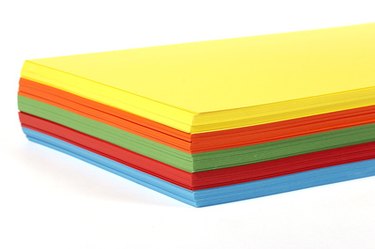
    • Card stock comes in pastels, classics, fluorescents and various shades of white. Classic colors are the ivory and beige tints associated with older felt and handmade papers. Fluorescents are bright, vibrant, modern colors. White can vary from bright whites (no color) to off whites ranging from very light beige to very light gray tints. Pastels can best be described as the colors associated with blackboard chalk: light, rather creamy and subdued.

Related Searches:

References

  • Photo Credit Business Card image by Biro from Fotolia.com

Comments

You May Also Like

  • Card Stock Vs. Cover Stock

    The terms "card stock" and "cover stock" are often used interchangeably, and the differences between them are subtle and may have more...

  • How to Frame Card Stock

    Card stock is a sturdy craft paper that you can use as a photo frame mat or backdrop for a framed photo...

  • How to Measure the Thickness of Cardstock

    Whether you enjoy scrapbooking, card making or another type of crafting, card stock paper is a common material for many different craft...

  • How Is Card Stock Rated?

    Card stock, also called cover stock, is paper that is heavier and thicker than regular copy paper or bond paper. As more...

  • What Does the Vehicle Identification Number Mean on a Car?

    A Vehicle Identification Number, or VIN, is not a random sequence of 16 digits. By examining the parts of a VIN, important...

  • Card Stock Thickness Guide

    Card stock, also known as cover stock, is paper that is thicker, heavier and sturdier than usual writing or copy paper. It...

  • What Weight Is Cardstock?

    Card stock is a heavy type of paper. It is sometimes referred to as "cover paper." Card stock comes in a wide...

  • How to Score Cardstock

    Cardstock adds a deluxe touch to handmade greeting cards, school crafts, party invitations and folded brochures. Give the projects a professional look...

  • How to Measure Stock Pull

    Seasoned hunters recognize the importance of technique, but may not realize the value of a properly-fitted shotgun. The stock, also called the...

  • How to Measure SD Card Speed

    SD cards are used for digital cameras and video camcorders to save pictures and other video files. If you are using an...

  • How to Make Your Own Paper M-16

    The M-16 assault rifle is an iconic weapon that has been in use for decades by various military forces. According to Global...

  • How to Calculate Sheets of Paper Per Box

    Using simple math, you can estimate approximately how many sheets of paper are in a box. This is done by utilizing a...

  • How to Measure Carat Weight of a Diamond

    Carat weight is simply the gross physical weight of a gemstone, with one carat equaling 200 milligrams, or approximately 1/142 of an...

  • How to Tell the Thickness of Cardstock

    Cardstock is a thick paper used primarily for crafts and business. When looking for the exact thickness of cardstock, you'll find that...

  • What Is Business Card Stock?

    Business card stock is the paper that is used to make business cards. There are many varieties of business card stock to...

  • How to Measure the SD Card Writing Speed

    Testing your SD card writing speed is important if you have multiple SD cards and only want to use the fastest ones....

  • What Is Card Stock Paper?

    Also referred to as cover stock or pasteboard, card stock is thicker than typical writing and printing paper. Available in a large...

  • How to Measure Stock Returns

    Investors measure stock returns in order to judge the quality of their investments in both an absolute sense and to compare other...

  • How to Find Jersey Cards in Packs

    Although “pack searching” is not illegal, it is considered unethical by many people who collect trading cards, especially sports cards. It is,...

Related Ads

Featured