Abalone or pāua are common names for the large marine gastropod mollusk species of the genus Haliotis. The genus Haliotis contains over a hundred species located around the world.
These sea snails cling to rocks along the seashore with their large foot covered by a hard shell for protection.
Abalone Biology
Abalone have separate sexes and are broadcast spawners, meaning that sperm and eggs released to fertilize in the ocean. Embryos swim for up to 14 days before settling on the ocean floor. Chemical cues from coralline algae, their first food, trigger the juveniles to settle on the benthos, which is the layer of life forms that live on the seabed.
As abalone grow, they eat larger types of algae and seaweed. Abalone live by clinging to rocks in intertidal oceanic zones.
Diversity of Abalone Shell Colors
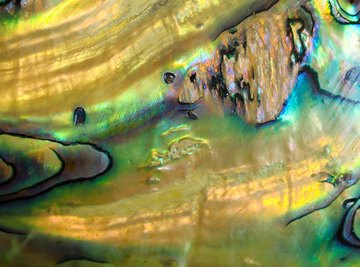
Base abalone shell colors vary and include a mixture of whites, pinks, purples, blues, greens, yellows and browns. Colors of the outer shell layers vary depending on the type of algae the abalone feed on. Abalone, along with oyster shells and some mussels, produce a substance called nacre that gives them their iridescence.
Nacre is a durable substance made from calcium carbonate. Nacre is also known as mother of pearl. When light shines on the thick nacre shell layer, the reflected light on the inner layer interferes with the reflections of light on the outer layer, causing the iridescent effect.
Diversity of Abalone Sizes
As abalone grow, they add new layers to their shell, increasing their shell's size and thickness. Different species of Haliotis grow to different sizes.
The largest abalone species is Haliotis rufescens, which can reach a shell diameter of up to 12.3 inches (31 cm) while Haliotis parva reaches a mere 1.7 inches (45 mm). Paua can reach a maximum size of 8 inches (20 cm).
Types of Abalone Shells
Abalone have a bowl-like shape with a series of holes along the outside used for respiration, sanitation and breeding. Shell shapes vary between species and the environment they grow in.
Some abalone have a corrugated shell margin while others are smooth. Haliotis walallensis has a flat shell compared to other abalone species. Haliotis kamtschatkana has a relatively thin shell compared to most abalone species.
Is There a Difference Between Abalone and Pāua?
Yes and no.
Pāua and abalone are both common names for species of Haliotis. Abalone is a more generalized American name for all Haliotis species. Pāua is the common name for the New Zealand species Haliotis iris.
Other common names for Haliotis species include ormer in the UK, perlemoen in South Africa and muttonfish in Australia.
Why Is Pāua Abalone Special?
Haliotis iris, or pāua, is a species of abalone exclusively found in New Zealand. They are prized for their bright turquoise shells with an iridescent rainbow sheen. The white outer layer of the pāua shell is sanded off, and the turquoise is polished to make stunning jewelry unique to New Zealand.
The indigenous Māori people traditionally eat pāua; the jet-black flesh has a unique shellfish flavor and rubbery texture that make them a popular export for Asian markets in the New Zealand aquaculture industry.
What Is a Pāua Stone?
As you can imagine, a pāua stone is not a real stone but the term used for pāua shells in jewelry. Pāua pearls are formed similarly to oyster pearls except that pāua pearls have a flat back. Unlike oyster pearls, pāua pearls do not typically form naturally.
Farm workers need to artificially inseminate a grain of sand for the pāua to grow the shell around to form the pearl. Pāua are hemophiliacs, making this process very delicate. If a pāua is damaged during insemination or improper harvesting, it will die.
References
- New Zealand Underwater Life: Paua
- Two Oceans Aquarium: Everthing You Need to Know About Abalone
- Animal Diversity: Haliotis Rufescens
- Animal Diversity: Haliotis
- BBC: Why Abalone Is New Zealand's Catch of the Day
- New Zealand Geographic: Passionate About Paua
- The Paua Industry Council: About Paua
- Blue Pearl Farms: The Blue Pearl Story
- Wild Blue: Paua
- Causes of Color: Why Are Pearls and Seashells Iridescent?
- Department of Primary Industries and Regional Development: Abalone
- Marine Science: Abalone Reproduction and Growth
- Marine Science: Abalone Species Diversity
About the Author
Adrianne Elizabeth is a freelance writer and editor. She has a Bachelor of Science in Ecology and Biodiversity, and Marine Biology from Victoria University of Wellington in New Zealand. Driven by her love and fascination with all animals behavior and care, she also gained a Certificate in Captive Wild Animal Management from UNITEC in Auckland, New Zealand, with work experience at Wellington Zoo. Before becoming a freelance writer, Adrianne worked for many years as a Marine Aquaculture Research Technician with Plant & Food Research in New Zealand. Now Adrianne's freelance writing career focuses on helping people achieve happier, healthier lives by using scientifically proven health and wellness techniques. Adrianne is also focused on helping people better understand ecosystem functions, their importance, and how we can each help to look after them.