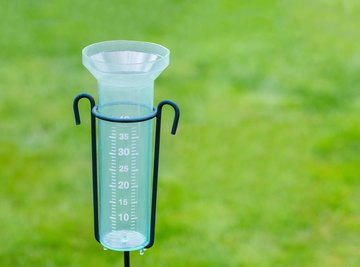
The more information people have about the weather, the better. Sure, it helps when your local meteorologist reminds you that you might need an umbrella one day. But tracking weather isn’t just about keeping you dry on your way to school. It’s also an important way to help farmers grow crops that will sustain billions of people and recognize weather patterns in order to better prevent and prepare for weather-related natural disasters. The rain gauge is one of the easiest tools for everyone from meteorologists to farmers to use to measure precipitation.
TL;DR (Too Long; Didn't Read)
A rain gauge is an important tool to help monitor global weather patterns, aid farmers dealing with drought and help meteorologists prepare for natural disasters.
Simple but Effective Rain Gauge
Rain gauges are centuries-old tools, and some of those records of past rainfall patterns still exist. That data is invaluable to the researchers who study weather patterns and compare today’s climate to that of the past.
Though some digital models exist today, the original design of the rain gauge hasn’t altered much over the past few hundred years. There are a few different types of rain gauges, but most include a cylindrical cup and a funnel system. The design is simple yet effective. Usually, a funnel collects rain and then empties into a cylinder, which is inside of a larger container that collects excess rainwater. When it comes time to measure the rain, the rainfall totals in the larger container and the cylinder will give an exact reading of how much precipitation recently fell.
Monitoring for Droughts
One of the most important uses for rain gauges is to monitor droughts in areas reliant on agriculture, as well as cities that don’t get much rain. For example, Los Angeles rain totals don’t amount to much, compared to the rest of the country. The city frequently experiences droughts, which can be devastating for both home gardens and commercial agriculture in the surrounding areas. So, local farmers use rain gauges to measure Los Angeles rainfall. The information helps them know whether or not they’ll have to dip into their reservoir or groundwater supply to help keep their crops alive, or prepare financially if one year’s crop might not be as healthy as a different batch from a wetter year.
Meteorologists also use rain gauges to measure Los Angeles precipitation, as well as precipitation in other cities dealing with droughts. In addition to helping them create a weather forecast, they can also warn people when L.A.'s rainfall has been particularly low. They might advise citizens to cut back on using excess water in order not to exacerbate the drought.
Prepping for Disaster
A greater understanding of precipitation patterns can also help meteorologists prepare for weather-related natural disasters. For instance, they might recognize that recent rainfall patterns indicate a serious storm is on the way. Armed with this information, they can warn people about impending disaster, and advise them to protect their homes and avoid unnecessary travel. In this way, the data that comes from a rain gauge can help save buildings, crops and even lives.
References
About the Author
Rachelle Dragani is a freelance writer based in Brooklyn with extensive experience covering the latest innovation and development in the world of science. Her pieces on topics including DNA sequencing, tissue engineering and stem cell advances have been featured in publications including BioTechniques: the International Journal of Life Science Methods, Popular Mechanics, Futurism and Gizmodo.