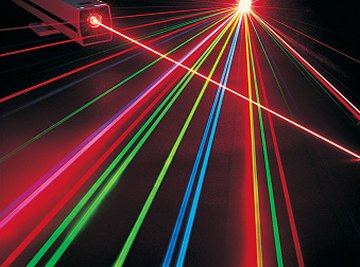
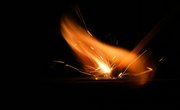
Though laser pointers with red beams are the most commonly used, more powerful laser pointers with green and blue beams are available as well. Green-beam laser pointers achieve their color with a higher beam wavelength than red pointers. The increased wavelength of green beam laser pointers requires more energy to maintain, and this energy can be focused to perform actions that are difficult with red laser beams. If properly focused, the light from a green -beam laser pointer can transfer enough energy to light a match.
- Green laser pointer
- Battery for laser pointer
- Book of matches
- Laser-rated safety glasses
The same technique can be used to pop balloons with green beam laser pointers. A green beam laser can also light paper or other flammable materials on fire, though it may take longer for the fire to start. The higher the power rating of the laser pointer is, the faster it will light a match. Laser pointers can range from 50mW to 200mW or more in power.
Never point the beam of a green laser pointer at the eyes or skin. The high-intensity beam can cause permanent damage to the eyes and can burn the skin. Safety goggles designed for use with laser products are recommended while performing experiments with green laser pointers.
Install fresh batteries into the green- beam laser pointer. As the ability to light a match is dependent on the laser beam's energy, fully-charged batteries help to ensure that the beam is operating at full power.
Secure your match using tape, a small amount of clay or other means. Do not use the book or box of matches to secure the match as this creates a fire hazard and do not have someone hold the match because this can result in burns. Make sure that your match is secured in an area free of flammable materials.
Point the laser pointer away from your eyes and turn it on, holding down the power button if necessary to keep it on. Move the pointer so that the laser shines directly onto the head of the match. Adjust the focus of the laser if your laser pointer features an adjustable focus option; you want to make the beam of your laser pointer as thin as possible because a smaller beam will focus more energy into a small area than a larger beam.
Keep the laser pointer focused on the same spot on the match head, securing the pointer if necessary to keep it from moving. It may take several seconds for the match head to build up heat at the point where the laser is focused; once sufficient heat has built up, the match head will burst into flames.
Turn off the laser pointer once the match begins burning.
Things You'll Need
Tips
Warnings
References
Tips
- The same technique can be used to pop balloons with green beam laser pointers. A green beam laser can also light paper or other flammable materials on fire, though it may take longer for the fire to start.
- The higher the power rating of the laser pointer is, the faster it will light a match. Laser pointers can range from 50mW to 200mW or more in power.
Warnings
- Never point the beam of a green laser pointer at the eyes or skin. The high-intensity beam can cause permanent damage to the eyes and can burn the skin. Safety goggles designed for use with laser products are recommended while performing experiments with green laser pointers.
About the Author
Born in West Virginia, Jack Gerard now lives in Kentucky. A writer and editor with more than 10 years of experience, he has written both articles and poetry for publication in magazines and online. A former nationally ranked sport fencer, Gerard also spent several years as a fencing coach and trainer.
Photo Credits
Photodisc/Photodisc/Getty Images