AnaitBoyajyan/iStock/Getty Images
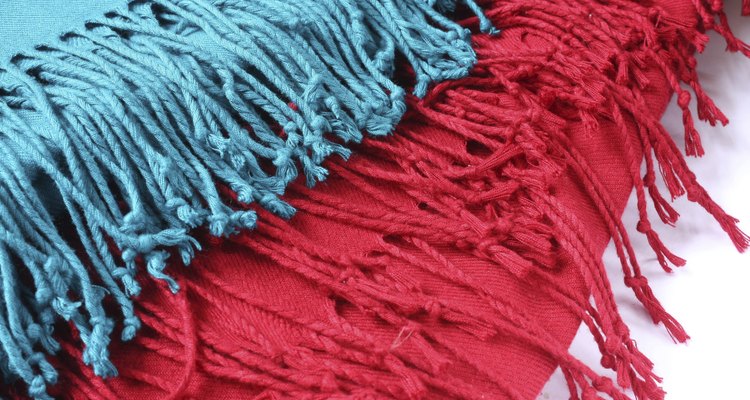
Your pashmina scarf will last for years with the proper care. Pashmina fabric is woven from the wool of goats indigenous to the Himalayan mountains and mixed with silk in either a 70/30 or 50/50 blend. Because they are made from natural fabrics, pashmina scarves do not have to be dry-cleaned and can be carefully hand washed.
Fill the sink with lukewarm water. Add a small capful of baby shampoo, swirling the water around so the shampoo dissolves.
Place the pashmina scarf in the water and let it soak for several minutes. Do not rub or twist the scarf, as this may pull it out of shape.
Drain the sink and refill it with lukewarm water. Add a capful of hair conditioner and swirl the scarf around in it several times.
Rinse the scarf thoroughly in lukewarm water.
Lay the pashmina scarf flat to dry. Do not place the scarf in direct sunlight or near heat sources.
If desired, press the pashmina with a cool iron.
Related Articles

How to Wash a Pashmina Scarf

How to Protect Cashmere Scarves From ...

How to Clean Viscose Shawls

How to Make a Wool Scarf Less Scratchy

How to Remove a Crease in a Silk Scarf

How to Wash an Acrylic & Viscose Scarf

How to Make a Pashmina Jacket

How to Take Out Wrinkles From a Merino ...
Cashmere & Silk Pashmina Shawl Care ...

How to Remove Dandruff With Baking ...

How to Wash Acetate

How to Wrap a Scarf Over the Nose & ...
How to Wear a Short Scarf Around the ...

How to Clean a Taffeta Dress

How to Stretch Wool After Shrinking It
How to Make a Sweater Softer

Types of Indian Fabric
How to Restore Stiff Cotton Sweaters

How to Clean Polyester Neckties

Can You Hand Wash Silk That Says Dry ...
References
Writer Bio
Angela Powell Watson has written for dozens of print and online resources, and recently published her first book. Watson holds a Bachelor's degree in Early Childhood Education and Art from Hood College, a Master's degree in Curriculum and Instruction from Western Maryland College and National Board Certification as an Early Childhood Generalist.
Photo Credits
AnaitBoyajyan/iStock/Getty Images