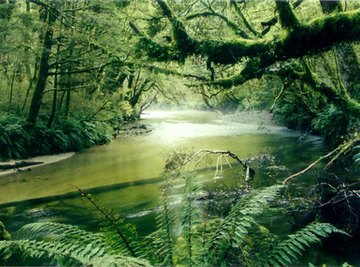
Tropical rainforests contain some of the most diverse and unique populations in the world. This diversity suggests that tropical rainforest plants and animals live an easy life. In fact, the opposite is true. Tropical rainforests provide a variety of niches because of the many challenging conditions found there.
Tropical Rainforest Conditions
The physical conditions of the tropical rainforest include high rainfall, steady temperatures and poor soils. Rainforests receive from over 79 to almost 400 inches – between 6-1/2 feet and 32-3/4 feet – of rain every year. High winds accompany many of the storms impacting tropical rainforests.
Tropical rainforests occur between 15- and 25-degrees latitude north and south of the equator, so temperatures stay between 68 degrees Fahrenheit and 94 degrees Fahrenheit, with average temperatures of 77F. Rainforests have poor soils because the high temperatures favor chemical decomposition. In addition, the high rainfall leaches (dissolves) minerals and nutrients from the soil, washing them downstream. Rainforest producers, from small plants to huge trees, compete for the remaining nutrients and minerals.
Layers of the Rainforest
Rainforest producers occur in layers: the emergent layer, canopy layer (sometimes divided into the upper and lower canopies), understory and shrub/herb layer.
Emergent Layer
Rainforest trees that grow up to 200 feet tall form the emergent layer. Trees in the emergent layer receive the most sunlight in the rainforest but must survive high winds and storm conditions. Trees in this layer include Brazil nut and kapok trees.
Canopy Layer
Trees in the canopy layer grow up to about 100 feet tall. While somewhat shaded by the taller emergent layer, canopy trees still receive plenty of sunlight for photosynthesis. The canopy layer, while still impacted by storms, are also partially protected by the taller emergent layer. Fig trees commonly occur in the canopy layer in rainforests around the world. Most rainforest plants and animals live in the canopy layer.
Understory Layer
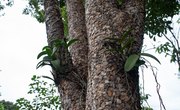
Plants in the understory receive very little sunlight. Many understory plants are epiphytes or "air plants," drawing their nutrients from the humid air around them and what nutrients might be found in litter and debris caught in the bark and branches of the tree. Epiphytes include philodendrons, mosses, bromeliads, orchids and tropical cacti.
Shrub or Herb Layer
The competition for resources like nutrients and water on the floor of the tropical rainforest is fierce. Extensive systems of tree roots soak up much of the nutrients and water. In a mature rainforest, the lower layers of the forest tend to be open because the lack of sunlight and nutrients limits plant growth.
Rainforest Producers Adaptations
Tropical rainforest biome plants exhibit a wide variety of adaptations. Most rainforest trees are evergreens. Many have a thick waxy layer on their leaves to reduce water loss due to the intense sunlight in the emergent and canopy layers. Some tree leaves turn sideways to the sunlight to reduce water loss during the hottest part of the day. A large number of plants, not just the trees, have long drip tips on their leaves. These drip tips direct water off the end of the leaves, reducing the standing water that could provide a habitat for fungi, bacteria and epiphylls (epiphytes that grow on leaves).
To help withstand the high winds, many trees have buttress trunks. Buttress trunks act as anchors, extending out from the trunk. This root structure also expands the area from which the tree can absorb water and nutrients. Other trees, especially those in wet areas, like mangrove trees, grow stilt or prop roots for extra stability. Some trees have very smooth bark to shed water and prevent ants and other intruders from climbing them.
Other specialized rainforest plants include vines, epiphytes and carnivorous plants. Vines grow upward, using trees as a path to the upper sunlit layers of the rainforest. As previously stated, epiphytes draw their nutrients from the air around them. Carnivorous plants draw nutrients from the bodies of insects, reptiles and even small mammals that they trap.
References
Resources
About the Author
Karen earned her Bachelor of Science in geology. She worked as a geologist for ten years before returning to school to earn her multiple subject teaching credential. Karen taught middle school science for over two decades, earning her Master of Arts in Science Education (emphasis in 5-12 geosciences) along the way. Karen now designs and teaches science and STEAM classes.
Photo Credits
new zealand rainforest image by Spencer Stoner from Fotolia.com