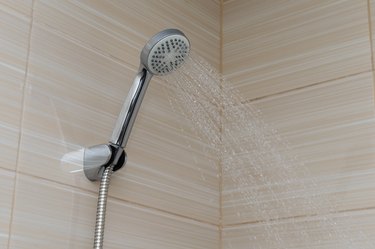
One of the water conservation measures mandated by the Energy Policy Act of 1992 is a limitation on the flow rate of shower heads manufactured and sold in the United States. The maximum allowable flow rate is 2.5 gallons per minute at a water pressure of 80 pounds per square inch. The U.S. Environmental Protection Agency (EPA) reduced flow rate specifications even more as part of its WaterSense program, although the WaterSense rates aren't mandated by law.
Water Usage of 2.5-Gallon Showerhead
Video of the Day
If you purchased your showerhead after the Energy Policy Act became law (which, let's face it, should be most of us), the showerhead delivered 12.5 gallons of water in a five-minute period, which is enough to flush your 1.6-gallon toilet eight times.
Video of the Day
A 10-minute shower with a 2.5-gallons-per-minute showerhead transfers 25 gallons from the water supply to the drain. That isn't enough to take a bath in a conventional bathtub — you need 35 to 50 gallons for that — but it's enough for several days of toilet use, and it's equivalent to 100 quart-sized bottles of water.
Showering With WaterSense
In 2010, the EPA initiated a program for water-consuming fixtures, such as toilets and showerheads. The program — much like the Energy Star program — certifies fixtures that exceed the federally mandated requirements. A WaterSense showerhead delivers 2.0 gallons per minute or less at 80 pounds per square inch.
To qualify for the WaterSense program, the showerhead must deliver the same volume regardless of whether you use it at full spray, massaging or any other mode. WaterSense showerheads are required to deliver a minimum of 1.5 gallons per minute at pressures as low as 45 pounds per square inch. At 20 psi, the showerhead must deliver at least 1.2 gpm.
Spray Force and Coverage
The overarching problems associated with showerheads sold shortly after the implementation of the Energy Policy Act were inadequate force and coverage — the spray was barely enough to keep you warm on a cold day. Modern manufacturers compensate with carefully designed pressure-regulating mechanisms and outlet hole placement.
A showerhead that conforms to WaterSense standards provides a minimum spray force of 2 ounces (0.56 newtons) at 20 psi. WaterSense requirements also dictate sufficient distribution of water spray, to prevent the common problems of shower sprays with a hollow center or, conversely, those with too much water at the center, creating a narrow stream.
Regulating Water Usage
The EPA estimates that the average American uses 100 gallons of water per day and that a typical American residence uses 100,000 gallons of water per year. Replacing one conventional low-flow showerhead with a WaterSense showerhead saves 5 gallons per 10-minute shower — that's the maximum daily water usage of a resident of sub-Saharan Africa.
You can measure the output of your showerhead by timing how long it takes to fill a 2-gallon bucket. If the flow rate is less than you expect, the outlet holes may be blocked with mineral deposits. Soak the showerhead overnight in vinegar to dissolve them.