

How Much to Replace a Full Garage Roof?

Even as a roof over a private home protects its inhabitants from extremes of weather, one over a garage does the same thing for vehicles. The latter may sport the same designs, decorations and materials as the former so that both present a unified appearance from the street. The cost to replace a full garage roof depends on its materials and pitch.
Asphalt
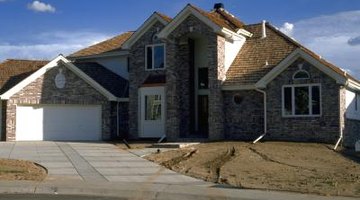
Asphalt shingles cover most residential roofs in the U.S. because of their low cost and durability. Price of labor and materials runs $2.75 to $4.50 a square foot, according to Cost Owl, with prices accurate at the time of publication. This puts the cost of a 400-square-foot garage roof at $1,100 to $1,800. This does not include removing any old material and hauling it away. That adds about $1.75 to $2.50 per square foot, or an additional $700 to $1,000 for a 400-square-foot garage roof.
Wood
Wood shake can vary by color, thickness, width and cut. It adds a touch of traditional warmth to a garage. The material is also energy efficient and breathable, but it requires regular maintenance and fireproofing to last. Typical compositions include red cedar and yellow pine. The price with installation runs from $2 to $3.25 a square foot. This prices a 400-square-foot garage at from $800 to $1,300 total.
Slate
Slate shingles can add a touch of class to your garage roof, and slate is one of the longest-lasting materials. If used for both the home and garage, slate can add value to a property because of its architectural depth. Synthetic slate costs from $7 to $12 per square foot, including installation. This prices a 400-square-foot garage roof at between $2,800 and $4,800. Natural slate is one of the most expensive roofing materials at $25 to $35 per square foot installed. This puts a 400-square-foot garage roof at $10,000 to $14,000 with installation. A slate roof can last about 100 years.
Pitch
The pitch or angle of a garage roof can affect cost. It is described as the number of inches the surface rises vertically for every 12 inches that it moves horizontally. In general, steeper-pitched roofs use more material and cost more than flatter roofs with the same length and width. A low pitch roof, which is 4:12 or under, is walkable and has the easiest and cheapest installation. Roofs measuring 6:12 to 9:12 have medium pitch and require roofing jacks and planks, making them more expensive. The steepest pitch roofs, at 10:12 to 12:12 -- 45 degrees -- are the most difficult and dangerous to work on. They cost the most for installation and repair.
References
Writer Bio
Aurelio Locsin has been writing professionally since 1982. He published his first book in 1996 and is a frequent contributor to many online publications, specializing in consumer, business and technical topics. Locsin holds a Bachelor of Arts in scientific and technical communications from the University of Washington.
Photo Credits
- Jupiterimages/Photos.com/Getty Images
More Articles

