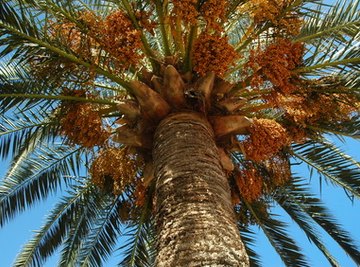

Three-dimensional classroom decorations add an extra dimension to making school fun. A palm tree is a great addition for a tropical theme, but also to help reinforce lessons on the rain forest, jungle, beach, trees or conservation. Make your palm tree a class project and reinforce recycling by having your students bring in used paper lunch bags for the trunk. You can decorate your finished trees with cardboard cutout animals, balloons for coconuts, or even Christmas lights.
- Empty carpet roll tube
- Handsaw
- Large clay plant pot
- 50 lb. bag of play sand
- Scissors
- 80 brown lunch bags
- Knife
- 12 inch Styrofoam block
- 7 white metal hangers
- 21 pieces of green tissue paper, at least 30 inches wide
- Wire cutters
- White glue
You can also fill the clay pot with small pebbles, rocks or dirt.
Get an empty carpet roll tube (free from many home improvement stores). With a handsaw, cut it to the height you desire.
Stand the tube upright in the large plant pot. Fill the pot with sanitized play sand to secure the tube.
Cut the closed bottoms off the lunch bags with the scissors. Slip the now circular brown paper rings over the top of the tube. Scrunch the paper bags as you stack them up from the bottom to create the texture of the trunk. Continue until you reach the top of the tube.
Carve the piece of Styrofoam using the knife so it fits snugly into the opening at the top of the tube. Insert it there.
Snip off the hook on the wire hangers with the wire cutters. Unfold the hangers so they are straight.
Lay a sheet of green tissue paper on a flat surface to make the palm fronds. Pour a line of glue down the center of the paper. Place another sheet of tissue on top. Pour another line of glue down the center. Press the straightened wire hanger onto the line of glue, leaving 8 inches of wire bare for the stem. Press another sheet of tissue paper over the hanger.
Fold the tissue paper in half over the hanger. Set it aside to dry. Repeat with all of the hangers.
Bend each hanger into an arc to make the palm frond once the glue is dry. Using the scissors, round off the square corners to make a leaf shape. Cut 1-inch strips into the tissue paper along the bottom edge.
Stick the wires into the Styrofoam block at the top of the tube, spacing them out so they resemble palm fronds.
Things You'll Need
Tips
References
Tips
- You can also fill the clay pot with small pebbles, rocks or dirt.
About the Author
Diana Waterston has been writing professionally since 1994. Her work has appeared in "Conde Nast Traveler," "Pregnancy" magazine and "NY Metro Parents." She has also produced segments for "Good Morning America," "CBS Early Show" and Fox Business Network. Waterston graduated from Princeton University with a bachelor's degree in English.
Photo Credits
palm tree image by Christine Valin from Fotolia.com