
The two most common types of fermentation are alcoholic and lactic acid fermentation.
While alcoholic fermentation may be the most well-known (and is seen in many foods and beverages, such as wine, beer, fermented teas, bread and sausages), lactic acid fermentation is thought to be the oldest. Fermented foods, such as cheese, yogurt, kefir, sauerkraut and pickled foods have been found in almost every culture all over the world, going back thousands of years.
To compare and contrast lactic acid fermentation and alcoholic fermentation, both are oxidation-reduction reactions and involve glycolysis.
Alcohol fermentation occurs in micro-organisms such as yeast and converts glucose to energy, which is released as carbon dioxide. The resultant by-product is called ethanol (also known as ethyl alcohol or simply alcohol). Lactic acid fermentation occurs in certain bacteria, yeast and muscle cells and converts glucose to energy. Its by-product is lactate. Lactic acid fermentation is also used in the food industry, which uses lactic acid bacteria.
The Role of Yeast and Bacteria in Fermentation
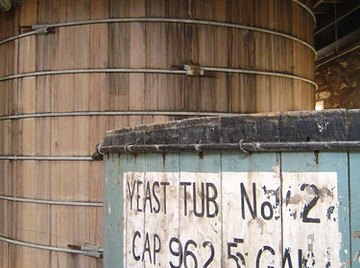
Alcohol fermentation often involves Saccharomyces cerevisiae, (commonly known as baker’s yeast), which derives its name from sugar (saccharo), fungus (myces) and beer (cerevisiae). Dating back to the Neolithic period, yeast fermentation is essential to the processes of producing beer, wine, bread and biofuel.
Fermentation involves the introduction of a number of microbes that increase the level of acid or alcohol; S. cerevisiae fermentation converts starch to simple sugars, which the yeast then consumes to create carbon dioxide and alcohol.
Simply put, the yeast gorges on sugar as the cells reproduce. The cells continue to reproduce until all the sugar is consumed and the yeast is spent; the yeast then settles to the bottom of the container. This process is the same whether the end result is alcohol or biofuel.
Lactobacillus is the most common bacteria used in lactic acid fermentation. The sugar present in fruit samples naturally produces lactic acid, which lowers the pH, reducing the number of micro-organisms that can grow. This effectively preserves food. This is commonly used in pickling as well as in the production of yogurt and fermented foods such as sauerkraut and kimchi.
Lactic acid bacteria are found naturally in some foods and are used mainly as “starters,” meaning they get the process of fermentation started. The carbohydrates already present in the food keep the reaction going. This is why cheeses that have “aged” for different amounts of time have different flavors.
Alcoholic vs. Lactic Acid Fermentation
Alcohol fermentation is a chemical reaction that uses yeast and sugar to produce energy, which you can see as the solution bubbles; it can be aerobic or anaerobic (work in the presence or absence of oxygen). After the carbon dioxide is removed, the resultant acetaldehyde is then reduced to form ethanol. Yeast cannot metabolize ethanol; as far as the parent cells are concerned, it is a waste product.
You can define lactic acid fermentation as the process that occurs after glycolysis in anaerobic respiration. An enzyme called lactate dehydrogenase prompts a reaction to start glycolysis, forming lactate in the process.
This lactate protonates into lactic acid and continues accumulating in muscle cells until oxygen is reintroduced and aerobic respiration returns. ("Protonate" means to add a proton to another atom or molecule, which creates a bond and transforms the lactate into an acid.) Lactic fermentation occurs through anaerobic respiration, which occurs when there is a lack of oxygen in an organism. This prevents muscles from getting energy from cellular respiration.
Primarily, lactic acid fermentation differs from ethyl alcohol fermentation in that lactic acid, rather than ethanol, is the resulting by-product. When exposed to oxygen, lactic acid molecules break down into carbon dioxide and water. When used in food production, this lactic acid breaks down sugars, preventing food from spoiling.
Alcohol fermentation can take place in environments both with and without oxygen, with differing results.
Effects of Lactic Acid on the Body
Muscle soreness experienced after exercise is caused by lactic acid buildup. With regular activity, the lungs can keep up with oxygen demands of the body, but during exercise, more energy is required. This leaves oxygen in short supply, so anaerobic respiration begins. This is not as efficient as aerobic respiration, and the process results in the production of lactic acid.
Though often considered waste, lactic acid is then recycled through the liver where it is converted back to glucose. In some cases, a buildup of lactic acid can cause nausea, difficulty breathing and weakness. When the body does not have time to recover, uric acid crystals may build up on joints, causing pain known as gout.
References
- Green River College: Alcoholic Fermentation in Yeast
- Oregon State College of Agricultural Science: A Story of the Yeast That Launched a Thousand Industries
- Journal of Bacteriology & Mycology: Lactic Acid Bacteria: Their Applications in Foods
- NCBI Bookshelf: Applications of Biotechnology to Fermented Foods: Lactic Acid Fermentations
About the Author
Kimberly Yavorski is a freelance writer with a passion for learning, especially about nature, outdoors and the natural sciences. A longtime student of the life sciences, she served as a leader for Girl Scouts and 4H, sharing her interests by teaching children and teens about natural and environmental science and animal anatomy. Her work has also appeared on LetsGetOutside.us and Happy Science Mom. She can be found at www.kimberlyyavorski.com.
Photo Credits
Image by Flickr.com, courtesy of Rick Audet