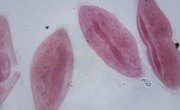
When you think about living things, you likely envision animals, plants and maybe some well-known bacteria. Protozoans probably don’t even ping your radar.
However, these microscopic organisms, which include the Sarcodina superclass, are definitely worthy of your attention – even if they aren’t the furriest or cuddliest critters on the block.
What Are Protozoans?
Scientists once called protozoans “one-celled animals” or “early animals” since some of their features and behaviors seem animal-like at first glance. However, this isn’t really accurate – and even the term “protozoan” is no longer a true category for purposes of taxonomy.
Scientists now use complex genetics to map the relationships between organisms, so those once classed as protozoan or protist now show up all over the tree of life rather than as a category of their own.
Still, protozoan is a helpful, informal way to describe single-celled eukaryotes who are motile and rely on other organisms for fuel. Since they are eukaryotes, all protozoans have a distinct nucleus enclosed by a membrane. They are also all heterotrophs, which means they can’t get their energy directly from the sun and therefore must consume other living things to power their bodies. Protozoans are also able to locomote, using projections such as cilia, flagella or pseudopodia to move from place to place in watery environments.
Amoebas are the most well-known members of this informal group. Some biologists use the term Sarcomastigophora to include both amoebas (formerly subphylum Sarcodina) and flagellates (formerly subphylum Mastigophora). This makes sense from a biomedical standpoint since some of these organisms cause human disease.
For example:
- Entamoeba histolytica are amoebas that cause amebiasis
- Trypanosomes are flagellates that cause African sleeping sickness and Chagas disease
- Giardia lamblia is a flagellate that causes giardiasis
The Sarcodina Superclass
Among the protozoans, the Sarcodina organisms stand out and have a few things in common.
For one, they have streaming cytoplasm, which means their gel-like interior has a flow they use to move things like nutrients and organelles around inside them. Sarcodines also use temporary projections called pseudopodia for important tasks like traveling and eating. Finally, these organisms reproduce both sexually (by joining gametes) and asexually (by dividing or budding).
The similarities among Sarcodina organisms end there since the group is quite diverse. Some sarcodines live alone while others thrive in colonies. Some are parasites with animal or plant hosts while others are free-living. Some have flagella during some life stages while others alternate having flagella or not from one generation to the next.
How Do Sarcodines Eat and Move?
One of the most interesting features of Sarcodina organisms is the way they use pseudopodia to move around and feed. The word pseudopodia literally means “false feet” in Greek, and a pseudopod is simply a temporary foot-like projection that sarcodines use in much the same way you use your real feet (and hands).
To form a pseudopod, the organism relies on cues in the environment to sense which way it should go. Then, it uses specialized proteins to stretch the cell membrane into an appendage, which fills with cytoplasm. Some sarcodines follow chemical cues that attract them while others seem to move randomly.
Pseudopodia are also useful for feeding. In this case, the projection oozes around the prey to trap it. In some cases, the pseudopod is sticky and mesh-like and captures the prey as with a net.
Amoeba Life Cycle
Amoebas are the most well-known Sarcodina organisms. These evolved a two-part life cycle, which particularly helps the pathogenic E. histolytica during infection. In the first stage, the amoeba is a cyst, or an inactive form capable of withstanding very harsh conditions – such as the acidic environment of the human digestive tract.
When conditions are safer, such as in the lower areas of the digestive tract, the amoeba excysts, releasing four trophozoites from the cyst. This is the second stage, and the trophozoites are the active, infectious form.
After wreaking damage in the intestines – and possibly entering the bloodstream to infect other parts of the body, including the brain – the amoeba can return to cyst form and pass out of the body with bowel movements. This enables the amoeba to spread to other people or animals.
References
About the Author
Melissa Mayer is an eclectic science writer with experience in the fields of molecular biology, proteomics, genomics, microbiology, biobanking and food science. In the niche of science and medical writing, her work includes five years with Thermo Scientific (Accelerating Science blogs), SomaLogic, Mental Floss, the Society for Neuroscience and Healthline. She has also served as interim associate editor for a glossy trade magazine read by pathologists, Clinical Lab Products, and wrote a non-fiction YA book (Coping with Date Rape and Acquaintance Rape). She has two books forthcoming covering the neuroscience of mental health.