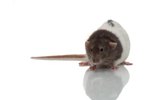
Female rats come into heat every few days. If your rat managed to have contact with a male during this time, whether because she was separated from her siblings too late, she came from a careless owner or even managed to encounter a wild rat while she was outside the cage, she could easily be pregnant. If you have adopted a pregnant rat, be ready for when she gives birth.
Signs of Pregnancy in Rats
The gestation period in rats is just three weeks and pregnancy is normally almost undetectable until the final week. If you suspect your rat is pregnant, look for weight gain, the most obvious indicator. In the last week, she’ll lose some hair around her nipples. Her behavior may change at any point -- for example, she may become more aggressive to her cage mates. What she won’t do is come into heat, of which the most obvious sign is the vibrating ears, or show much interest in the scent of males.
Pregnancy Diet and Care
Provide extra high-protein food, such as kitten food, for her along with her normal diet, and give her as much as she wants of both. A woman may be “eating for two,” but your rat is eating for 22. Also move her to a separate cage from your other rats. This is the nursery cage and doesn’t need to be as large as a normal rat cage. A one-level cage is best, as baby rats can easily fall and hurt themselves.
Signs of Imminent Birth
After you’ve noticed your rat is pregnant, you probably only have a few days before she gives birth. Once she is very obviously plump with babies, they’re nearly due. Keep her cage in a warm room and provide a medium-sized cardboard box with a rat-sized hole in the side. Also tear up plenty of plain toilet tissue or paper towels into strips. The day before she gives birth, she’ll commence nest building.
How to Care for Mother and Babies
While she's nursing, provide the mother with as much food as she wants, both her normal feed and the high-protein food you gave her during pregnancy. She’s nursing a large brood, around 20 babies or more, and needs plenty of extra nutrients. The kittens -- baby rats -- are weaned at three or four weeks, but begin sampling the mother’s diet before that. They can have the same food as adult rats. Handle the kittens frequently once they have left the nest.
When to Separate the Males
Transfer the juvenile males to a separate cage once they are 5 weeks old. Rats have little objection to incest and they could easily impregnate their mother or sisters. If you like, the females can remain with their mother indefinitely. However, if she already has rat friends and you plan to adopt out the babies, it might be better to transfer the mother back to her original cage and keep the females in the nursery cage. This means you’ll need to maintain three cages until you’ve adopted out the kittens -- one for males, one for females and the original cage.
References
Photo Credits
-
Jupiterimages/Photos.com/Getty Images
Writer Bio
Judith Willson has been writing since 2009, specializing in environmental and scientific topics. She has written content for school websites and worked for a Glasgow newspaper. Willson has a Master of Arts in English from the University of Aberdeen, Scotland.