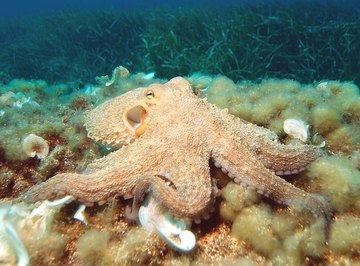
Mollusks make up a scientific phylum Mollusca, soft-bodied creatures, most often enclosed in a shell. The mollusk's body contains the digestive and reproductive organs. Among mollusk characteristics, a mantle covers the body and a foot is present to provide the mollusk with the ability to move and capture food. Included in the phylum of mollusks are squids, octopuses, clams, oysters, snails and slugs. The mollusk life cycle varies among these many creatures.
Most mollusks require sexual reproduction but some, such as many species of snails, are hermaphrodites, meaning both the male and female genders are contained within one individual animal and self-fertilization takes place. The mollusk life cycle is relatively complex for such a simple creature and it varies greatly among different classifications of mollusks and among species within classifications. This makes it impossible to discuss the life cycle of the phylum as a whole. However, within different classifications, the life cycle may follow somewhat similar patterns among various species.
Squid Species

The life cycle of the squid varies among species, however, that of most squid follows a similar pattern. Female squid spawn, leaving fertilized eggs in the water. Depending upon environmental conditions, the eggs hatch within about two weeks. Larvae, called rhynchoteuthion, emerge. During development, the larvae forms two tentacles and the eight arms grow in length. As an adult, the male squid will fertilize the females eggs and the spawning process will begin again.
Octopus Life Cycle
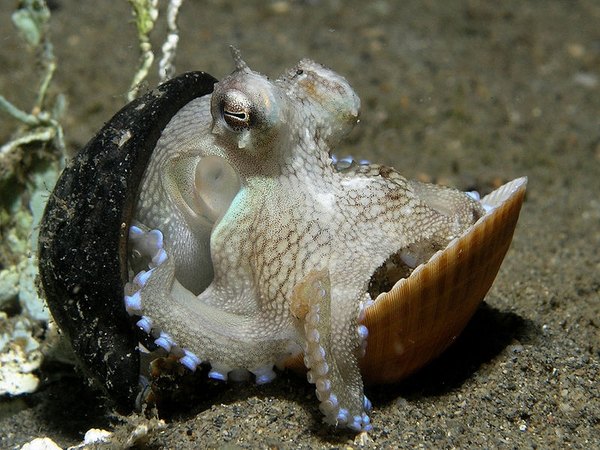
The life cycle of the octopus also varies among species, but generally follows a similar pattern. The male octopus places his tentacle inside the female's cavity and inserts a sperm packet. He then dies. The female octopus will lay 50 to 100 eggs and carries them around in the area between her tentacles. While guarding her eggs, she doesn't eat and will die shortly after they hatch. A tiny octopus emerges from each egg and grows to an adult when it too will mate and begin the life cycle again.
Hard-Shelled Clam
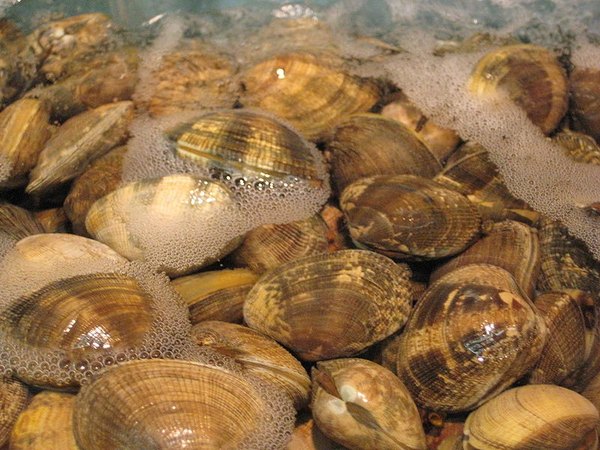
Again, with the clam, the life cycle differs among individual species, but follows a relatively similar pattern. The mussel life cycle is also similar to that of the clam. A fertilized egg develops within the clam's shell. When the eggs hatch, larvae emerge from the adult and fall to the bottom of the water to wait for an opportunity to attach to a host, most often a fish. The tissue of the host forms a cyst over the larva. Once mature, the clam breaks out of the cyst and returns to the water bottom to its life as an adult.
Oyster Life Cycle
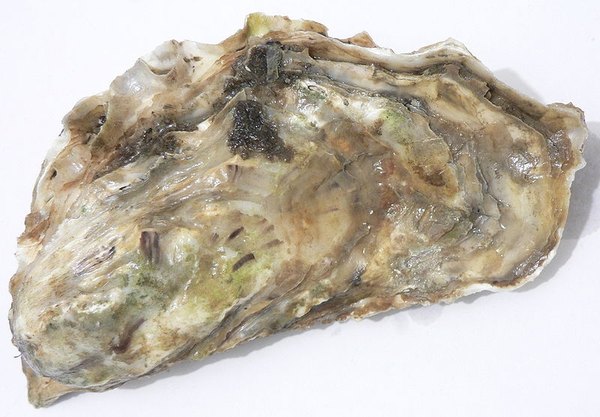
Reproduction among oysters begins when water temperatures warm to 68 degrees or greater. Oysters spawn with the female releasing eggs into the water and the male releasing sperm. Within about six hours, a fertilized egg develops into a free-swimming larva that will develop a shell within 12 to 24 hours. Within a few weeks, the shelled larva develops a foot and settles to the bottom of the water, attaching itself to a hard surface--usually the shell of an adult oyster--to enter into metamorphoses. An adult oyster emerges shortly thereafter.
Snail Life Cycle
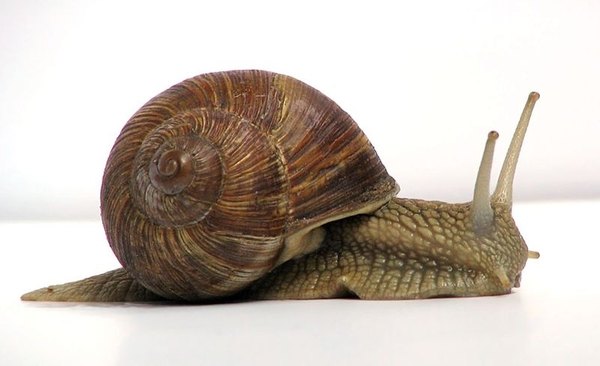
The snail life cycle varies between species, with some requiring sexual reproduction and others reproducing through self-fertilization. In those where sexual reproduction is necessary, two adult snails--both of whom usually have both male and female reproductive organs--will mate and both will produce fertilized eggs. The eggs are deposited into the soil and will remain there for about four weeks before hatching. The larvae have a shell at birth, but must quickly consume calcium to make the shell grow hard. The snail will continue to mature and in most species doesn't reach sexual maturity for a couple of years.
References
About the Author
Bethney Foster is social justice coordinator for Mercy Junction ministry, where she edits the monthly publication "Holy Heretic." She is also an adoption coordinator with a pet rescue agency. Foster spent nearly two decades as a newspaper reporter/editor. She graduated from Campbellsville University, receiving a Bachelor of Arts in English, journalism and political science.
Photo Credits
http://en.wikipedia.org/wiki/File:Octopus2.jpg