Have you noticed that your dog is sneezing and wheezing instead of being his usual cheerful and snuggly self? Food allergies or seasonal allergies may be at play and can lead to sneezing and post-nasal drip, which requires a trip to the veterinarian for a proper diagnosis.
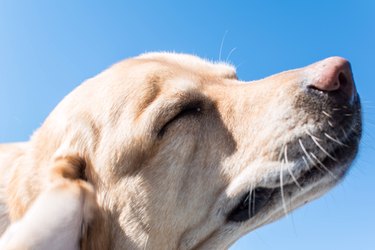
Like humans dealing with the unpleasant side effects of allergies, dogs can suffer from them too and can wind up with symptoms, like a runny nose and itchy skin. Discover what the potential causes of these allergies could be and how to treat them.
Video of the Day
Video of the Day
Nasal discharge in dogs
Nasal discharge in dogs has many potential causes, including environmental allergies or food allergies. It can also be caused by something more serious, like a virus, bacterial infection, dental problem, tumor, or a foreign body in the nose. This is why it's important to have your dog checked by a veterinarian to determine the cause of that discharge if it lasts for more than 24 hours and especially if it's not clear.
Dogs dealing with prolonged nasal discharge might also start coughing due to the post-nasal drip that occurs. This happens because the nasal discharge can accumulate at the back of your dog's throat and nose, uncomfortably building up and causing your dog to cough.
Allergies in a dog's nose
Like humans, dogs can suffer from environmental allergies to pollen, mold, and dust. Household cleaners and other chemicals can also lead to inflammation of your dog's airways as well as runny eyes, a runny nose, and post-nasal drip.
Food allergies can also lead to nasal discharge and a post-nasal drip in dogs. While the most common symptoms of a food allergy in dogs include skin irritations and ear infections, you might also notice some sneezing a few hours after meals and some nasal discharge.
Some dogs are even more prone to developing allergies than others, including the bichon frise, boxer, bull terrier, cocker spaniel, German shepherd, Labrador retriever, golden retriever, and Maltese.
Brachycephalic breeds with post-nasal drip
All dogs can develop allergies, but some dog breeds are more likely to develop post-nasal drip and breathing problems due to allergies and excessive exercise. These breeds include French bulldogs, English bulldogs, Boston terriers, pugs, and Pekingese dogs. Because of their short muzzle and nose, these breeds tend to develop breathing problems more easily than those who don't have this feature.
If you notice that your short-nose pup is making noise when breathing or gagging when swallowing, this could indicate a post-nasal drip due to allergies or a more serious issue that's causing nasal discharge. Because brachycephalic breeds are more affected by allergies that cause post-nasal drip, it's important to visit the vet with your pup.
Recommendations for allergies and post-nasal drip
Your vet may recommend putting your dog on corticosteroids or antihistamines depending on the severity of his symptoms. You may also want to wipe down your pup with a damp cloth after walks to remove dust, grass, and pollen from her fur.
In addition, regularly cleaning your dog's environment by vacuuming frequently, washing your dog's bedding one to two times per week, and even using an air purifier in your home will help lessen your dog's symptoms to environmental allergies.
Recommendation for food allergies in dogs
For dogs suffering from food allergies, your vet may recommend switching your pup to a hydrolyzed protein diet or doing a food trial. Hydrolyzed protein diets are designed with proteins that are broken into tiny particles that won't trigger an allergic reaction in your dog when eaten, unlike traditional proteins.
A food trial involves feeding your dog a food that contains a novel protein, like lamb, duck, or venison, and a limited number of other ingredients, including only one carbohydrate. This will help you and your vet find the ingredients that are causing your dog's allergy and eliminate them from his diet through trial and error.
- The Vets: Dog Sneezing a Lot: When it’s Normal and When to Worry
- American College of Veterinary Surgeons: Brachycephalic Syndrome
- Veterinarians.org: Hydrolyzed Protein Dog Food: Everything You Need to Know
- Cummings Veterinary Medical Center at Tufts University: What Every Pet Owner Should Know About Food Allergies
- This Dog's Life: 10 Breeds That Are Prone to Allergies