
No ecosystem is entirely free of sediment. In aquatic environments, its presence can threaten the health of ecosystems. Sediment can cloud the water, which in turn can negatively impact the plants and animals of these places. Also, depending upon the type of sediment, additional issues can also occur. It can have both organic and inorganic sources, whether it is algae floating in the water or suspended particles of soil from an eroded shoreline.
Sediment Contamination
One of the primary negative effects of sediment in the ecosystem concerns the nature of the sediment. Agricultural and urban runoff may contain toxic materials, which can damage or even kill the organisms within an ecosystem. According to the U.S. Environmental Protection Agency (EPA), runoff from farmlands is the main cause of pollution in U.S. waterways. The runoff can include sediment from pesticide and fertilizer applications as well as animal waste and bacteria.
Filter Feeders
Some animal species are especially sensitive to the effects of sediment, with contamination quickly accumulating in animal tissues. Filter feeders such as mussels and clams get food by filtering water through their bodies, making them especially vulnerable to the presence of sediment. Other species such as salmon require clear waters in order to locate their prey. High levels of suspended sediment can interfere with their ability to find food, risking the health of the ecosystem by disrupting the prey-predator relationships.
Wetlands and Water Filtering
Wetlands affect the sediment load in the ecosystem by slowing water flow, which allows suspended particles to drop down to ground level. This filtering action is an important environmental benefit because it removes the sediment from the water. In essence, the sediment, whether it contains contaminants or not, becomes locked into the sediment layer of the wetlands. The effects of the pollutants are then mitigated.
Soil Erosion
One way in which sediment enters an ecosystem is through soil erosion. Water flowing over bare soils will easily dislodge sediment, where it will later be deposited within the environment. Impervious surfaces, such as roads and parking lots, facilitate soil erosion. Without plants to slow it, water flow increases, allowing it to dig deeply into stream banks.
Prevention/Solution
The best way to control the negative environmental effects of sediment is to prevent its introduction into the environment. Planting dense groundcover along stream banks and coastal areas will help keep soils intact and prevent them from washing away. Restoration of wetlands within floodplains and other areas will improve water quality by removing suspended sediment from the water.
References
- "Muddy Coasts of the World"; T. Healy, Y. Wang, and J. Healy; 2002
- "Ecology of Coastal Waters: A Systems Approach"; K. Mann; 1982
Resources
About the Author
Chris Dinesen Rogers has been online marketing for more than eight years. She has grown her own art business through SEO and social media and is a consultant specializing in SEO and website development. Her past work experience includes teaching pre-nursing students beginning biology, human anatomy and physiology. Rogers's more than 10 years in conservation makes her equally at home in the outdoors.
Photo Credits
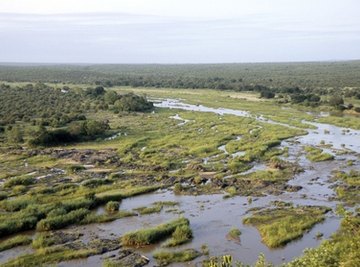
Olifants river wetland in savannah, Kruger National Park image by Lars Lachmann from Fotolia.com