Flamingo Bird Information

Flamingo Bird Information thumbnail
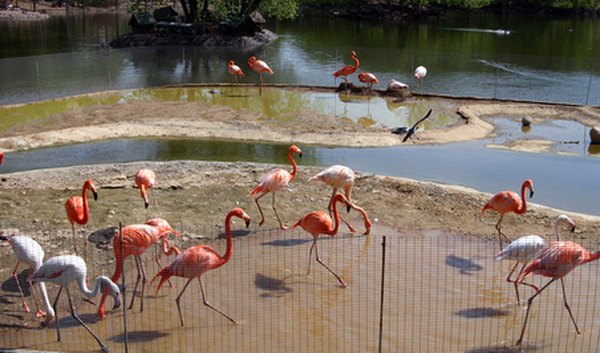
Flamingos enjoy wading through water.

Flamingos are perhaps one of the most iconic birds in nature, representing exotic beauty. They are often associated with colorful lawn decorations and can be seen along sidewalks of tropical tourist destinations. Flamingos enjoy wading in water and sifting through mud for food. They often move in groups, dotting beaches with pink flecks. People are making efforts to keep these birds off the endangered list.

  1. Identification

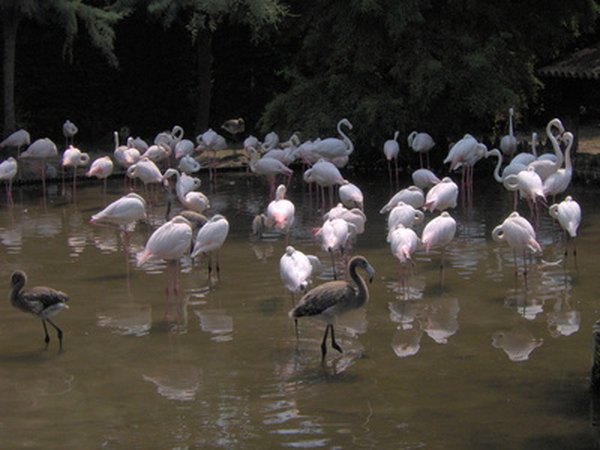
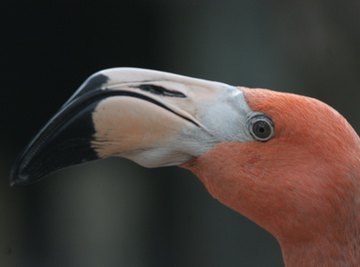
    • Flamingos are rarely mistaken for other birds because of their pink color and long legs. Many times, flamingos stand on one leg with the other leg tucked under their body. Their beaks are long and curve downward, allowing them to scoop food from shallow water exceptionally well. Flamingos have webbed feet, which allows them to stand without sinking in muddy water. Flamingos are colorful because of their diet. White or pale flamingos are malnourished, according to the Bird Life website.

    Types of Flamingos

    • There are six species of flamingo, which are the Caribbean, Chilean, Andean, James, greater and lesser flamingo. The greater flamingo is the tallest of the species and can reach up to 5 feet tall. The lesser flamingo is about 2 to 3 feet tall. The most obvious difference between the greater and lesser flamingos is their beaks. The greater flamingo has a pink beak and the lesser flamingo has a darker red beak.

    Features

    • The most identifiable features of the flamingo are the most interesting. The flamingo beak operates like a "filter," according to the Tropical Birds website, because it removes protein from the water the bird holds in it beak. What looks like a knee is actually an ankle joint that distributes heat through the leg. The bird also has a vocal song that is as distinctive as its looks. The birds often swing their heads from side to side. Flamingos eat algae and shrimp and are pink or red due to the carotenoid proteins they consume.

    Geography

    • Flamingos live in lakes, swamps, lagoons or where they can find large amounts of water and mud. They need deep water for feeding and nesting and the sandy islands in the intertidal zone are a favorite spot for these birds, according to The Wild Ones website. They prefer warm climates of extreme southern United States, northern South America, West Indies, Yucatan and the Galapagos Islands. They are also known to survive in Bolivia and Uruguay.

    History

    • Tropical locations and vacation spots often use the large pink birds with long legs as familiar icons. They are considered a threatened species, reports the Bird Life website. They often march in unison. They fly but, unlike most birds, they use wind and ground speed to lift from the ground.

Related Searches:

References

  • Photo Credit pink flamingo image by Vasina Nazarenko from Fotolia.com

Comments

You May Also Like

  • Information on the Bird Called the Flamingo

    Flamingos are colorful wading birds with a global distribution, existing in the New World as well as Asia, Africa and parts of...

  • Information on Flamingo Bird's Habitat

    The five species of flamingo inhabit very similar habitats all around the world, straining through the water to find small fish and...

  • Flamingo Information

    The flamingo may be one of the world's most readily identifiable birds, with its stick-like legs and bright pink coloration. Many a...

  • About Pink Flamingos

    With bright pink feathers and a habit of standing on only one leg, flamingos are one of the most recognizable waterbirds. Without...

  • What Birds Are in the Flamingo Family?

    What Birds Are in the Flamingo Family?. There are six species of flamingos belonging to the Phoenicopteridae family. The flamingo's appearance is...

  • Information on Pink Flamingos

    The pink flamingo is widely recognized by just about everyone, whether bird fanciers or not. These colorful, long-legged birds conjure images of...

  • Native Habitat of the Flamingo Bird

    There are six different species of flamingos, all of which are immediately identifiable by their body shape and pink feathers, which range...

  • The Habitat of Pink Flamingos

    Flamingos are birds known for their pink feathers, long legs and hooked bills. The pink or reddish color of their feathers can...

  • Things About an Andean Flamingo

    The Andean Flamingo is one of six species of flamingos. Scientists know the Andean flamingo by its species name Phoenicoparrus andinus. Zoo...

  • Is the Flamingo Endangered?

    The flamingo is such a common sight at zoos around the country that it seems that these birds could not possibly be...

  • Water Birds in Florida

    Florida's watery environments, including swamps, marshes, mud flats and coastal areas, provide a habitat and foraging ground for a wide variety of...

  • Facts About the Greater Flamingo

    The greater flamingo is one of six species of flamingo and the type with the largest geographical distribution. According to the San...

  • 10 Facts About the Flamingo

    10 Facts About the Flamingo. Flamingos, with their brightly colored feathers, stick-like legs and flexible necks, are some of the most recognizable...

  • Facts About Pink Flamingos

    Pink flamingos (Phoenicopterus ruper) are exotic waterbirds indigenous to tropical regions. Flamingos are social birds with an omnivorous diet. They are known...

  • Flamingo's Habitat

    Flamingos are well known for their pink plumage that makes them easily recognizable. Their pink hue come from carotenoid pigments found in...

  • Utah State Bird Information

    Utah's state bird, the California gull, is a white bird with gray wings and a black tail tipped with white. The lower...

  • American Flamingo Facts

    The American flamingo is scientifically known as Phoenicopterus ruber, and it may also be called the Caribbean flamingo. It is the most...

Related Ads

Featured