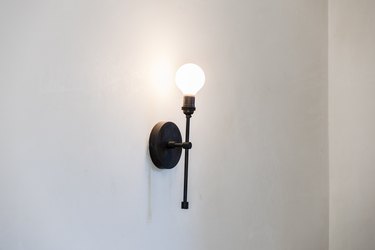
There are a surprising number of choices to make in the light bulb aisle. Whether you're renovating a home or just trying to find a replacement for a busted light fixture, you may be stuck asking yourself which bulb fits the bill. There are a lot of factors that go into determining which light bulbs are best for your situation. A better understanding of the differences between soft white and daylight light bulbs can help you choose the bulb that will be best for you and your home.
Switching to LED Light Bulbs
Video of the Day
In the past, most light bulbs were either incandescent or fluorescent. However, in recent years, many consumers are making the switch to more environmentally friendly LED bulbs. The bulbs require far less wattage and don't waste as much heat as incandescent light bulbs, making them far more energy-efficient. While LED bulbs are more expensive than other types, they last much longer, making them more cost-efficient in the long run.
Video of the Day
How to Measure LED Brightness and Color
If you've decided that LED bulbs are the right fit for you, you'll then have to decide which shade of light bulb you want. With non-LED light bulbs, most consumers were used to buying bulbs of a certain number of watts. Wattage isn't technically a measurement of brightness, but typically, the higher the wattage on an incandescent bulb, the brighter it will be.
With LED light bulbs, though, wattage doesn't correspond directly to brightness. Instead, there are a few other ways to judge the brightness and color of an LED bulb:
Lumens: The lumens (lm) of an LED bulb refers to its brightness. Generally, the higher the lumens of the bulb, the brighter the bulb will be.
Kelvin: Kelvin numbers measure the color temperature of a bulb, or what kind of hue it gives off as it glows. An LED bulb with a Kelvin number of around 2700K to 3000K typically gives off a warm, yellowish glow. Bulbs in the 3500K to 4100K give off a relatively bright white light. Once you start getting over 4200K, you'll begin to notice a blue color temperature, with the bluest LED lights hitting a Kelvin number of around 6500K.
Color Rendering Index: You might also find it important to know what colors will look like under your LED lighting. This is known as the color rendering index, or CRI. A CRI is more important in retail or office settings, where differences in color can lead to frustrated customers. (No one wants to go home with a navy sweater they thought was black, for instance, or see a stack of apples in a grocery store that looks rather orange instead of bright red.) But if you want to make sure you're seeing the right colors in your house, look for LED bulbs with a CRI rating higher than 80.
Soft White vs. Daylight
In addition to lumens, Kelvin numbers and the CRI, many LED bulbs come with descriptors such as soft white light, daylight, bright light or cool white, all aimed at giving you an idea of what the bulb will look like once it's in your home.
Determining which shade of LED lights you want for your home is entirely a matter of personal preference, but there are a few guidelines you can follow to make sure the bulbs look great at your place.
Soft white bulbs, also referred to as warm white bulbs, are typically best for rooms that you want to have a soft, cozy feel. They sometimes give off a more yellowish light than daylight LED bulbs. They're not the glaring lights that you need in an office, but they're not so dim that you can't see what you're doing in your room. Many people choose them for places like bedrooms or living rooms.
Daylight LED lights are meant to mimic the outdoor light you'd have on a clear, sunny day, although it doesn't quite look like natural sunlight. These bulbs give off a bright white or sometimes blueish glow. They're great for rooms that don't get outside light, such as basements or windowless rooms. They're also great in kitchens or bathrooms so you can see clearly as you're doing jobs like getting every last spot out of a dirty dish or applying makeup. Additionally, they're nice for places where you might be doing a lot of reading, such as a home office or study.