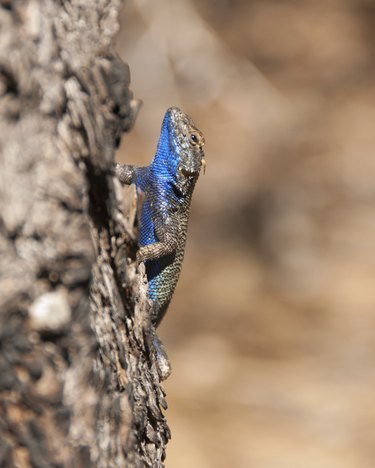
"Blue belly lizard" is the common name for the Western fence lizard, a lizard species native to California, Nevada, Oregon, Idaho, and Utah but found elsewhere as a pet. A bright, shiny blue streak of scales on its neck and underside gives this lizard his nickname, but his actual name reflects the creature's preference for sun basking on elevated places, like a fence.
Blue belly lizards can be kept as pets and are one of the hardier types of spiny lizards. To increase the chances that your lizard lives to his potential life span, provide him with a large enough habitat, a heat lamp, water, and food, such as insects and invertebrates.
Video of the Day
Video of the Day
Blue bellied lizard temperature
Like other reptiles, blue bellied lizards are cold blooded, so they must sit under the sun (called "basking") to maintain their body temperature. Therefore, like all captive reptiles, they need a heat source in their enclosure. In this case, the spot under the heat lamp must be kept at 90 degrees Fahrenheit. The rest of the enclosure can be 75 to 85 degrees but should not fall below 65 degrees at night. Maintaining proper enclosure temperatures is a challenging part of keeping pet reptiles.
Heat lamps can dry out the environment, so adding humidity is important. Misting the aquarium twice a day will likely be necessary depending on the climate in which you live. Also, like many reptiles, the blue belly lizard needs UVA and UVB rays to metabolize food and promote normal behavior. Most commercial reptile heat lamps also provide UV rays, but if yours doesn't, you'll need to add an additional UV light about 4 inches from the tank.
Blue bellied lizard habitat
Enclosures for these tiny grayish-brown lizards should be 10- to 20-gallon screen-covered aquariums. The size depends on the size of the lizard. They grow no more than 6 to 8.5 inches long and are considered smaller reptile pets.
Reptile carpets as cage liners alone aren't good for blue belly lizards. You'll need to add a ground-covering substrate, such as sand, dirt, or cypress mulch, because these lizards like to dig. In fact, they bury themselves while sleeping. Branches and even plants are needed because they love to climb.
Blue bellied lizard diet
In the wild, these lizards like eating spiders, caterpillars, flies, ants, and beetles — in other words, insects. They will even eat smaller lizards, which is why these territorial lizards should be kept in tanks alone. In captivity, they will eat meal worms, wax worms, and crickets.
Don't feed blue belly lizards every day. They only need to be fed three to four times per week. Water is essential. Provide a water dish but know that your lizard will likely prefer drinking water droplets dangling from plants as she would in the wild, which is another reason misting is important.
Blue bellied lizard facts
The blue belly lizard is also called the Western fence lizard, and if that wasn't confusing enough, they are also types of spiny lizards. All three names can refer to the same lizard, but the blue stripe is the defining feature.
These are not reptiles that like to be handled, and they can bite. The average Western fence lizard life span is five to seven years. Another fun fact is that these attractive creatures can change color with their environment, from gray to black and sometimes developing yellow legs, but their blue stripe usually remains.