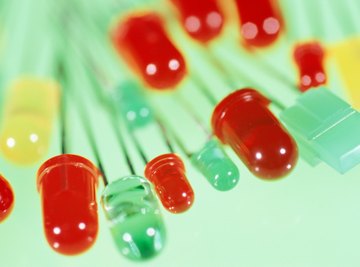

A light-emitting diode is a type of semiconductor that emits light when current runs through it. LED lamps are composed of numerous LEDs grouped together. Recent improvements in technology have improved the luminosity of LEDs and made LED lamps a suitable replacement for incandescent or fluorescent lamps. is a semiconductor light source. LEDs are used as indicator lamps in many devices and are increasingly used for other lighting.
Pro: Environmentally Friendly
LED lamps use considerably less electricity than incandescent or fluorescent light sources. For instance, a 5-to-7-watt LED light bulb is equivalent in brightness to a 60-watt incandescent bulb or a 15-watt fluorescent light. Installation of LED light bulbs has been touted by environmental conservationists as an easy way to reduce consumption without fundamentally changing human behavior. Moreover, unlike fluorescent and incandescent bulbs, LED bulbs do not contain mercury or any other toxic material.
Pro: Cost-Effectiveness
Lower energy consumption also translates into lower utility costs for consumers. Although LED light bulbs are considerably more expensive to purchase than incandescent ones (approximately $15 versus $3 respectively), their long life-spans and low energy costs make up for this in the medium-to-long term. LED light bulbs last approximately 10 times longer than incandescent bulbs (about 60,000 hours).
Con: Directional Lighting
LED light bulbs are directional, as light only emanates from the top half. As a result, LED light bulbs do not scatter light in all directions the way incandescent and fluorescent bulbs do. While LED light sources are ideal as directional light sources or spot lights, they are less effective as ambient light sources (even when using the general purpose varieties).
Con: Short-term Cost
Although LED light bulbs are cost-effective over time, they are several times more expensive as incandescent lights. Consequently, for individuals seeking short-term lighting solutions, incandescent light bulbs will likely be preferable. However, as the scale of production increases and the technology improves, it is likely the cost of LED light bulbs will likely diminish.
References
About the Author
Patrick Stothers Kwak first began writing professionally in 2008 as a contributor to the "UBC Foreign Affairs Journal." His articles are centered around international politics and political economy. Stothers Kwak holds a Bachelor of Arts in international relations from the University of British Columbia and is pursuing his Juris Doctorate at Osgoode Hall Law School at York University.
Photo Credits
Stockbyte/Stockbyte/Getty Images