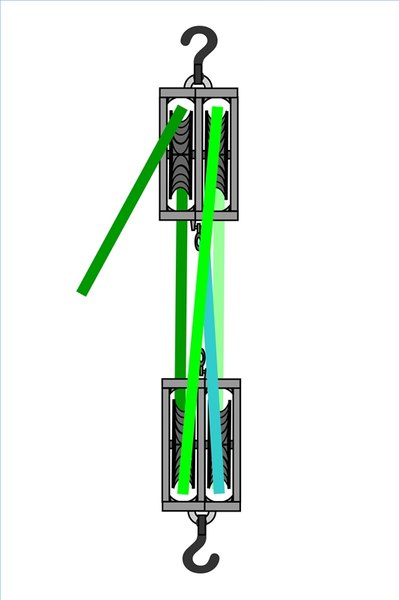


Reeving blocks to set up a double pulley system requires a little thought. A double pulley system, also known as a "block and tackle," consists of the pulleys, or blocks, and the tackle, the ropes riven through the blocks. You must decide if you will use a double pulley system with one sheave--the roller in a pulley--in each block, which will give you a mechanical advantage of 3 to 1, or a double pulley system with two sheaves in each block, which will give you a mechanical advantage of 5 to 1.
Items you will need
2 blocks, each either two-sheave or three-sheave
Line, natural or synthetic fiber
Step 1
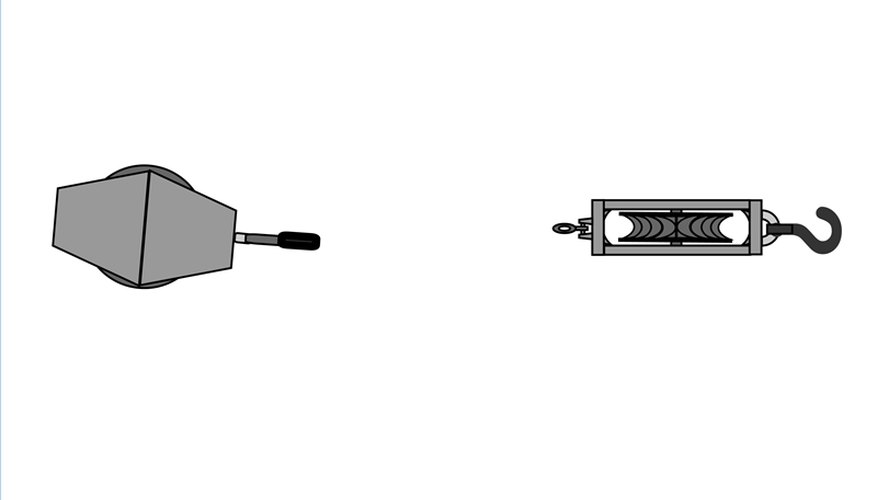
Lay the blocks on the deck, 2 to 3 feet apart, with one block on its side and the other on its face. The hooks should point away from each other. The block lying on its side will be the upper block of the tackle; the bottom block will attach to the load.
Step 2
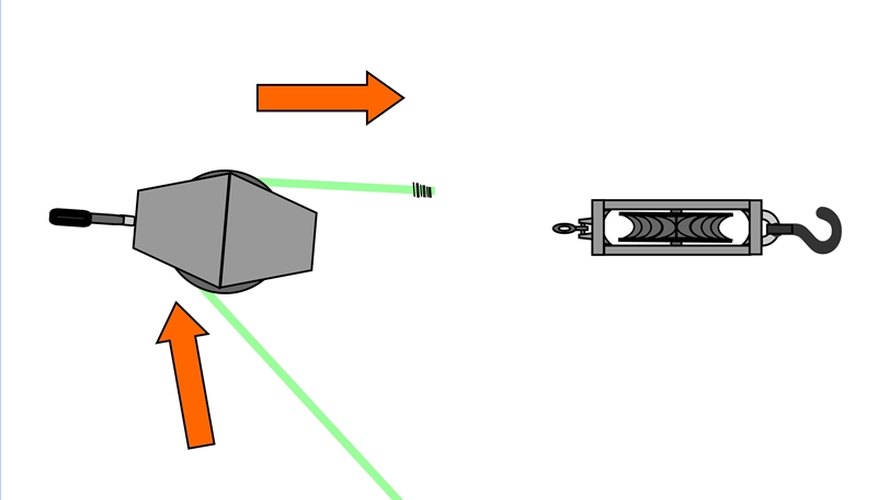
Reeve the line from the left, through the sheave of the block lying on its side.
Step 3
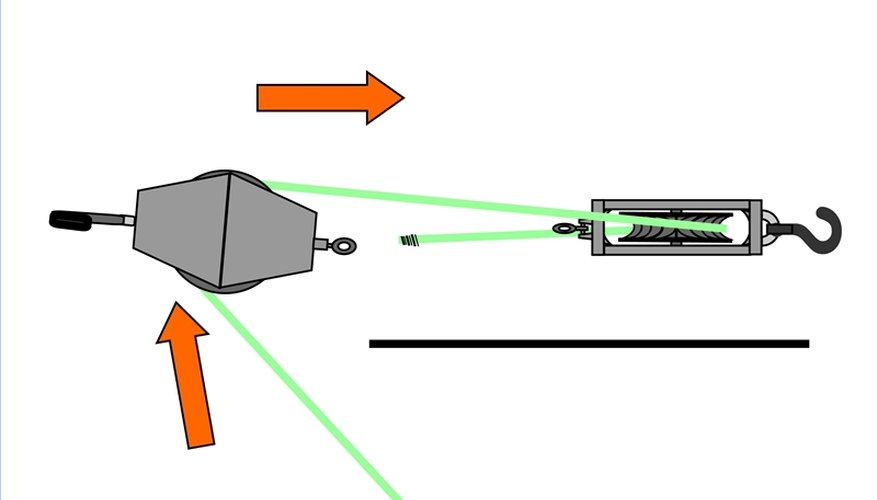
Reeve the rope through the sheave of the block lying on its face.
Step 4
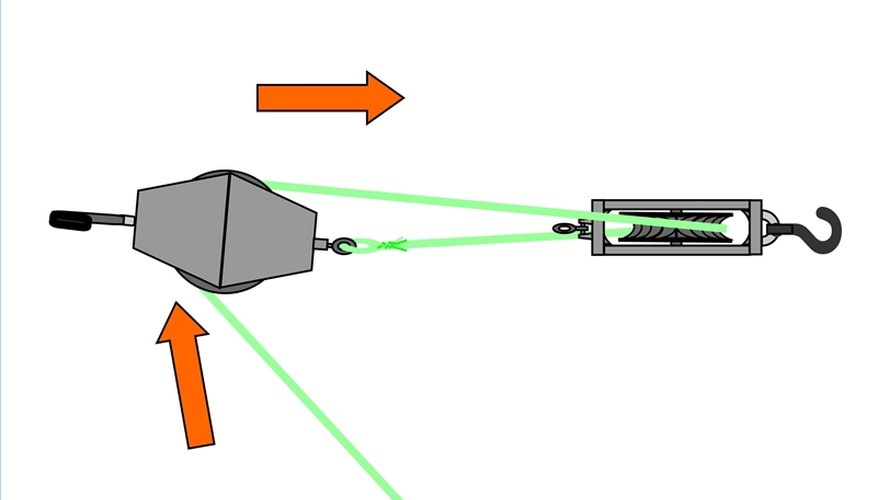
Bring the rope up to the becket of the block lying on its side and secure it to the becket with a becket bend or an eye splice.
Step 5
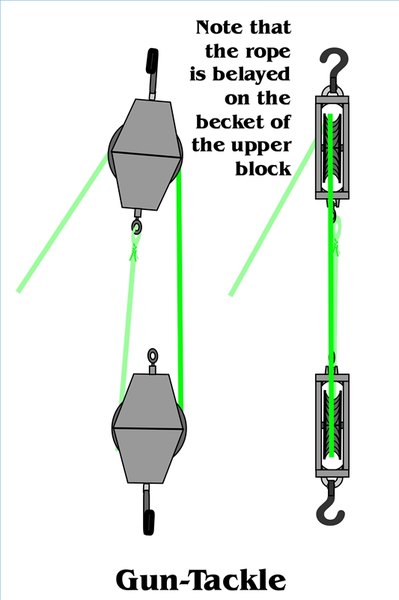
Use the block that has the rope belayed to its becket as the uppermost block in your tackle to gain the best mechanical advantage.
Step 1
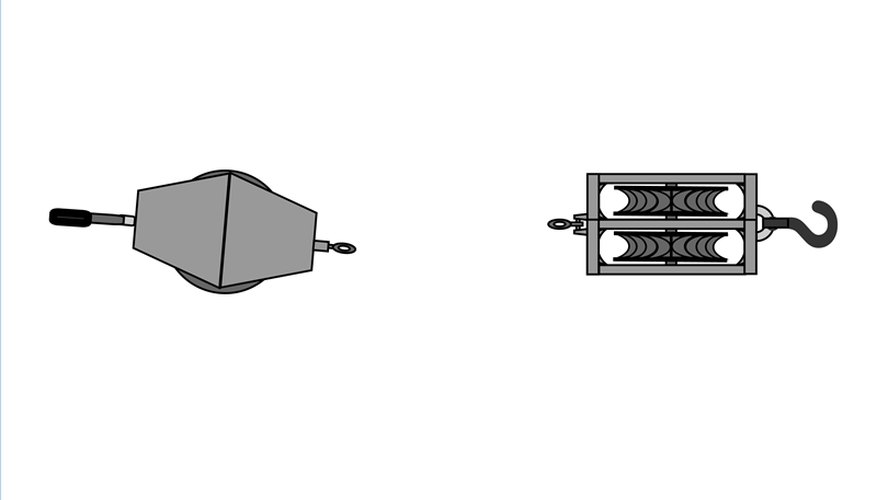
Lay the blocks on the deck, 2 to 3 feet apart, with one block on its side and the other on its face. The hooks should point away from each other. The block lying on its side will be the upper block of the tackle; the bottom block will attach to the load.
Step 2
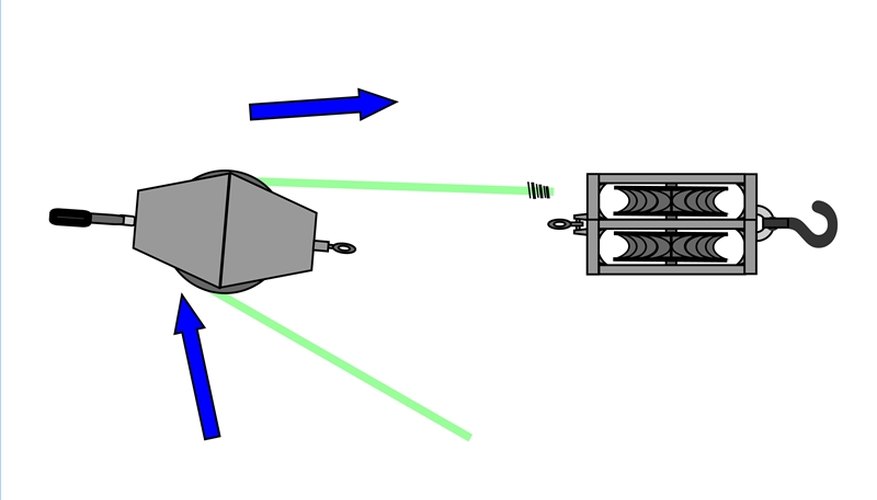
Reeve the line from the left, through the sheave nearest the deck on the block lying on its side.
Step 3
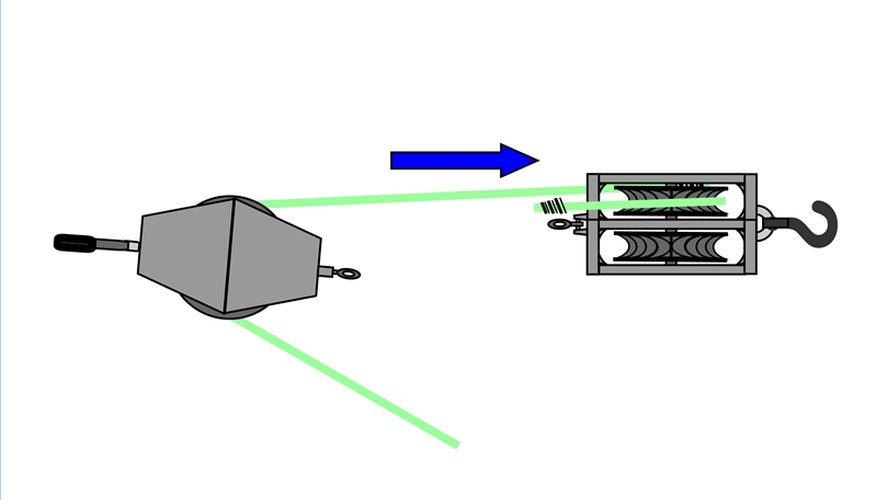
Reeve the rope through the one sheave of the block lying on its face.
Step 4
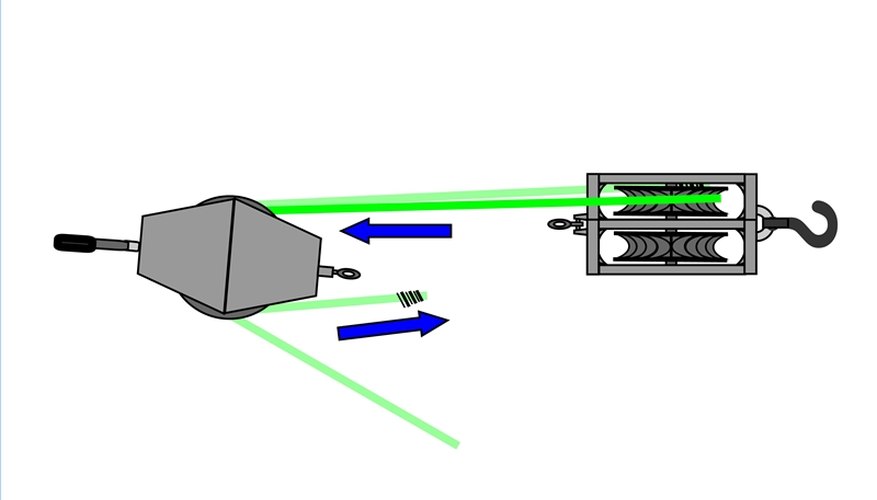
Reeve the rope though the empty sheave of the block lying on its side.
Step 5
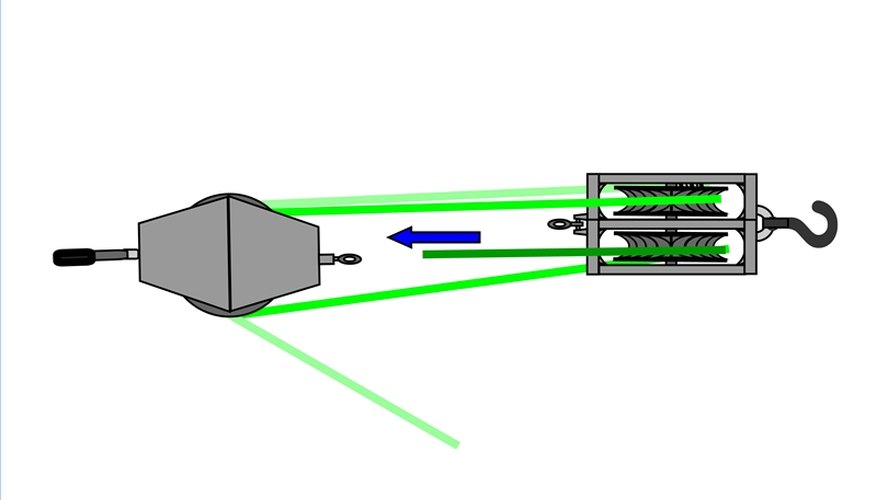
Reeve the rope through the remaining sheave of the block lying on its face.
Step 6
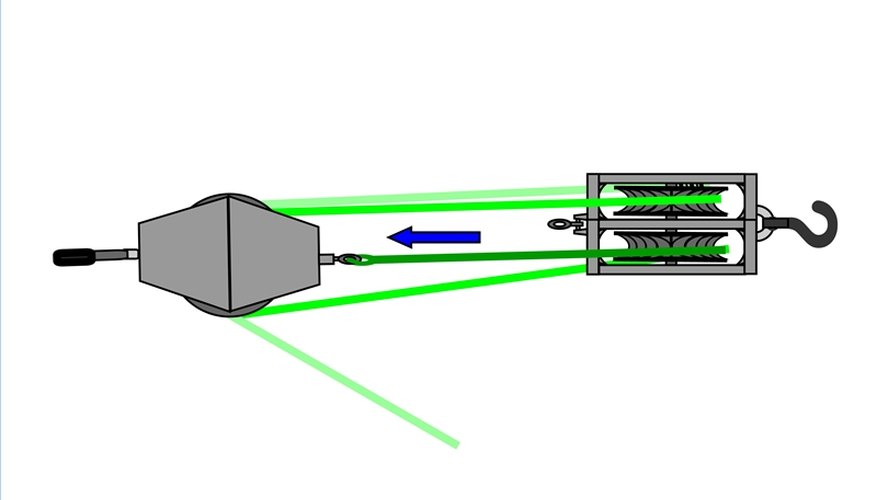
Pass the rope up to the becket of the block lying on its side and secure it to the becket with a becket bend or an eye splice.
Step 7
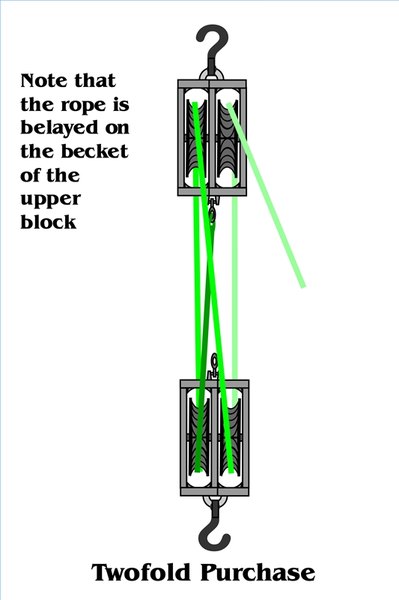
Use the block that has the rope belayed to its becket as the uppermost block in your tackle to gain the best mechanical advantage.
Warnings
- Always ensure that the line and blocks chosen have a sufficient safe working load for the task you are attempting.
Tips
- Until riven through a block, it's called "line." After being riven through a block, it becomes part of "tackle" and is called rope.
References
Tips
- Until riven through a block, it's called "line." After being riven through a block, it becomes part of "tackle" and is called rope.
Warnings
- Always ensure that the line and blocks chosen have a sufficient safe working load for the task you are attempting.
Writer Bio
Will Charpentier is a writer who specializes in boating and maritime subjects. A retired ship captain, Charpentier holds a doctorate in applied ocean science and engineering. He is also a certified marine technician and the author of a popular text on writing local history.