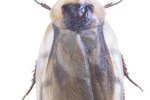
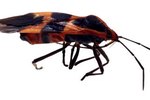
Roughly 11,000 known species of grasshopper exist and are widely distributed across the globe. Most reach around 2 inches in length, but some species can grow to be up to 5 inches long. Adults have heads, thoraxes, abdomens, six legs, two pairs of wings and two antennae. Their antennae are long and are used to sense the world around them. All species undergo a simple incomplete metamorphosis in three stages: egg, nymph and adult.
Mating Process
Before the next generation of grasshoppers can start its life cycle, mating must occur. As adult grasshoppers have short lifespans, they must quickly attract mates so they can reproduce as many times as possible. Males and females engage in direct sexual reproduction to fertilize the females' eggs. Males must deposit a sperm packet -- known as a spermatophore -- into the females. This travels to the females' eggs through minuscule canals called micropyles before fertilizing them, ready to be laid.
Egg Stage
The first phase of development for any grasshopper is the egg stage. Females lay their eggs in late summer or early fall, after mating has occurred. They generally lay egg pods containing between 15 and 150 eggs -- but may lay up to 25 of these during their short lives. Females bury these egg pods under the ground to keep them safe from predators. These eggs lay dormant in the soil until hatching in late spring the following year.
Nymph Stage
Once the grasshoppers hatch from their eggs in springtime, they're in their nymph stage. Nymphs are much like fully formed adult grasshoppers, except they're smaller and have no wings or reproductive organs. Providing there's plenty of food around, they grow quickly. However, since they have exoskeletons it's hard for them to get larger, as they don't have skin that stretches, like many animals do. They must shed these exoskeletons five times before they reach their adult size.
Adult Stage
By the time summer comes around, grasshoppers will have reached their full adult size. They will only live until fall, when the colder weather kills them off. Of course, they may live for less time if one of their many predators -- including reptiles, insects, small mammals, birds and even humans -- gets them first. Their main prerogative in this time is to mate as much as possible, to produce the next generation. Males are able to "sing" by rubbing together modified parts of their forewings. They use this song to attract females and begin the mating process.
References
Photo Credits
-
Jupiterimages/Photos.com/Getty Images