Sheep Lice

Sheep Lice thumbnail
Sheep lice affect the health of animals and farming profits.

Sheep lice affect the health of an entire flock. The most common sheep body louse, Boicola ovis, infects sheep throughout the world. Economic impacts include decreased wool prices and animal productivity. These biting lice spread within a flock very easily, and effective lice control depends on animal management and chemical treatment. If not controlled, lice numbers increase very quickly.

  1. Identification

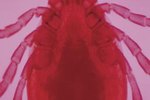
    • Lice live their entire lives in the wool of the sheep. Wingless and very tiny, about .08 of an inch long, the creatures inhabit the outer layers of skin, where the wool emerges. Parting the fleece allows viewing of lice at the base of the wool hairs. They like to congregate in the neck area of short wool sheep and side area of long wool sheep.

    Life Cycle

    • Lice complete their entire life cycle on sheep. They congregate in areas where the wool grows, not the face or udder. The female louse lives only 30 days. She lays 10 to 20 eggs, which hatch in nine to 10 days. It takes about 35 days for the hatched lice to mature.

    Effects

    • The feeding action of the lice on the skin irritates the sheep. Sheep may rub themselves against objects to get relief. The rubbing damages the wool by matting the fibers together and sometimes tearing them. Such self-inflicted trauma causes fleece loss and damage. High lice numbers predominate in late winter, when the wool is long and the sheep live in close quarters.

    Treatment

    • Controlling lice depends on appropriate animal management and chemical treatment. Shearing sheep removes 90 percent of lice. Lice exposed to the environment will die quickly. Shearing benefits chemical treatment of lice, but not required. Chemical treatment involves walking sheep through a chemical water bath containing organophosphates. Chemical treatments reach the skin easier with shorter wool. Topical backline (along the back) applications, such as cypermethrin or deltamethrin, control lice, too.

    Significance

    • The economic effect of lice on wool and productivity depend on wool condition, amount of wool, type of wool affected and sheep marketability. Matting and discoloration decreases values of highly profitable wool types. More lice means more damage and less profit. Many buyers refuse to buy lice-infested sheep or wool.

    Prevention/Solution

    • Sheep need close inspection for lice before introduction to a flock. Lice spread rapidly by direct contact. So if lice are found, isolate the infested sheep from the rest of the flock and treat accordingly. Lice not only transfer between animals, but between flocks on shearing clothes and equipment. Moving between flocks requires decontamination of all reusable items.

Related Searches:

References

  • Photo Credit black sheep image by Trevor Allen from Fotolia.com

Comments

You May Also Like

  • Natural Sheep Lice Treatment

    Sheep lice are common parasites that can quickly spread from one sheep to an entire flock. They lower quantity and quality of...

  • Reasons for Hair Loss on Sheep

    Comments. You May Also Like. How to Care for Hair Sheep. Hair sheep are sheep with a greater proportion of hair than...

  • Sheep Shearing Instructions

    We get wool from sheep by shearing the fleece from them with cutters, but there are other reasons for relieving these animals...

  • How to Control Biting Lice

    Biting lice affect many animals, from companion animals like cats and dogs, to poultry, cattle, goats and other farm animals. Biting lice...

  • Zap Lice Treatment

    Humans have battled head lice for millennia. Anthropologists have even found Egyptian mummies with desiccated head lice and eggs on their scalp...

  • Quail Lice Treatment

    In the United States, poultry farmers raise domestic quail for their meat and eggs, mostly from birds descended from a Japanese breed...

  • Sheep Shearing Guide

    Sheep shearing is the centuries-old practice of harvesting the fleece, or wool, that grows on sheep. The process is not painful to...

  • How Do I Build Muscle in Sheep?

    Building muscle in sheep is important when it comes to showing them and should be started when they are lambs. According to...

  • How to Treat Bird Lice on Humans

    You do not have to own a pet bird in order to be affected by bird lice. A nest infested with these...

  • How to Trim a Wool Cap on Sheep

    Wool caps are an integral part in proper sheep fitting. Wool caps are only accepted on wool cap breeds such as Hampshires...

  • Life Cycle of the Roundworm

    Roundworms are common parasites that have a direct life cycle, which means they don't use intermediate hosts. Human roundworm (Ascaris lumbricoides) infections...

  • How do I Treat Turkeys for Lice?

    One of the fastest ways to ruin an entire roost of turkeys is through the spread of lice. Lice feed off the...

  • Life Cycle of Lice

    Head lice are insects that feed off the of the blood of their host. One louse can produce hundreds of eggs during...

  • Sheep Diseases: Scabies

    The symptoms of sheep scabies include scaly, crusted, yellowish sores, hide damage and wool loss. The Iowa State University Center for Food...

  • How to Make Fleece Circle Blankets

    Fleece blankets are soft and warm enough to wrap a baby in, especially during the cold winter months. Parents searching for the...

  • What Are the Treatments for Lice in Goats?

    There are two types of lice that might affect your goats, biting lice and sucking lice. Goat lice are picky about their...

  • What Do Lice Look Like?

    Lice do not discriminate based on hair length, color, or age. They will happily jump from one human host to the next....

  • Neem Lice Treatment

    Indigenous to India, the neem tree is famed for its extensive medicinal properties. Rising in popularity as a cure-all herb, neem is...

Related Ads

Featured