



Anthropology studies humankind--our pre-history, cultures, use of language and physical evolution. Some anthropologists use trowels, others tape recorders, still others hi-tech DNA analyzers. Their tools and research subjects may differ, but they all seek answers to a very basic question: What makes us different from the other species on earth?
Archaeology
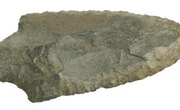
Archaeologists look to our distant past for answers. Civilization existed for thousands of years before the invention of writing. Excavations, or "digs," meticulously unearth the implements, artifacts and dwelling places of prehistory. Look in an archeologist’s field bag and you will no doubt find: a paint brush, mason’s trowel, root clippers, hand broom and dustpan, metric folding ruler and tape measure, line level, work gloves, plastic bags and markers, and a bound notebook and pencils.
Cultural Anthropology
Pioneers in this field, like Margaret Mead, made do with a notebook and pencil. Their eyes and ears were their primary tools, their subjects native peoples with little or no prior contact with the modern world. Cameras and other recording equipment were alien to these people and thus employed sparingly. Cultural anthropologists now study contemporary as well as traditional social life. Cameras, video and tape recorders are commonplace today; field researchers use them freely and benefit from the accurate, detailed observations they provide.
Linguistic Anthropology
People communicate with each other in words, facial expressions and gestures. Capturing the language as it is spoken in everyday exchanges in natural settings is vital. Miniature, unobtrusive Lavaliere microphones worn by research subjects make this possible. Just as the digital audio recorder transcribes every sound and sentence into bits and bytes, the linguistic anthropologist can thoroughly analyze language at a computer workstation. Leavening in digitized visual data of these interactions recorded by video cameras allows a multi-modal research analysis.
Paleoanthropology
Paleoanthropologists precisely measure primate, humanoid and human skeletons. Calipers size the cranium and teeth; mandibulometers measure the lower jaw; osteometric boards measure long bones like the femur. Latex mold-casting material is used to make replicas. Specimens are stored in acid and lignin-free containers. Labs also have portable X-ray equipment and laser-scanning, three-dimensional digitizers that map the specimen. Specially developed software like InScribe, GRF-ND, Morpheus, TPS and Morphometrika record and sort two- and three-dimensional coordinate data and statistically analyze it.
Molecular Primatology
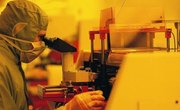
Some anthropologists study primates instead of humans, looking for genetic links and differences between the two. Basically, they extract and map a specimen’s DNA and RNA. This takes a lot of very sophisticated equipment. New York University, for example, says its laboratory equipment includes an ABI 3730 Automated DNA Analysis System that does DNA fragment analysis and sequencing; 96-well thermo-cyclers that amplify segments of DNA; a BioRad iQ5 Realtime PCR system that assays target genes; and fluorometers producing dyes that bind to specific chains of DNA.
Related Articles






References
Writer Bio
Francis Duffy has been writing professionally for over 25 years. Duffy has written 14 major market-research studies for Business Communications Co. Allied Business Intelligence and Communications Industry Researchers, and articles for Datapro, EBSCONotes ResearchStarters™ Business and EBSCONotes ResearchStarters™ Sociology.