Interesting Facts About the Hackberry Tree

The hackberry tree (Celtis occidentalis) is common deciduous tree with a few uncommon traits. Because of its prevalence across the United States, the hackberry is known by many different names such as sugarberry, beaverwood and nettletree. The hackberry is a tolerant species that can grow in a range of environmental and soil conditions making it a useful tree for municipalities and private land owners across the country.

  1. Mistaken Identity

    • Many people mistake the hackberry for its cousin the American elm. Amateur arborists are not alone in being confused over the identification of hackberries; scientists too have had trouble definitively placing the genus of hackberry (Celtis) into the correct family. Scientists once included Celtis species in the elm family (Ulmaceae) and then they were placed into their own family called Celtidaceae, before ending up in their current classification as a member of the hemp family (Cannabaceae). There are around 60 to 70 species of Celtis found in temperate regions around the world.

    Common Uses

    • Like the elm, the hackberry is often used as a shade tree in urban environments due to its drought tolerance and size. Possessing a soft wood comparable to elm and white ash, the hackberry is not particularly valued for commercial purposes. It is most often used as firewood though it is occasionally used for inexpensive furniture construction. While the hackberry is not an economically important tree, it is useful in areas around rivers to help prevent erosion and minimize risk from flooding. The hackberry is also amenable to bonsai cultivation.

    Size

    • Rarely found in pure stands, the hackberry is usually found in mixed deciduous forests. It is not a strong competitor, but once established it can grow to heights of 30 to 50 feet, on average. In its prime development conditions in valley soils it can grow to be over 100 feet tall and can have a very fast growth rate.

    The Edible Tree

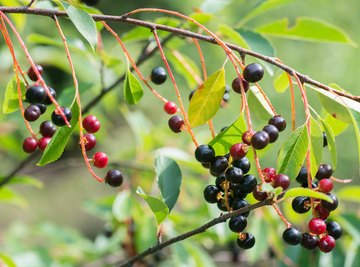
    • The hackberry produces small, pea-sized berries that change from light orange to dark purple in colour when ripe in early fall. The hackberry is a great tree to attract birds and other animals who love to feed off the fruits both in the tree and on the forest floor. In fact, the hackberry relies on animals to eat the fruits and disperse its seeds in order to reproduce. The fruits are not just for forest animals though. Humans can enjoy the small berries as well. Though the fruit is quite thin and usually dry, the taste of the berries is said to be similar to dates.

    Ethnobotanical Uses

    • Native Americans used the hackberry as a source of food, for medicinal purposes, and for special ceremonies. The bark of the tree was boiled down and used medicinally to induce abortions, regulate menstrual cycles, and cure venereal diseases. The berries were often crushed and used to flavour foods, or mixed with corn and animal fats to make a thick porridge.

Related Searches:

References

Resources

Comments

You May Also Like

  • What is a Hackberry Tree?

    A tree able to grow in poor quality soils, the hackberry (Celtis occidentalis) is a native species from New England to northern...

  • Hackberry Tree Varieties

    Hackberries are deciduous trees in the elm family. While not susceptible to the devastating Dutch elm disease, many hackberry varieties are prone...

  • Hackberry Tree Problems

    Hackberry (Celtis occidentalis) is a native tree of the U.S., and is also known as common hackberry and nettletree. The tree grows...

  • Is Hackberry Good for Firewood?

    The hackberry is a soft-wooded, ornamental shade tree that grows to a maximum of 60 feet. It is a medium- to fast-growing...

  • Hackberry Tree Removal

    The hackberry tree, also called Celtis occidentalis, is one of 100 most common trees in North America. This elm-like tree is rounded...

  • Is the Hackberry Bush Fruit Edible?

    Comments. You May Also Like. How to Identify Hackberry. Hackberry trees are common throughout the world, both in the wild and in...

  • Interesting Facts About Plum Trees

    The plum tree, Prunus cerasifera, is a deciduous tree and the bark of the tree is a reddish brown. One common name...

  • Interesting Facts About Trees

    Trees come in a variety of shapes and sizes. The two main types of trees are broadleaf trees and coniferous trees. Examples...

  • Plants That Live in the Upland Forests

    Plants That Live in the Upland Forests. The upland forests are wooded areas in which there is extensive drainage of the soil....

  • How to Identify Hackberry

    Hackberry trees are common throughout the world, both in the wild and in residential areas. It resembles an elm, and is often...

  • The Fastest Growing Trees in Oklahoma

    The Fastest Growing Trees in Oklahoma. A fast growth rate can be a key factor in choosing trees in Oklahoma for landscaping...

  • Hackberry Tree Pests

    Though hackberry trees add stately visual impact and copious shade to the garden, these green-leafed deciduous trees can experience cosmetic damage and...

  • A Description of a Hackberry Tree

    If the hackberry tree (Celtis occidentalis) had a public relations spokesperson, she would most likely tell you how adaptable the tree is...

  • How to Kill a Hackberry Tree

    Hackberry (Celtis occientalis) is a medium-sized deciduous tree from the elm family. The tree grows to a full height of about 80...

  • Interesting Facts About Flood Lights

    With the vast selection of floodlights on the market today, there's no reason not to choose to install one or more on...

  • Desert Berry Plants

    Most berries are small fleshy fruits containing seeds. The flesh surrounding the seeds is often juicy and sweet, enticing animals to eat...

  • Facts About the Common Tree Frog

    The common tree frog spends most of its life in trees, grass and shrubs in its native range. The bright green frogs...

  • Lancewood Tree Information

    Lancewood, also known as Nectandra coriacea or Ocotea coricea, is a small tree native to south Florida and the Keys, as well...

Related Ads

Featured