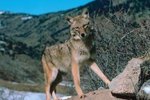
Information About the Arctic White Wolf

Information About the Arctic White Wolf thumbnail
The arctic white wolf is perfectly adapted to life in the arctic circle.

The arctic wolf is perfectly adapted for living in the frozen north of the arctic circle. They are one of the premier predators in the area and little has changed for the subspecies in millions of years. There are many factors which have made the arctic wolf a top animal, both biological and environmental.

  1. Physical Characteristics

    • Arctic wolves are generally smaller than other wolves. However, they do tend to be bulkier and have much thicker and longer fur. The fur of an arctic wolf is almost always white. Adults are about three feet long with a foot long bushy tail. However, some have been known to reach six feet. Males weight up to 175 pounds and females weigh 55 to 90 pounds. The average height is three feet tall. Like other wolves, the arctic wolf has strong jaws with very sharp teeth. They have very good hearing, eyesight and sense of smell. They use these acute senses for hunting. To help reduce heat loss, the arctic wolf has a shorter muzzle, more rounded ears and shorter legs than other wolves.

    Breeding and Life Cycle

    • Normally only the alpha male and alpha female in a pack breed. However, if a pack gets too large, some wolves may splinter off and form a new one. Packs tend to have six individuals. The wolves seek out a breeding ground, usually a valley that's relatively dry. If able, they may burrow out dens or use caves and rock outcroppings for shelter. Mating season begins in March. Pups are born, two or three at a time, deaf and blind. After a month, they can eat meat. The whole pack has the responsibility of feeding the pups regurgitated meat. After a year, a young wolf is able to fend for itself. In the wild, arctic wolves live for an average of ten years. In captivity, this number can double.

    Habitat

    • Arctic wolves are able to tolerate sub-zero temperatures, weeks without food and five months of darkness. They live in the arctic circle, above 67 degrees north latitude, in parts of Canada and Alaska as well as Greenland and Northern Europe. For the most part, living in these remote areas keeps them out of contact with negative outside forces. Wolf territories can stretch over a thousand miles simply because of food scarcity in any one location.

    Feeding and Hunting Habits

    • While lemmings and arctic hare are staple food sources for the arctic wolf, they often try to take down larger game, caribou, musk ox, elk and mountain sheep. These larger animals can only be taken down by the effort of an entire pack. They rarely have a chance for a surprise attack. Instead, the pack circles the animals, who usually create a defensive shield for the young, trying to confuse and scatter them. Then the wolves go for the weak, old or young. A large animal can feed a pack for days. On occasion, the arctic wolf is known to eat fish, birds, small rodents and even berries.

    Other Fun Facts

    • The scientific name for the arctic wolf is Canis lupus arctos. They have a language of sorts which is made up of facial expressions and tail movement. Howling is used to signal the beginning or end of a hunt, to find lost pack members or just for fun. They can run up to thirty miles per hour. Their sense of smell can extend to an entire mile. A grizzly bear is one of the only real enemies an arctic wolf has. Bears can steal a kill or even eat the pups. Birds of prey sometimes steal wolf pups for food also. Encounters with human beings are rare but wolves have been killed for their pelts and because they attack cattle when other prey isn't available.

Related Searches:

References

  • Photo Credit Arctic Wolf image by Vita.Z from Fotolia.com

Comments

You May Also Like

  • Characteristics of a White Arctic Wolf & Siberian Husky Mix

    Characteristics of a White Arctic Wolf & Siberian Husky Mix. Wolf hybrids are controversial because they are sometimes unexpectedly aggressive. Wolf instinct...

  • About Arctic Seals

    The frigid and inaccessible Artic region, though blanketed in snow and harsh weather conditions, is home to an incredible ecosystem. Several polar...

  • Facts About Arctic Seals

    Seals that live in the Arctic Ocean are often referred to as arctic seals. Arctic seals come in a variety of different...

  • Tundra-Wolf Information

    The tundra wolf (Canis lupus albis) is a kind of gray wolf that is found in the forests of northern Europe and...

  • Facts About Tundra Wolves

    The tundra wolf is another name for the arctic wolf. Tundra wolves are considered to be a sub-species of the gray wolf....

  • Information on Arctic Flowers

    When thinking of the tundra, summer flowers don't generally spring immediately to mind. The snow-blanketed landscapes, bone-numbing cold and long winter nights...

  • Animal Red Wolf Information

    The red wolf, or Canis rufus, is similar in appearance to the gray wolf, its cousin. The red wolf is smaller, thinner...

  • Information on White Seals

    Harp seals are born with furry white coats which remain with them for their early years. These coats are beautiful and have...

  • How to Draw Realistic Animal Hair for a Wolf

    Drawing realistic-looking fur for a wolf or any other animal is a difficult process. In fact, it is one of the harder...

  • Nancy Drew: The White Wolf of Icicle Creek Hints

    If you're a fan of the amateur teen sleuth who drives a Nash Metropolitan and seems to find trouble without trying, then...

  • Interesting Facts About Baby Wolves

    Baby wolves, also known as wolf pups, are playful mammals not unlike their domesticated sibling species, the dog. Wolf cubs are raised...

  • White Siberian Husky Information

    The Siberian Husky is an active dog used primarily to pull sleds in sub-arctic climates. They weigh between 35 and 60 pounds...

  • Tundra Characteristics

    The cold, harsh tundra landscape is divided into the alpine and artic regions. Avanalance peak trail, Arthur's pass, New Zealand image by...

  • Characteristics of Husky Dogs

    The Siberian husky was first brought to Alaska from Siberia in 1909. This elegant and powerful dog was originally used in the...

  • Wolf-Dog Hybrid Care Information

    According to the Dog Pages website, Arctic tundra, Alaskan interior, British Columbian timber and Eastern timber wolves can all be bred with...

  • Life Cycle of the Wolf

    Wolves have captured our imagination in books and stories. They have been maligned and hunted, yet somehow we are still fascinated by...

Related Ads

Featured